Of Forts, Faith, and a Final Encounter

I usually take my last day in any place a little slow. My stay at Ranthambore National Park was no different. Before arriving, I knew there was a fort here, but what I hadn’t realized was that Ranthambore Fort is a UNESCO World Heritage Site. That, of course, made it unmissable.

Trying to stay ahead of the heat, I set out early. My first surprise, there was no entry fee. The fort houses three temples, and most visitors seemed to be heading there for prayers. As I stepped out of the vehicle, I noticed the absence of eager guides, a rarity at monuments. I’ve always been wary of half-baked historical narration, but as I approached the gate, my driver introduced me to Harphool Gurjar, who would be my guide for the morning.
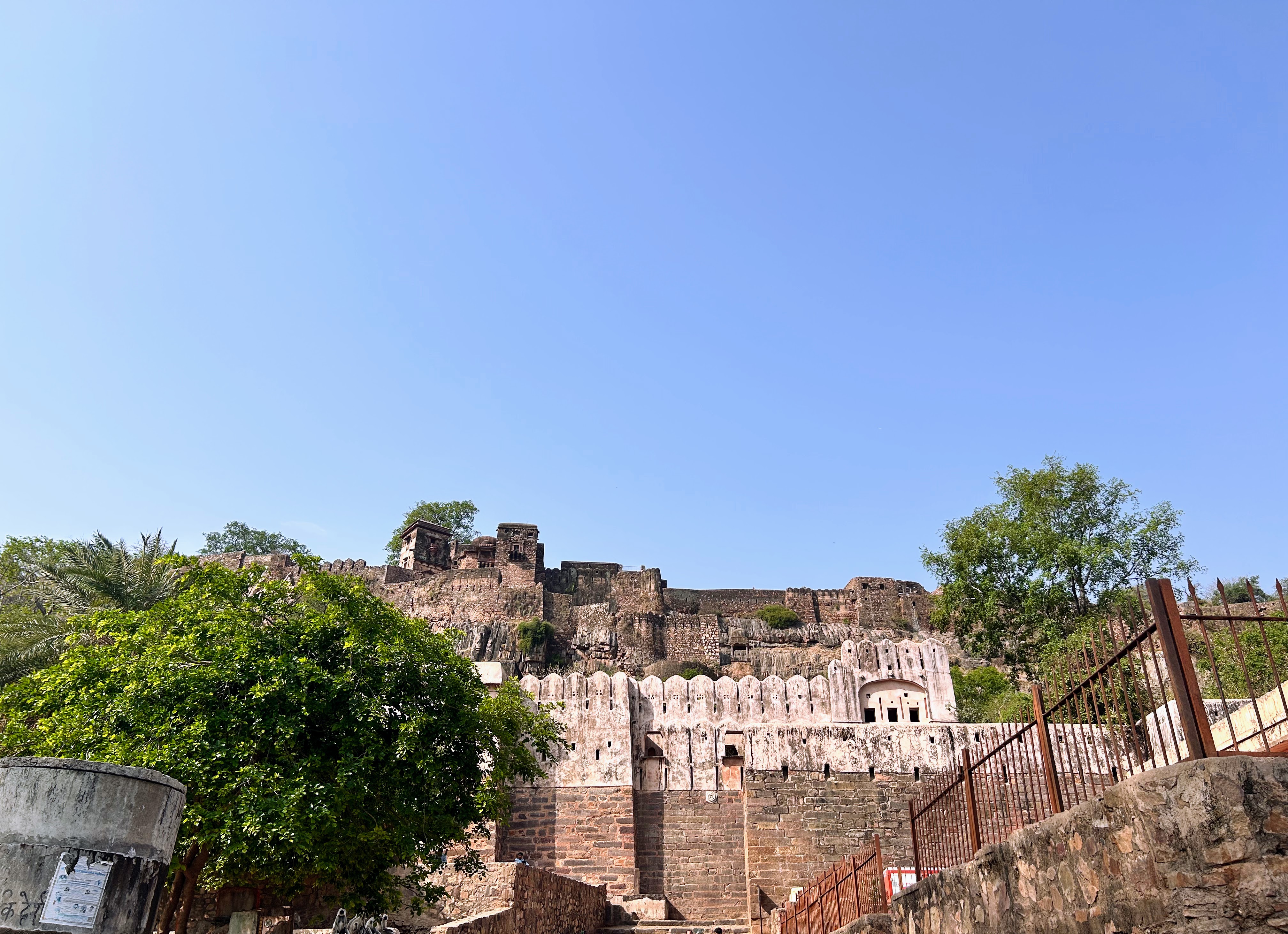
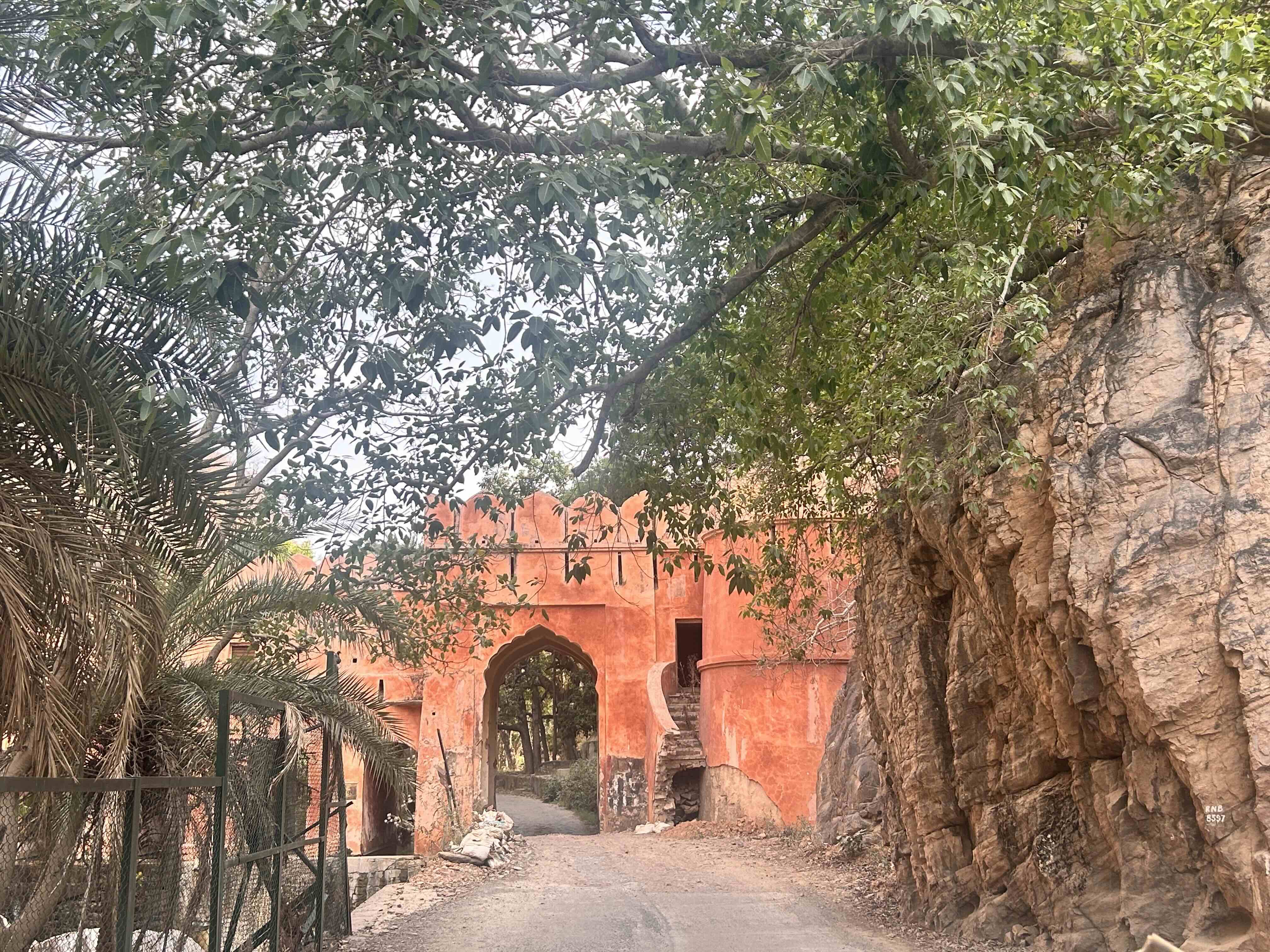
Before he could begin, I told him that while I would visit the temples, my interest lay in the fort and its history. The fort has seven gates, though only four, Navlakha Pol, Hathi Pol, Ganesh Pol, and Andheri Pol (or Toran Dwar), are accessible; the others lie within the core of the national park. Rising from the rugged folds of the Aravallis, the fort stretches across nearly seven kilometers of formidable walls.
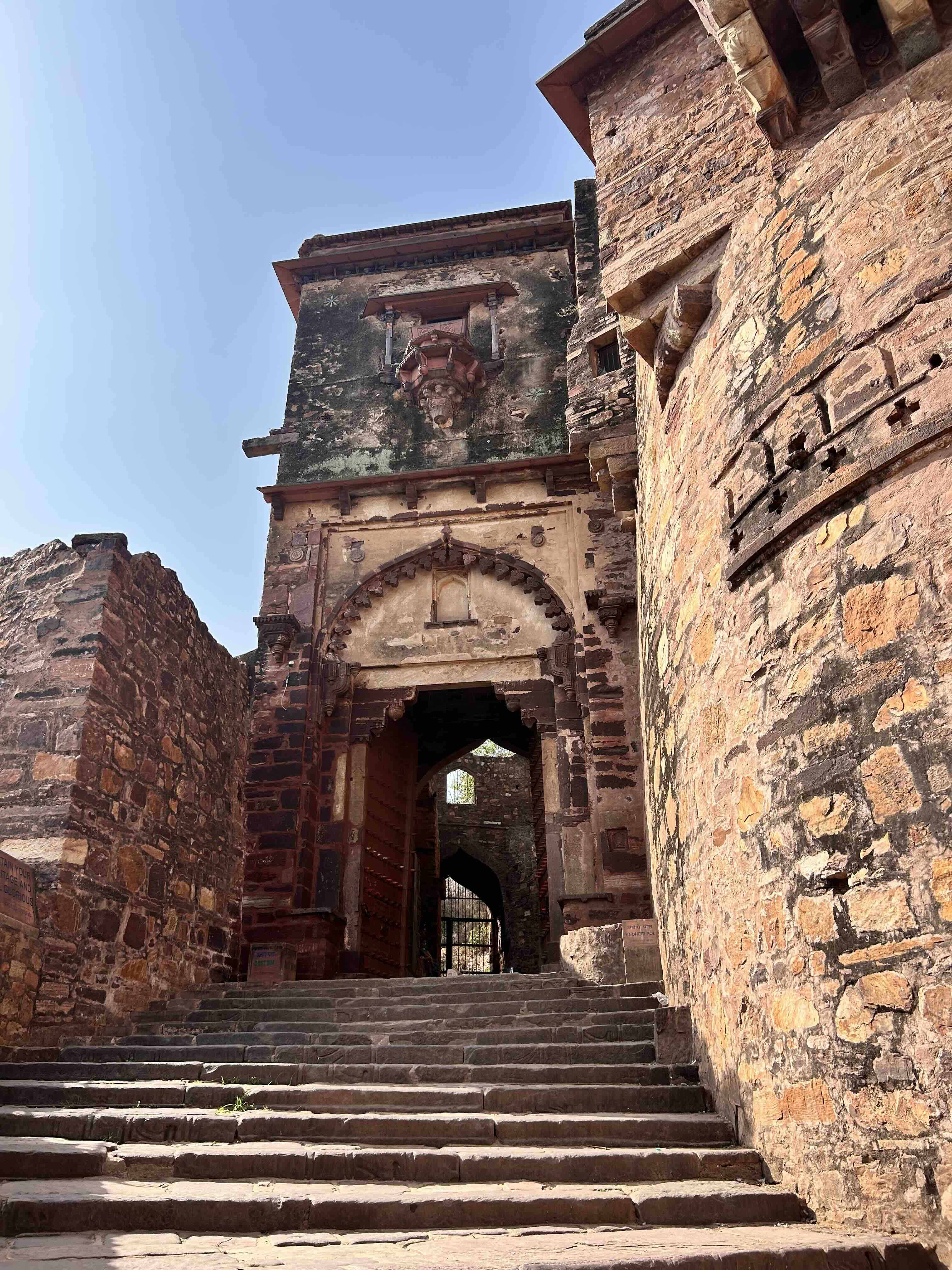
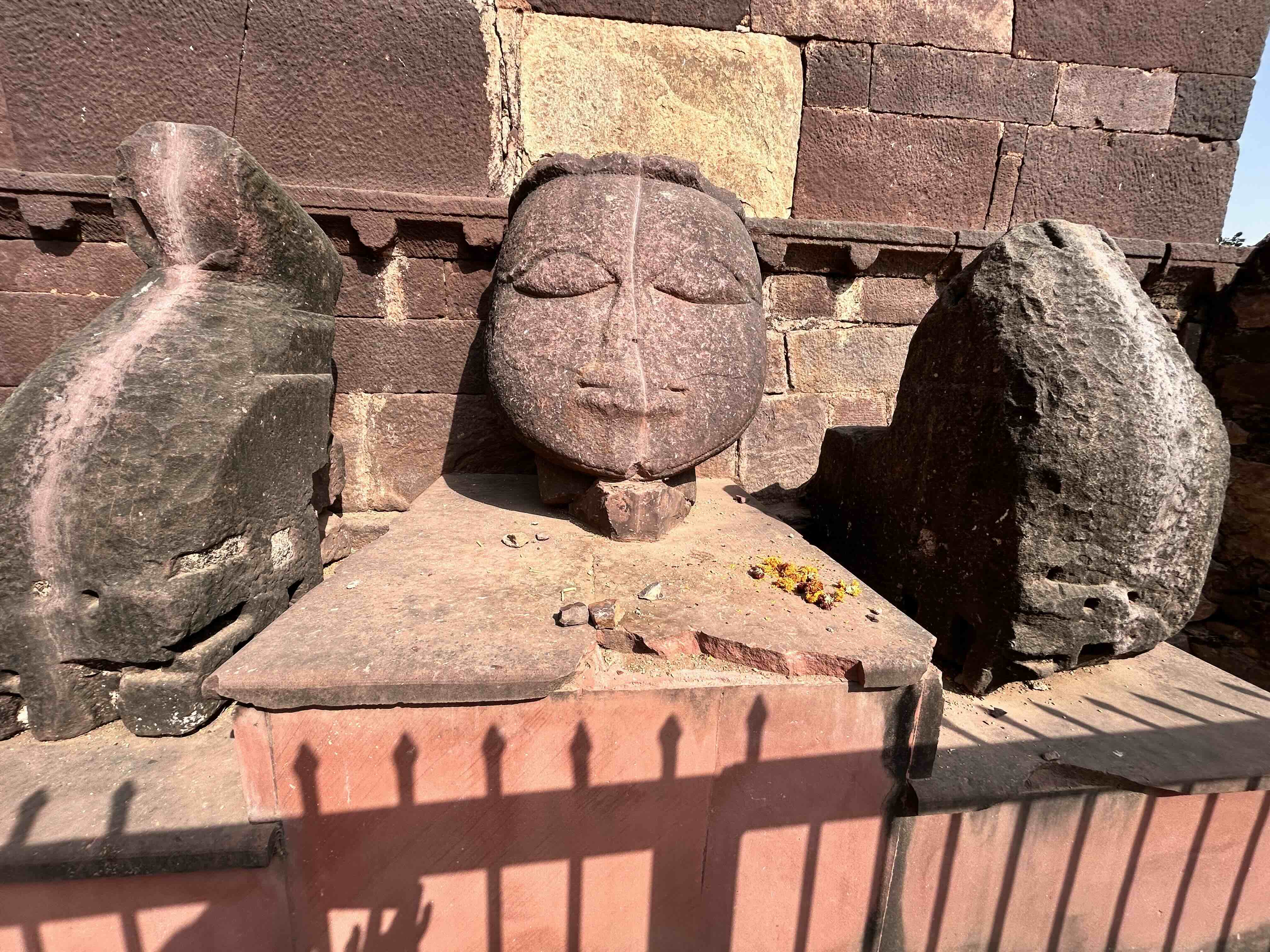
We began our ascent through Navlakha Pol towards Hathi Pol. There, I noticed a peculiar stone carving, a face, a torso, a hand. It represents Ranmal, a general who is believed to have betrayed King Hammir Dev Chauhan to Alauddin Khilji in 1301. Locals still throw stones at the carving, a symbolic act of contempt for betrayal.
At Ganesh Pol, my guide pointed out markings on the wall, said to be the hoof prints of the king’s horse. What followed was a story layered with drama. According to local lore, Hammir Dev Chauhan had, in fact, won the battle and sent his generals to inform the queen to stop the royal women from committing jauhar. The generals, however, conveyed false news. When the king realized, he rushed back, only to be blocked at Hathi Pol and Ganesh Pol. In desperation, he urged his horse up the steep walls, but it was too late. The women had already committed jauhar. His daughter, too, is said to have leaped into a kund. Overcome with grief, the king is believed to have taken his own life.
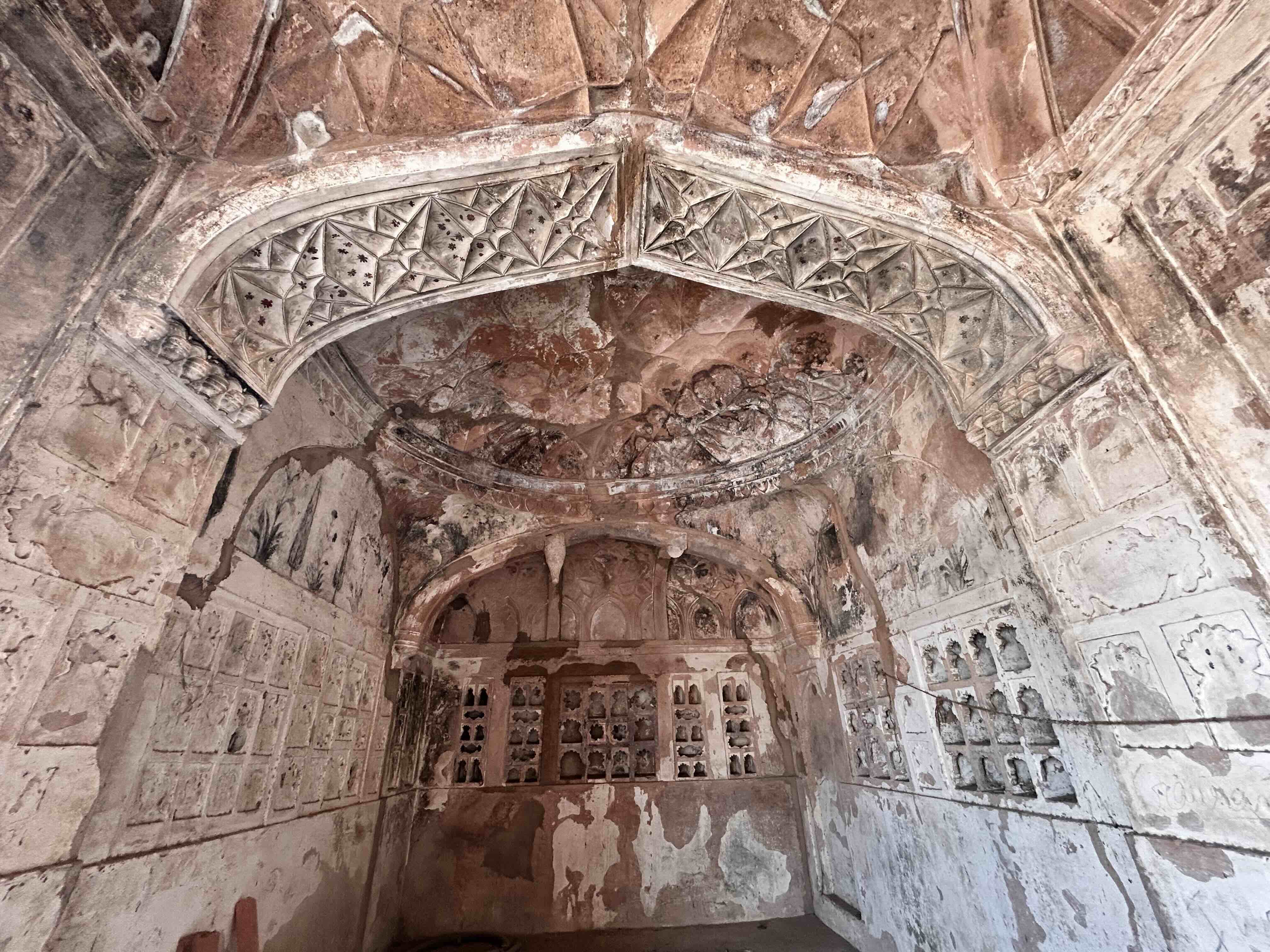
I could not say how much of this is historically accurate, but it certainly carried the weight of a cinematic narrative. The better-known jauhar of Rani Padmini at Chittorgarh Fort occurred in 1303, lending the tale a broader historical resonance.
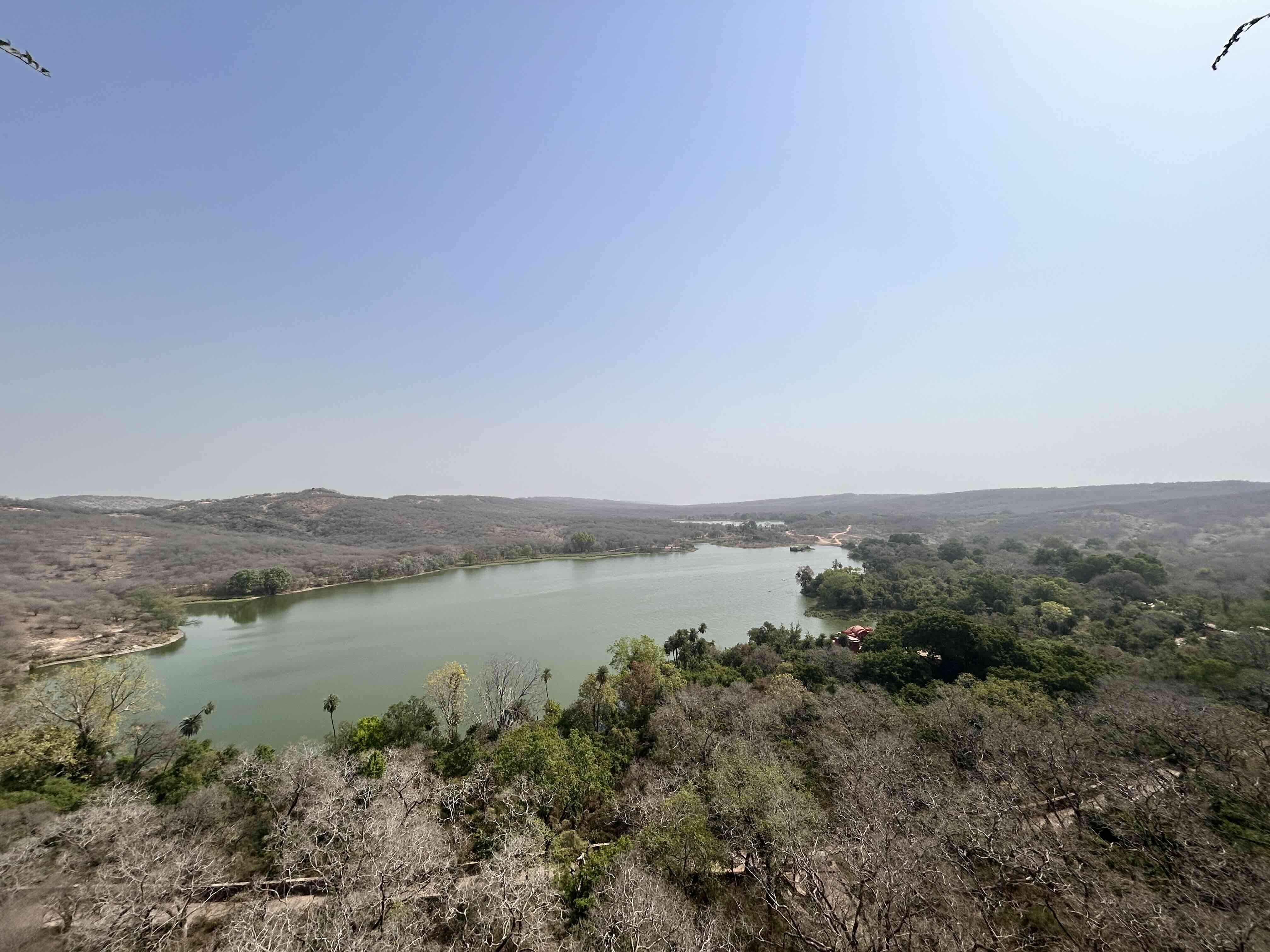
Taking a less-trodden path, we reached Badal Mahal. Before I could take in the view, my guide led me through a narrow passage that opened onto the rooftop. The reward was immediate, a sweeping panorama of Padam Talao and Zone 3 of the park below. Back inside, I paused in the cool interiors, imagining queens seated on swings that once hung from the hooks still visible on the ceilings, looking out over the same tranquil waters.
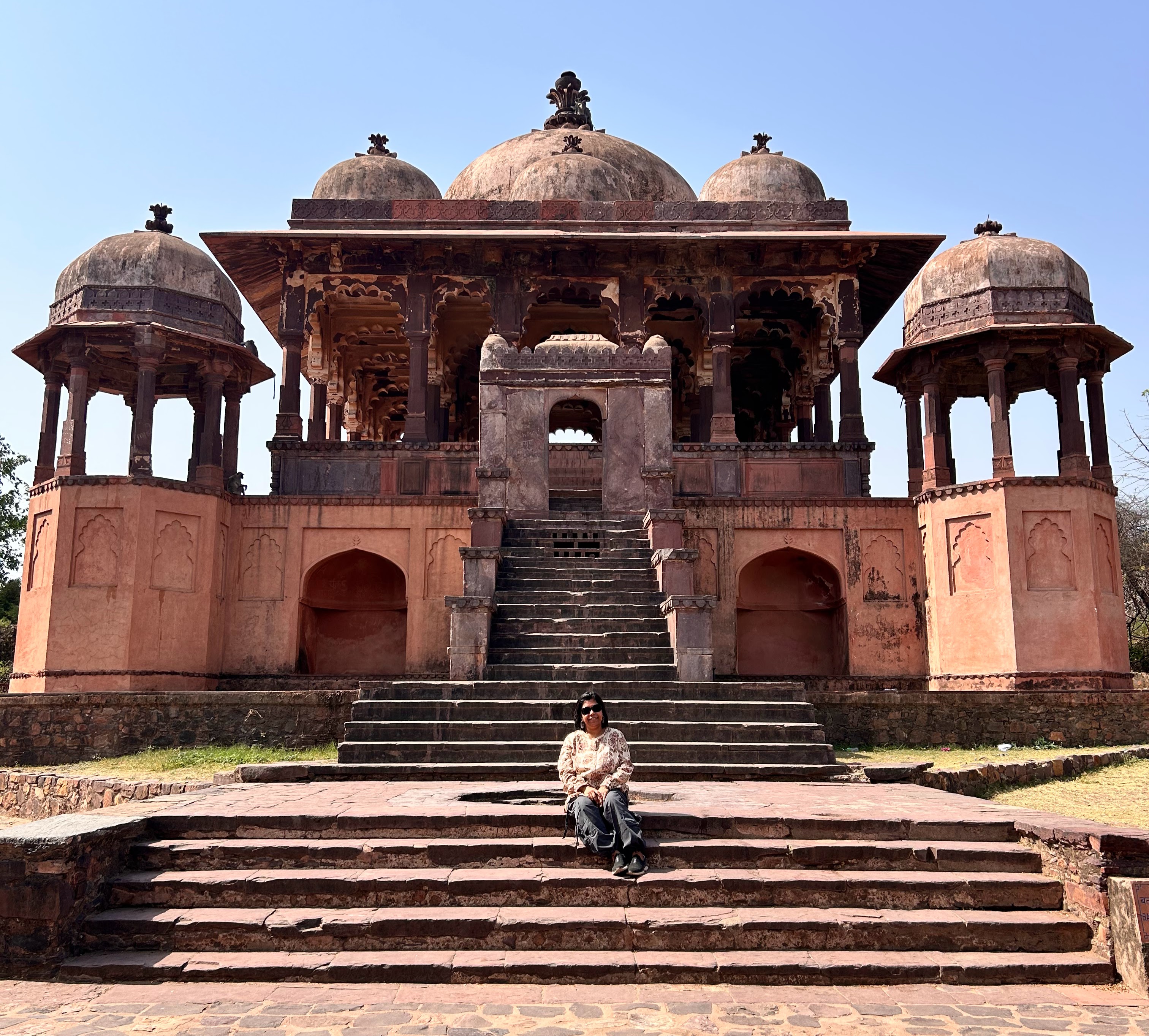
We moved next to the 32-pillared cenotaph, built by Hammir Dev Chauhan in honour of his father, Rao Jaitra Singh’s 32-year reign. Beneath it lies a Shiva temple. The steps are aligned so that the first rays of the sun fall directly on the shivling, a quiet interplay of architecture and devotion. Langurs had claimed the space as their own, but seemed entirely indifferent to our presence.
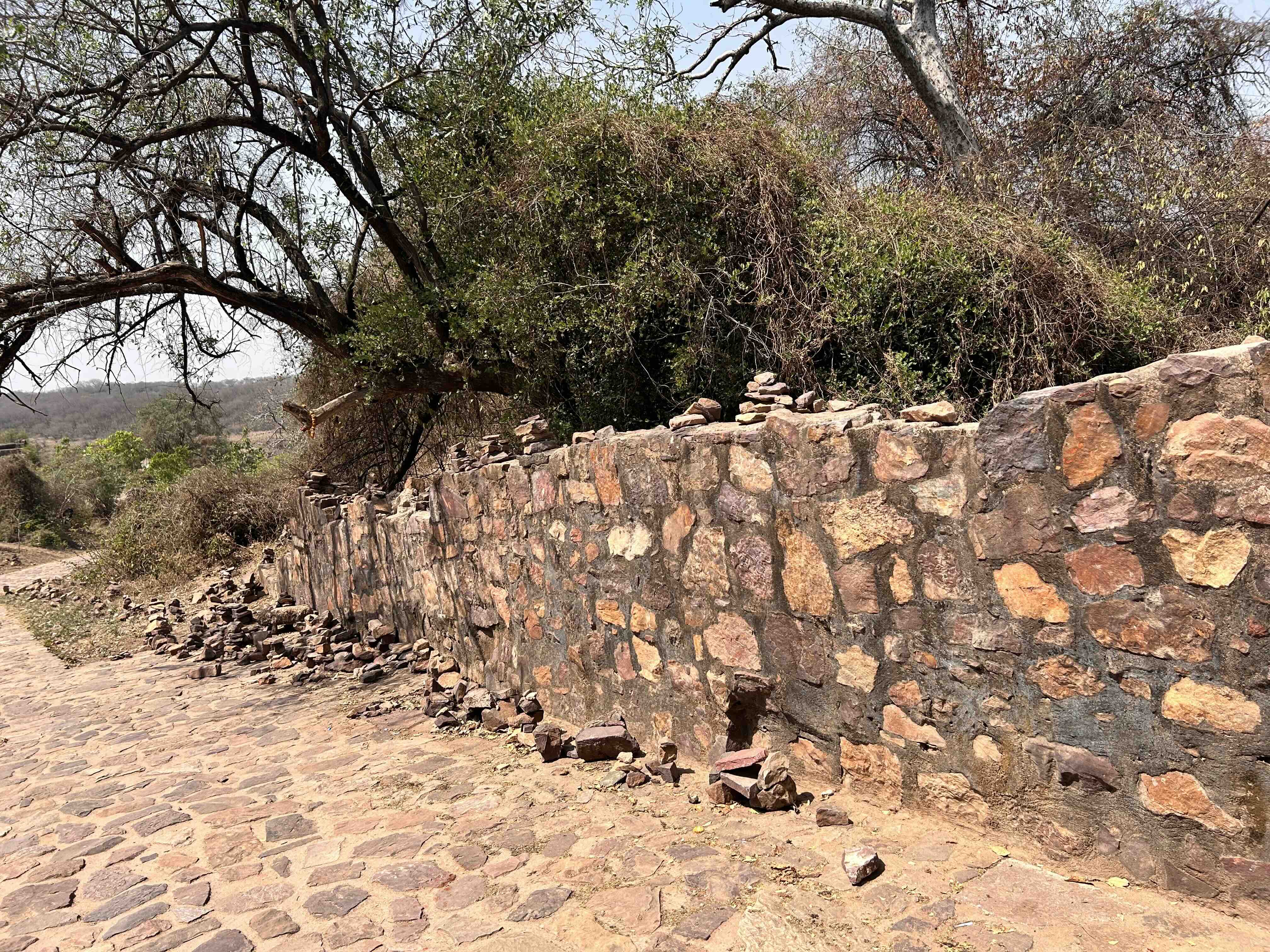
At the Trinetra Ganesh Temple, devotion took centre stage. Dedicated to Lord Ganesh, along with his consorts Riddhi and Siddhi and sons Shubh and Labh, it drew a steady stream of visitors. Further ahead, near the Laxmi Narayan and Jain temples, I noticed stacks of small stones. My guide explained that devotees build them as symbolic homes, praying for a house of their own. It reminded me of Mount Mary Church, where wishes take physical form in offerings.

After nearly two hours, I returned, saving some energy for my final safari.

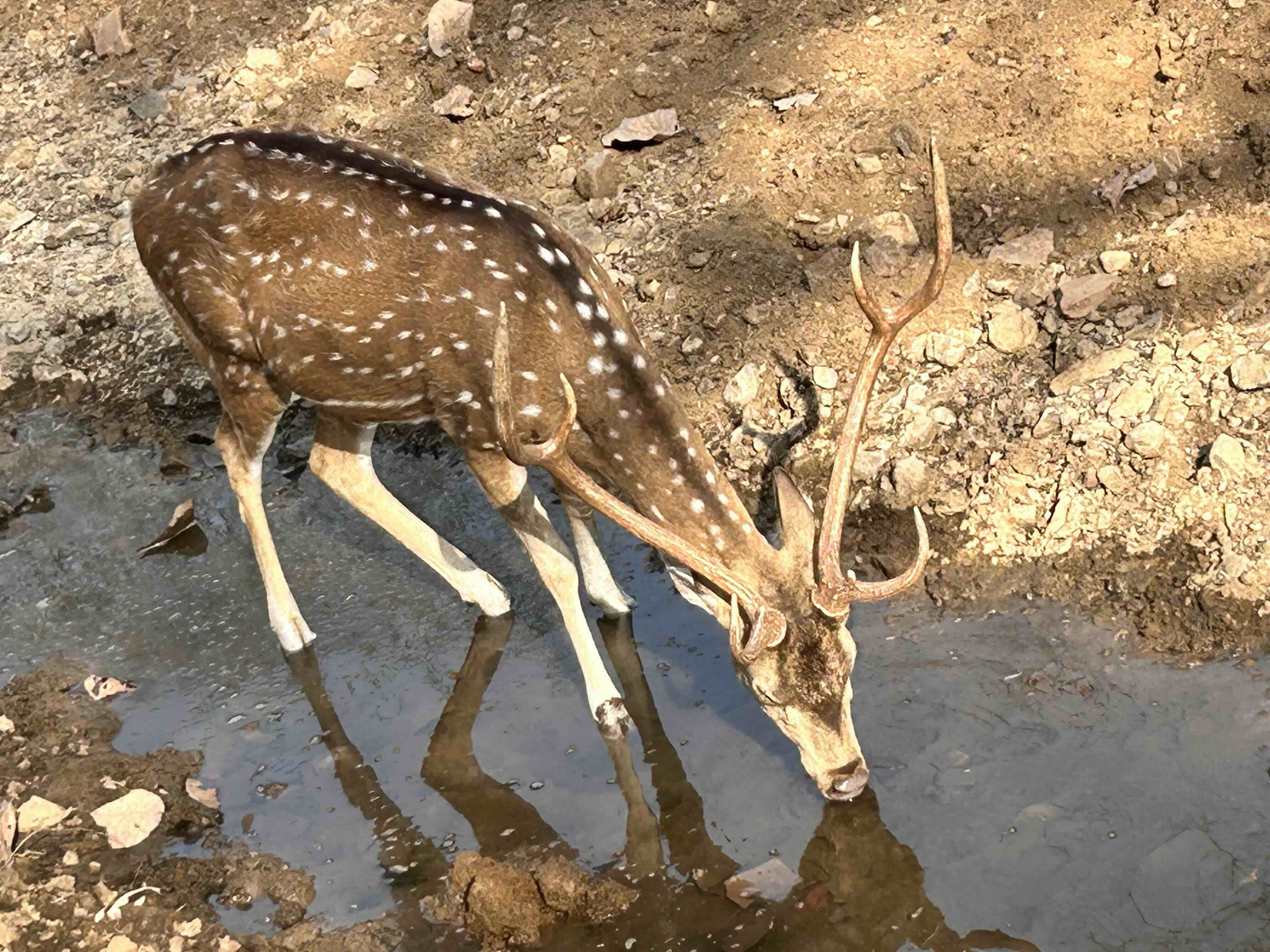
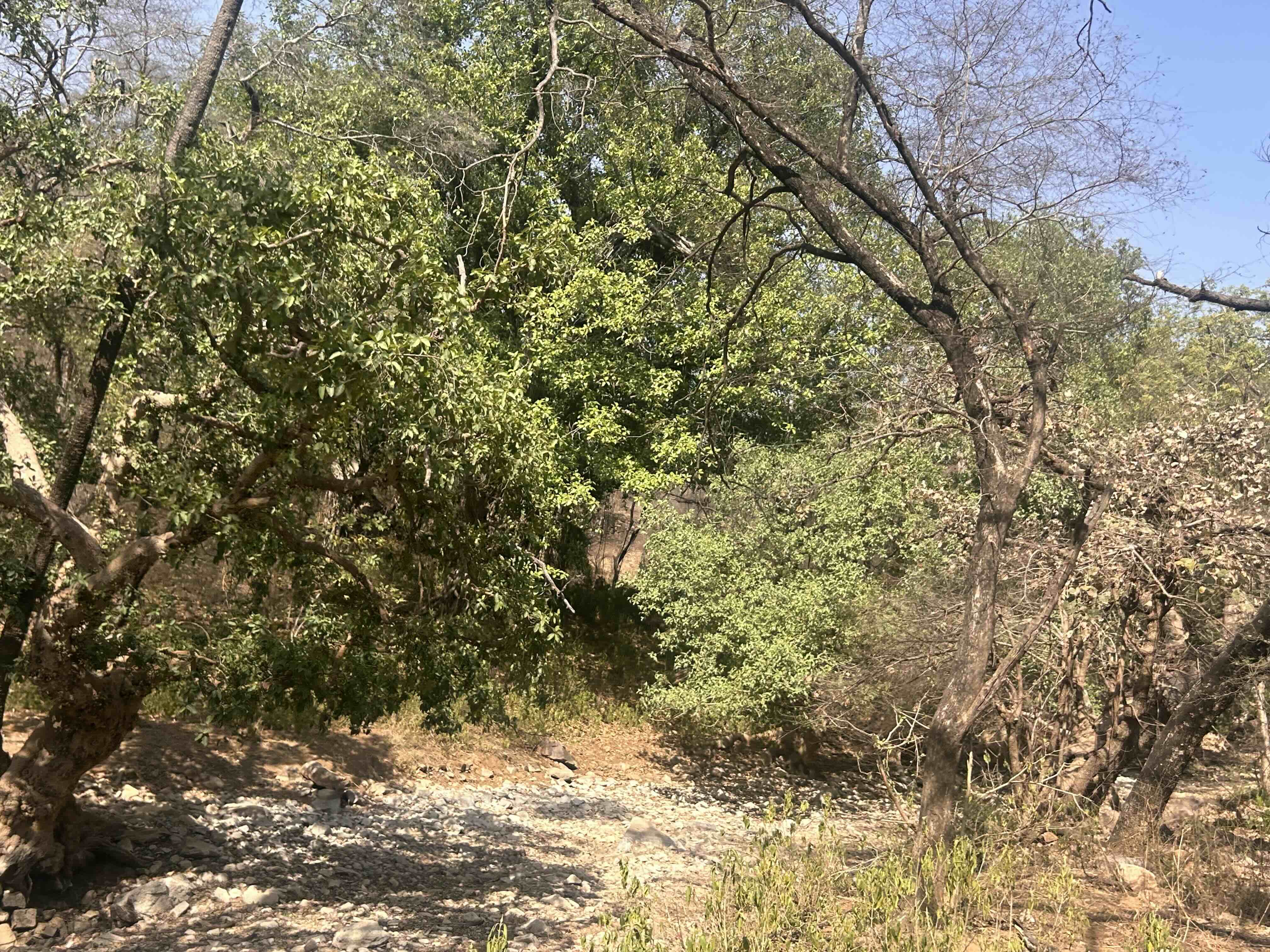
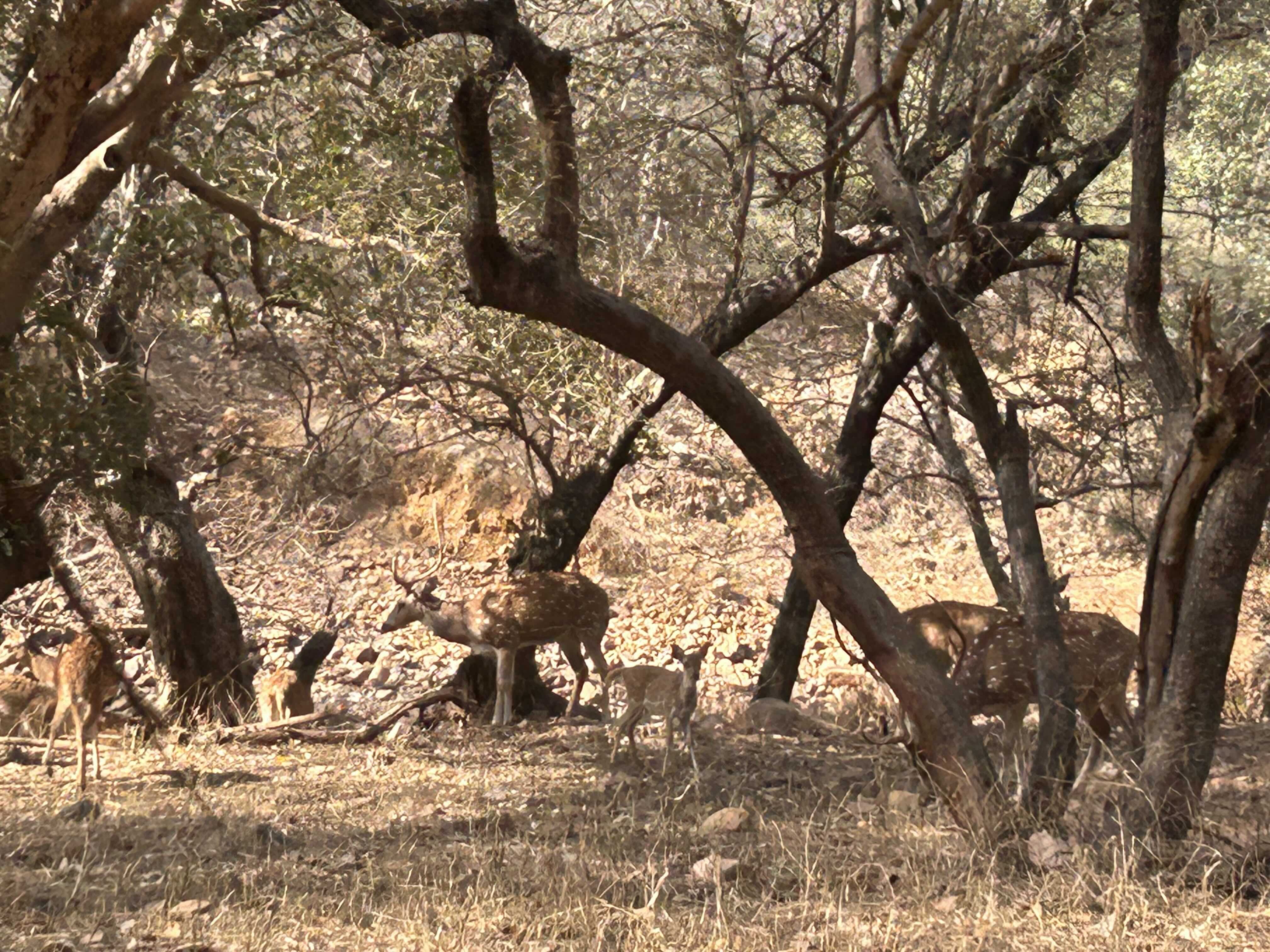
The afternoon was unforgiving, 42 degrees and rising. As we entered Zone 4, the guide mentioned it was known for good sightings. A Rufous Treepie greeted us at the Singh Dwar checkpost, as if curious about yet another hopeful entrant. Most animals had retreated into the shade. We saw the familiar spotted deer, sambar, and at one point, two stags locked in combat.
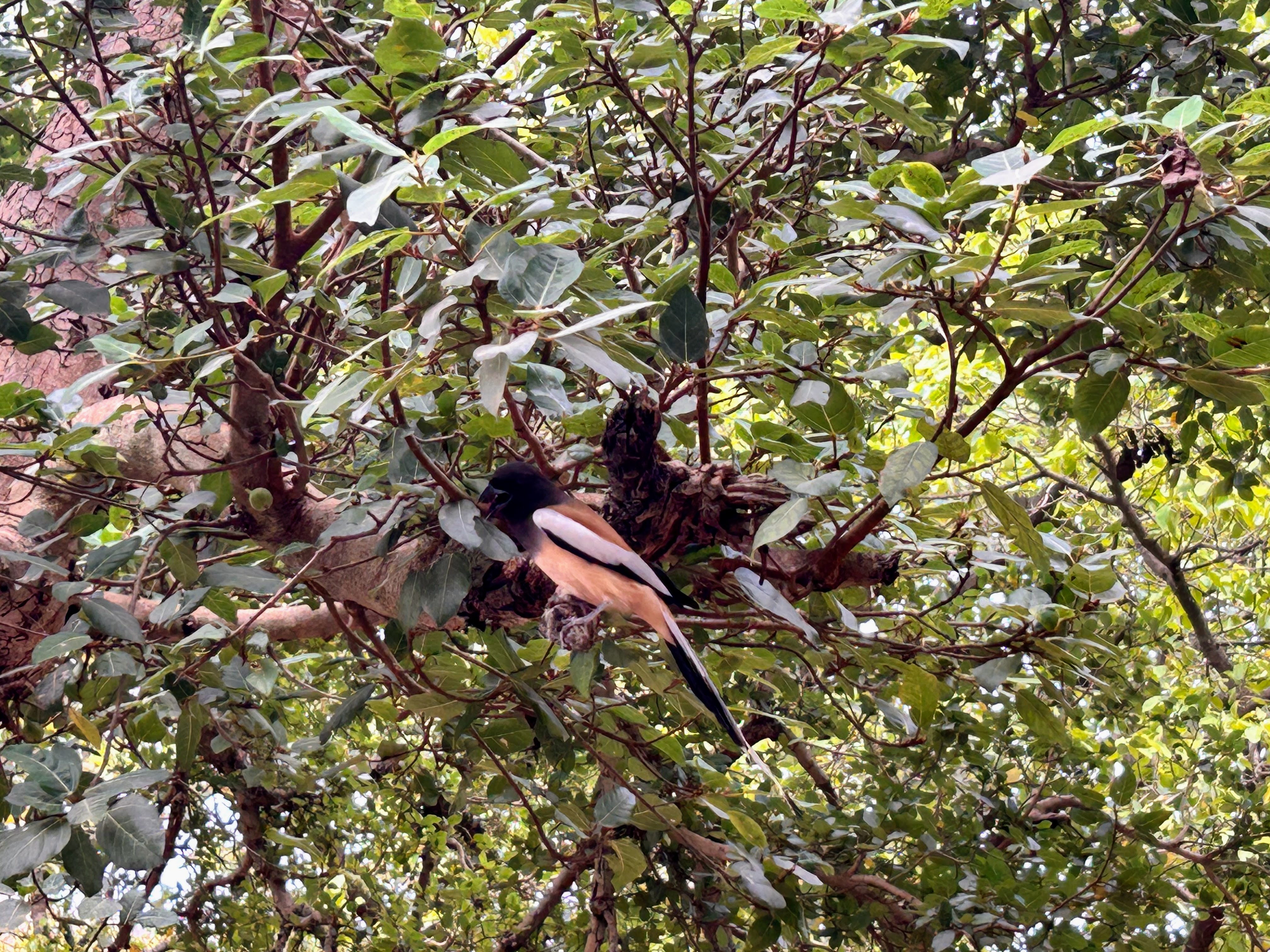
But the focus, inevitably, was the tiger.

A tigress had reportedly made a kill at Malik Talao earlier that morning, and vehicles were converging there. By the time we arrived, vultures had already taken over the carcass. The tigress was nowhere in sight.

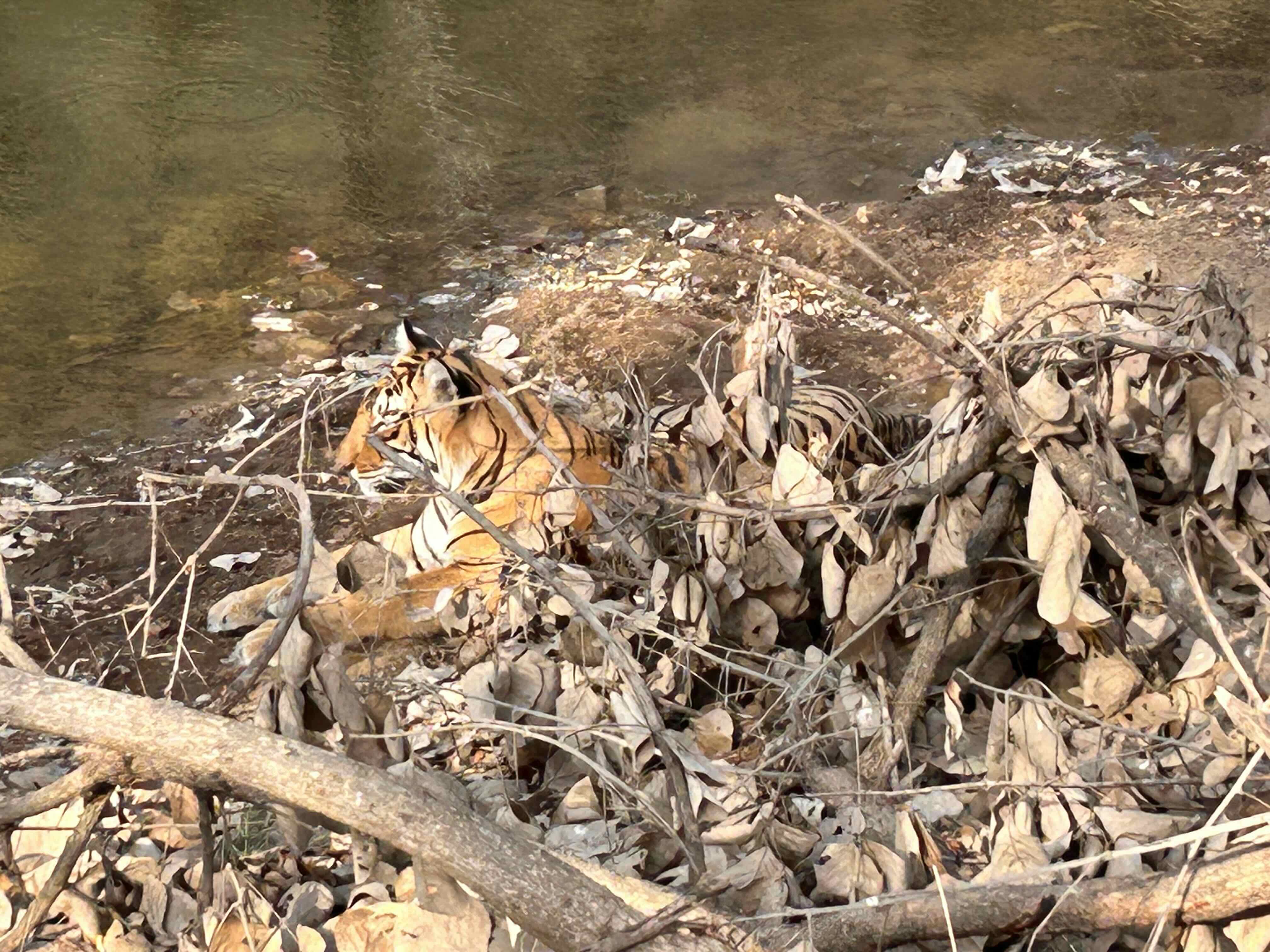
We turned back. Soon after, word came of a sighting of Durga, the tigress, near the Berda area. We reached just in time to see her resting in the shade by a body of water, composed and unhurried. After a while, we moved again, this time towards Jamun Deh, where cubs of tigress Shakti had been spotted.
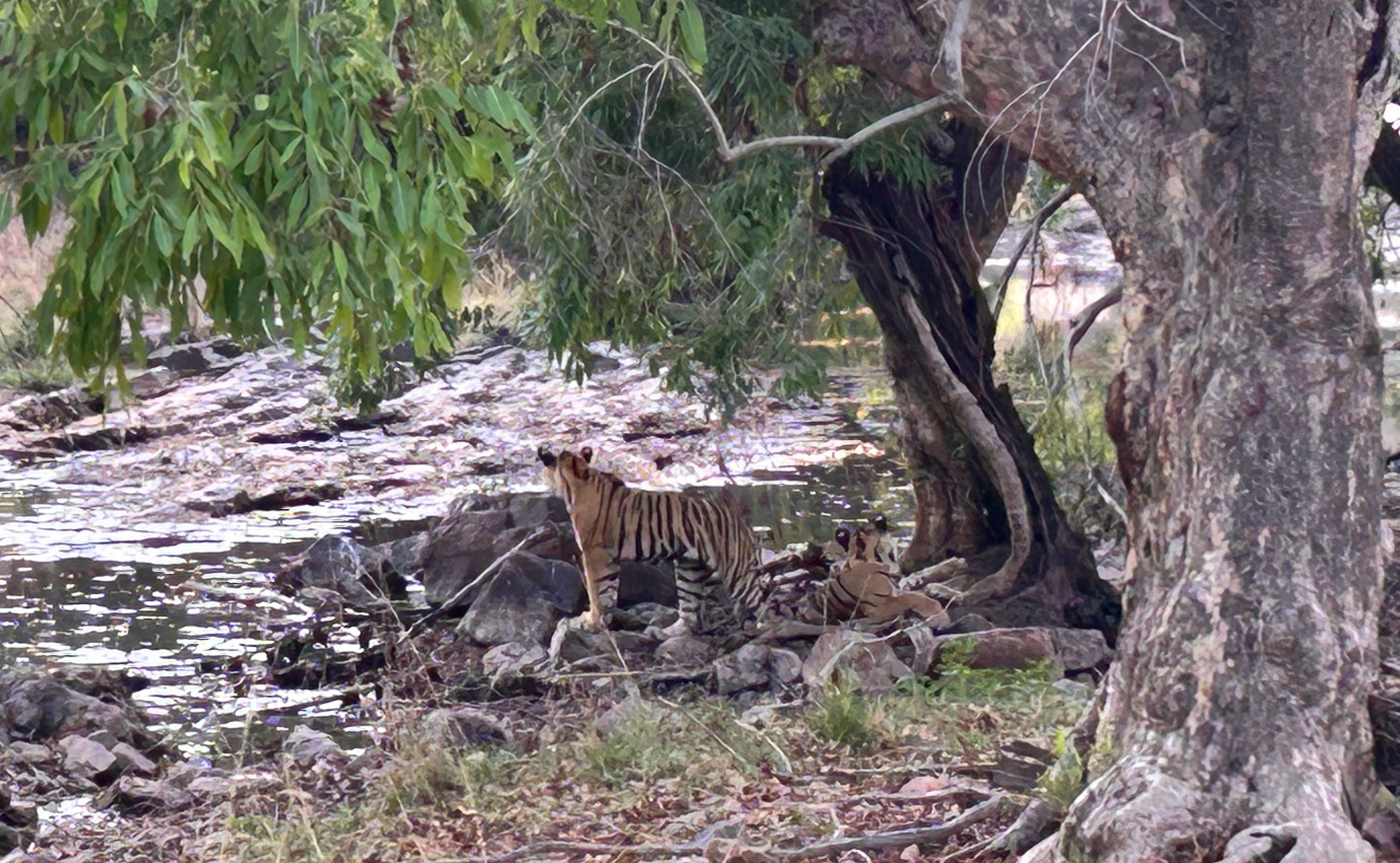
Two cubs lay quietly near the water. Cameras clicked in unison. One cub rose, took a few tentative steps, and settled under another tree. Almost immediately, a sambar’s alarm call rang out, sharp, insistent, continuing until the cub disappeared into stillness once more.
As the safari neared its end, we began heading back. Not far from the exit, a small crowd of vehicles had gathered. A sloth bear ambled across the track, indifferent to the attention, offering one final, unexpected sighting.
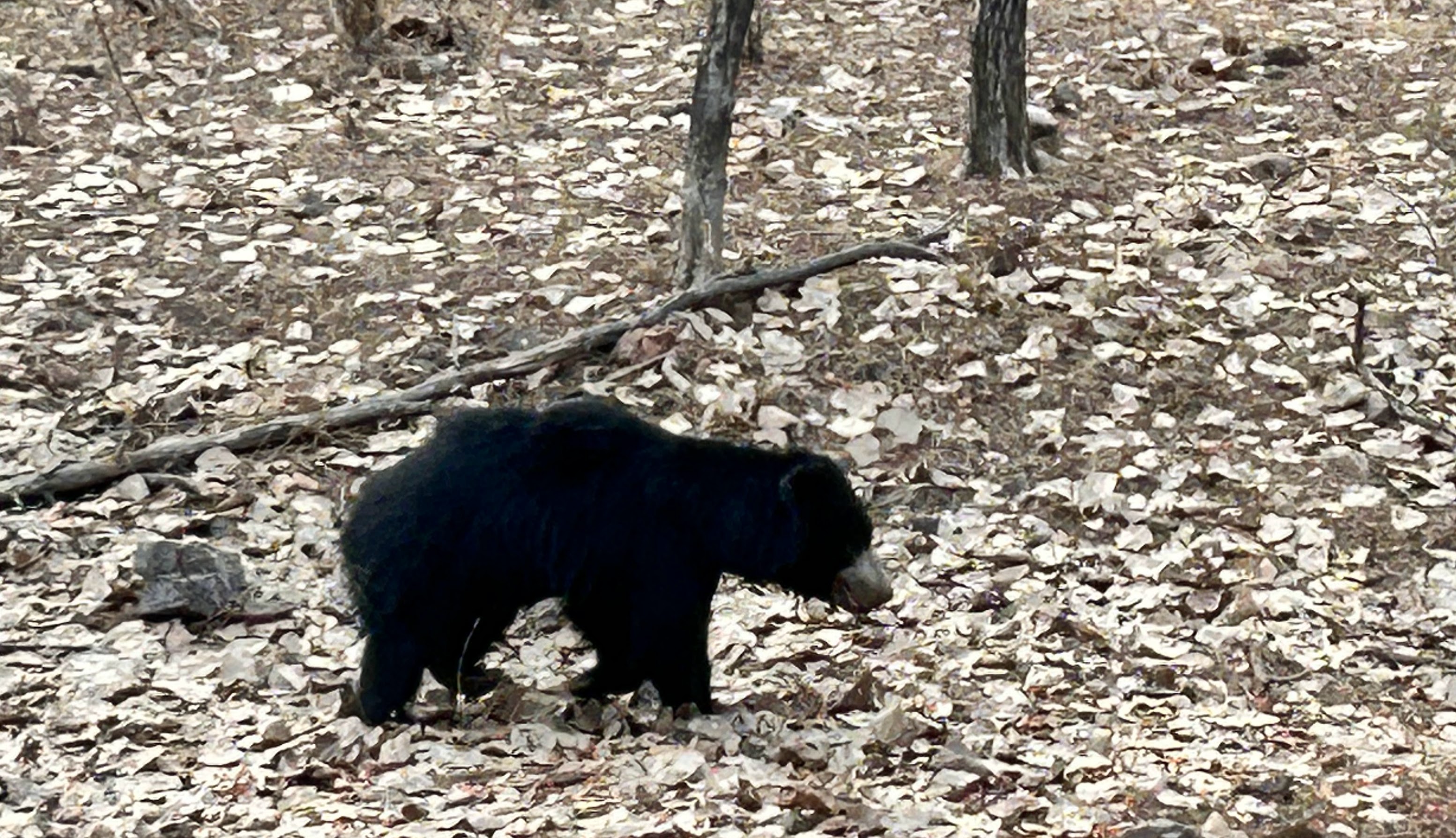
We exited the park, only to hear that a tiger had been spotted on the road just ahead. Curiosity led us there, where a crowd had already formed. In the midst of it all was Malang, the cub of tigress Sultana. Forest officials worked to clear a path as the young tiger walked calmly along the road before slipping back into the forest. My three days at Ranthambore could not have ended on a better note.

As I left, I realized that Ranthambore had offered more than sightings. It had revealed itself in layers, the stillness of the forest, the stories etched in stone, the quiet faith of those who visit, and the unpredictable rhythm of the wild. Not every moment was dramatic, not every search rewarded, but perhaps that is the essence of the jungle. It gives you just enough to return with wonder, and leaves just enough unseen to make you come back again.
Beyond the Tiger: Listening to the Wild

Safari is an experience that unfolds differently for each person. For me, it is best savoured in silence, absorbing the sights and sounds of the jungle. My first safari in India, at Kaziranga National Park, had set that tone. I remember spending three hours with a pair of binoculars, watching wildlife and listening intently, barely taking any photographs. As I booked my safari at Ranthambore National Park, I hoped to recreate that experience—immersive, unhurried, and deeply personal.

The tiger sighting on the previous day had, of course, raised expectations.

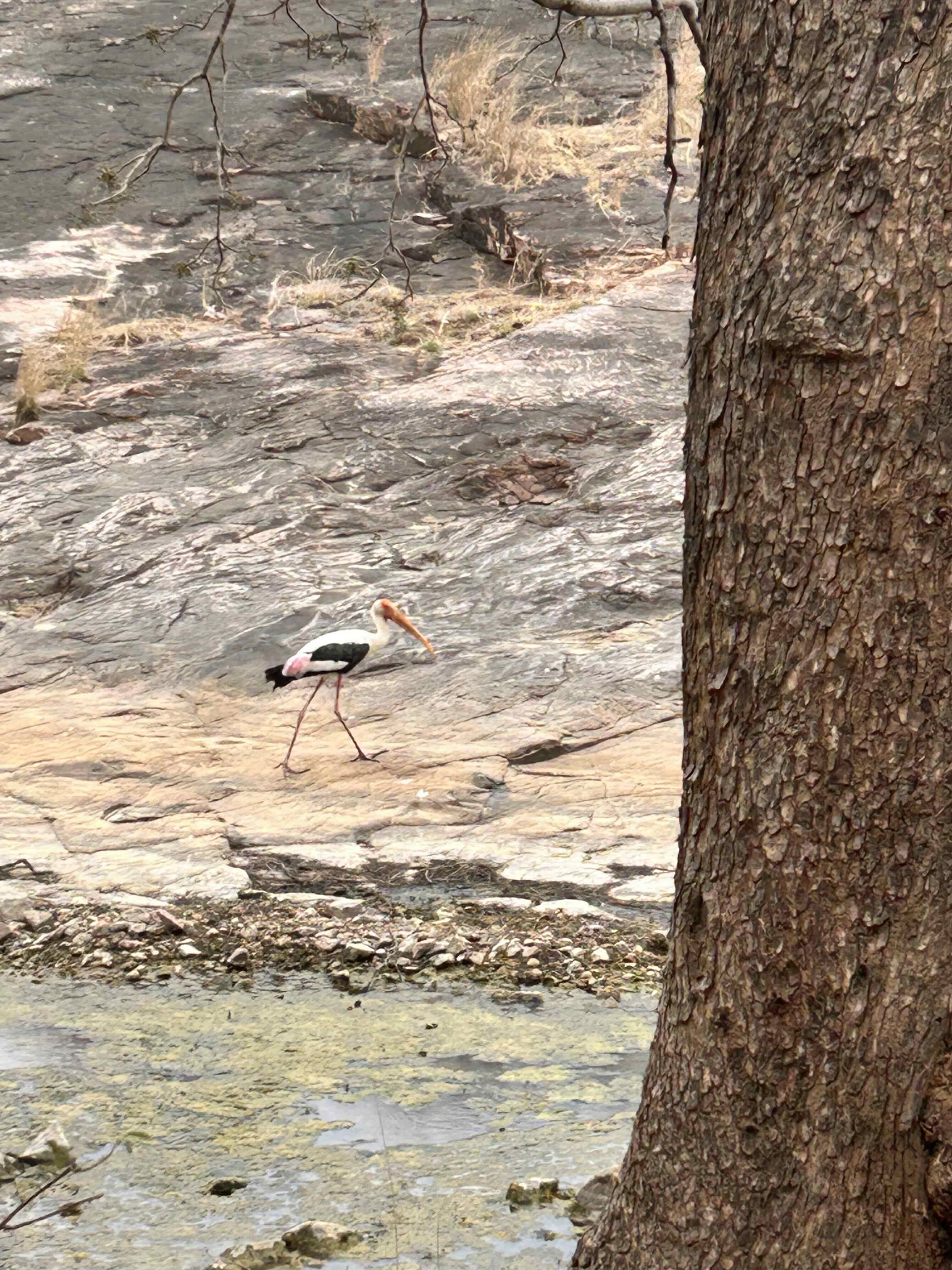
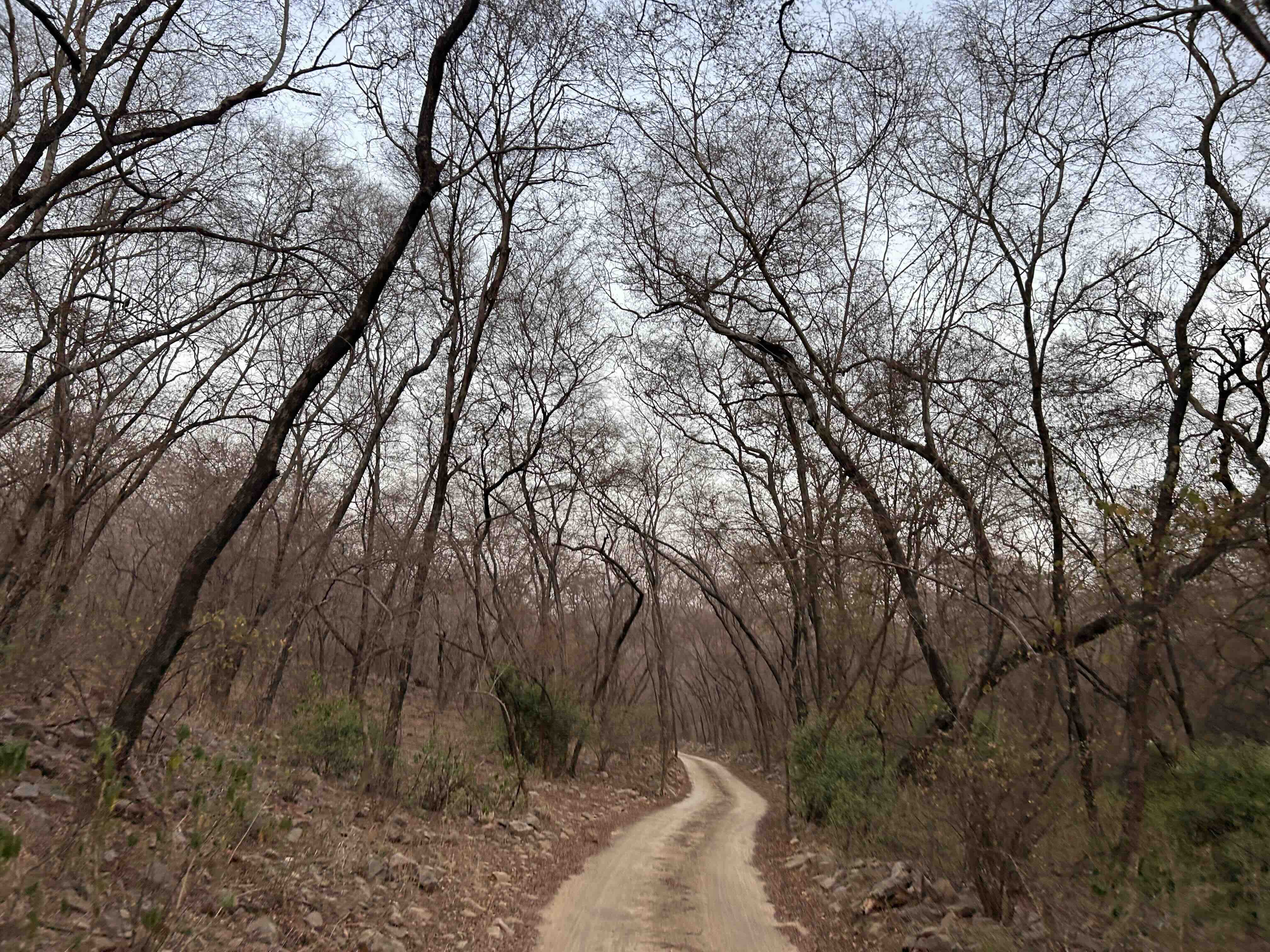
At 6:00 am, just as the first light softened the horizon, I entered Zone 1. The air was still cool, carrying a sense of anticipation. At the entrance stood a magnificent banyan tree—ancient, sprawling, almost ceremonial in its presence. As we moved ahead, a flock of painted storks broke the stillness, their movements graceful against the morning light.

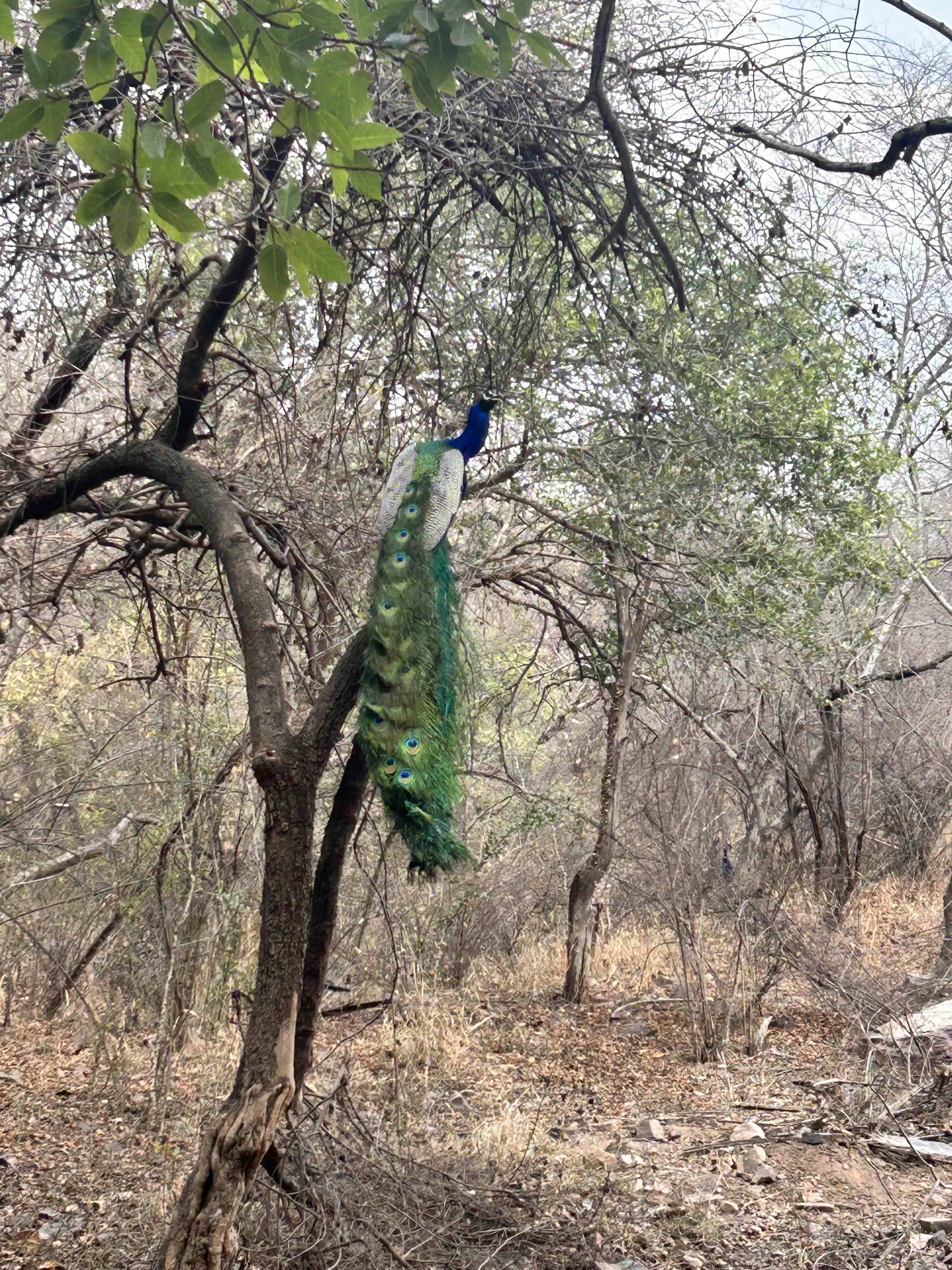
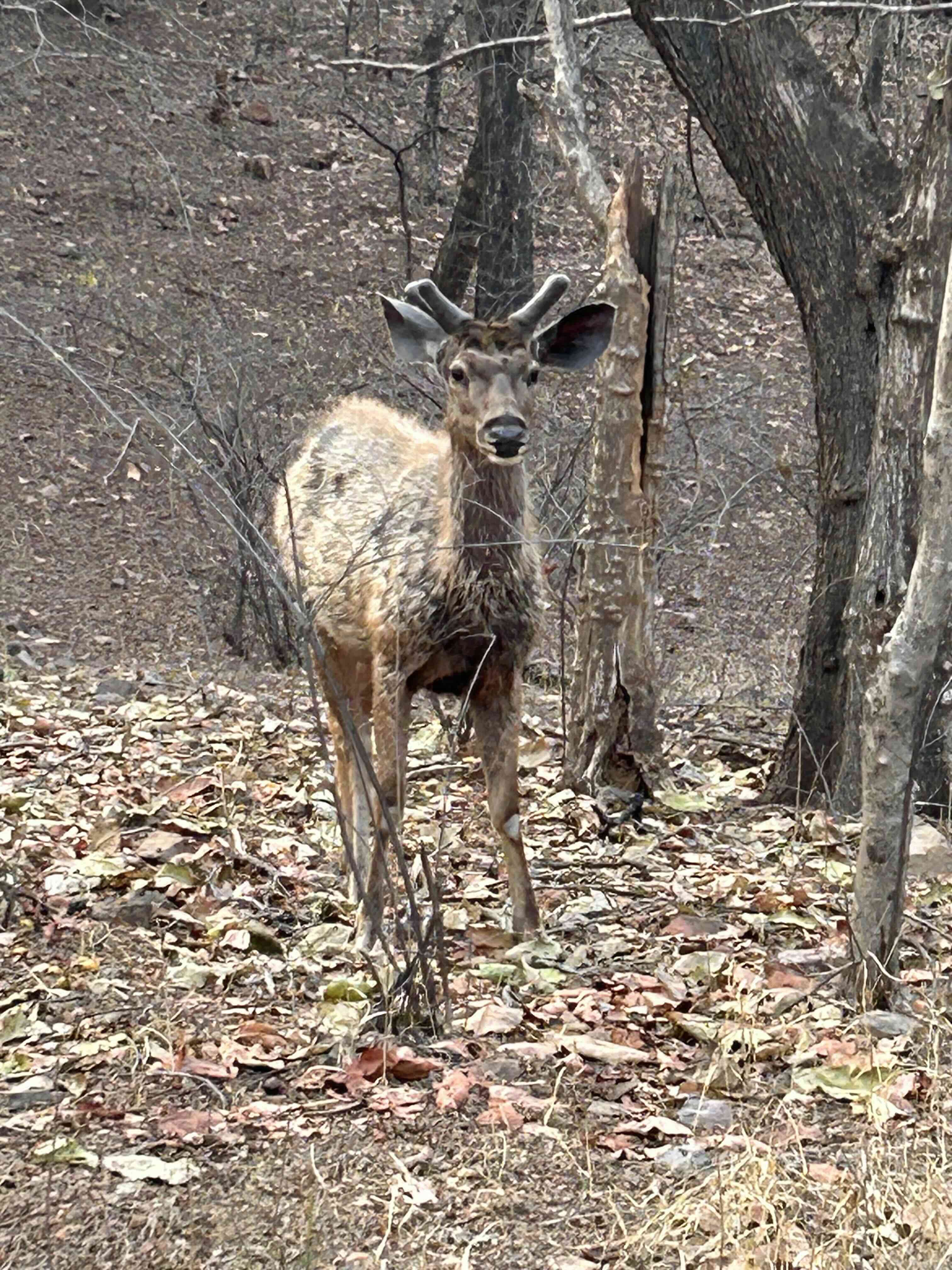
I told my guide that while I would like to see a tiger, I was equally keen to experience the jungle in its entirety. And so we moved, past spotted deer grazing cautiously, sambar standing alert, langurs observing from treetops, and peacocks adding fleeting bursts of colour. Yet, inevitably, the search for the tiger shaped our path. We paused at waterholes, scanned trails, and at one point even came across fresh pugmarks. The signs were there, but the tiger chose to remain unseen.

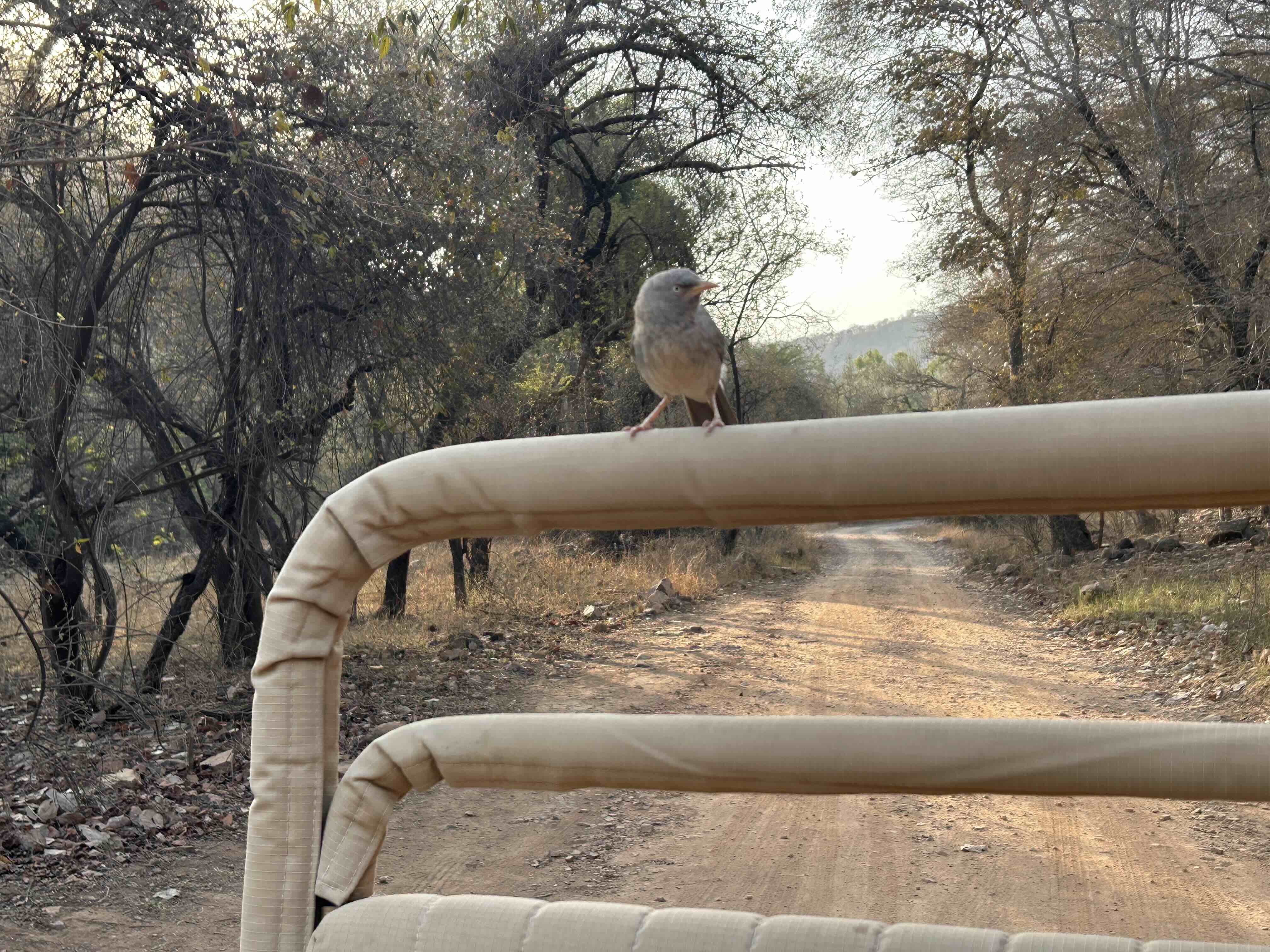
The jungle was calm. There were no alarm calls, no urgency in the air. As we covered the length and breadth of the zone, I found myself drawn to the smaller, quieter details. Common house sparrows, jungle babblers, surprisingly friendly, even perching briefly on the gypsy, kingfishers flashing their brilliance, yellow-footed green pigeons blending into foliage, black-winged stilts poised at water edges, drongos, bulbuls, mynas, and a fleeting glimpse of a golden oriole that refused to stay still long enough for a photograph. A cormorant stood with wings outstretched, drying itself in the morning sun.

As the safari drew to a close, we began our return. Just at the exit, word spread that a tiger had finally been spotted, at one of the very waterholes where we had waited. The jungle, it seemed, had made its point. It teaches patience, on its own terms.

Despite the rising heat, 42 degrees by afternoon, I decided to head out again. This time to Zone 2.
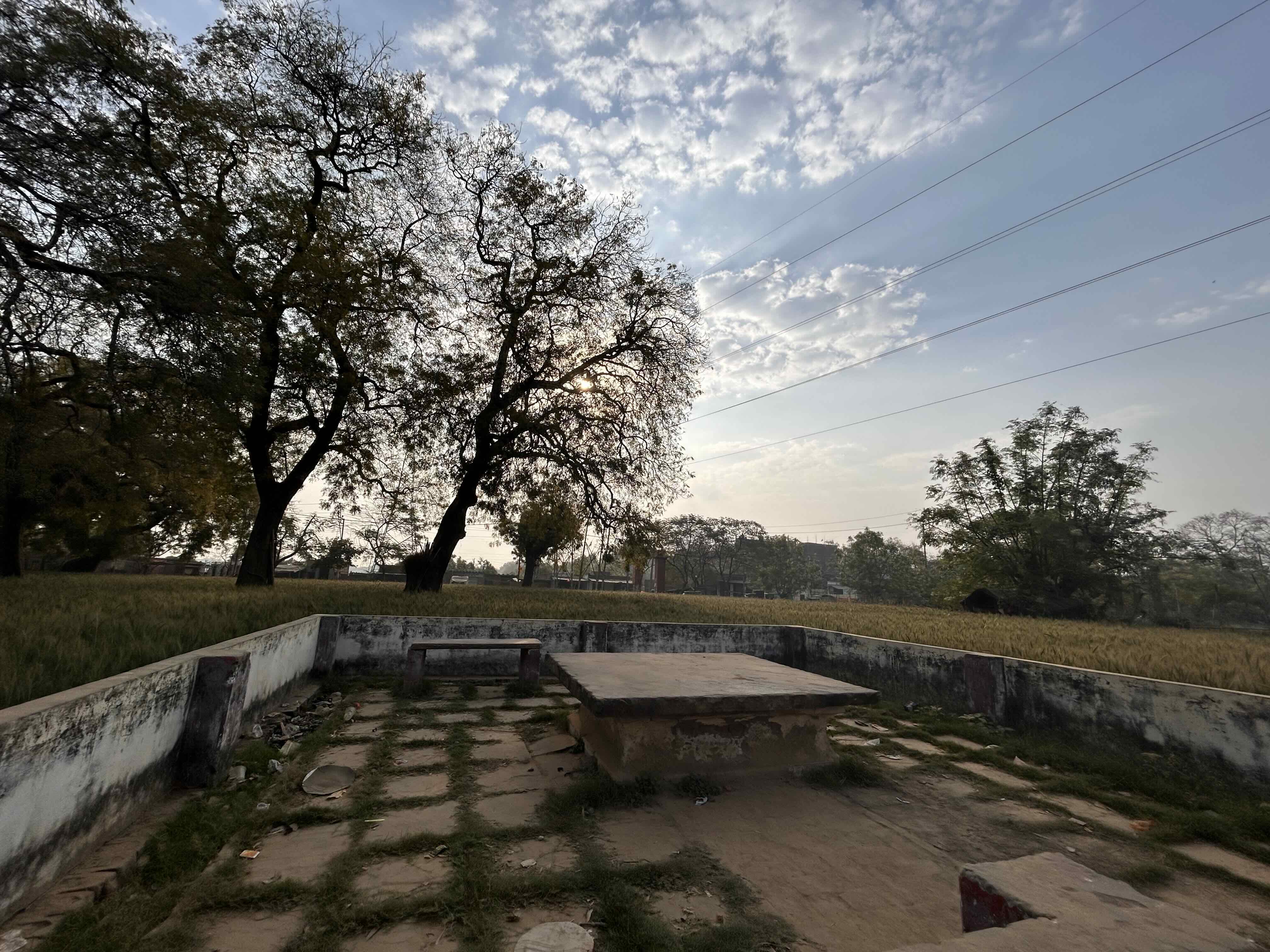
Ranthambore Fort looms quietly over the park, a reminder that these forests were once the hunting grounds of the Maharajas of Jaipur. Scattered across the landscape are remnants of that past, old stepwells, ruins, and silent structures reclaimed by nature.

As we moved through the dry terrain, we noticed a sambar suddenly turn alert. Moments later, the unmistakable alarm call echoed through the trees. We stopped under the shade of a mango tree, waiting, listening, hopeful. But the call faded, and the forest returned to its stillness.

Once again, we traversed the zone with other vehicles, all asking the same question: “Have you seen the tiger?” We spotted a crocodile basking lazily, herds of deer, nilgai moving cautiously, and an array of birds, but the tiger remained elusive.

And yet, there was no disappointment.

There was, instead, a quiet sense of fulfilment. The rhythm of the jungle, the calls, the silences, the interplay of species, has a calming, almost meditative quality. Perhaps the absence of the tiger sharpened my awareness of everything else. The jungle revealed itself not through spectacle, but through subtlety.

Day two in Ranthambore, then, was not about the star attraction.
It was about the forest itself, unfiltered, unhurried, and complete in its own quiet way.

In the Heat of Chance: A First Day in Ranthambore.

There was no particular reason for this holiday, except that I seem to live from one break to the next. Ranthambore National Park had been on my radar ever since I moved to Delhi. In India, wildlife sightings are as much about luck as they are about patience, more so when it comes to the big cats. A few years ago, I visited Sundarbans; while I saw plenty of wildlife, the elusive Royal Bengal tiger remained just that, elusive.

I had initially planned to go to Ranthambore in March. A colleague, however, suggested summer, when the heat drives animals to water bodies, increasing the chances of sightings. It seemed like a fair trade-off: discomfort for possibility.

Ranthambore is a little over four hours from Delhi, and I chose to drive. Despite my best intentions to beat the morning rush, I was delayed. Perhaps when you’re driving yourself, a part of you resists urgency. After inching through traffic towards Gurugram, I finally found my rhythm on the Delhi–Mumbai Expressway. From there, the journey eased into a quiet, steady glide.

Bougainvillea bloomed along the highway in a riot of colour, pinks, purples, whites, making me wonder why the ones on my terrace never seem quite as exuberant. Beyond them, the landscape shifted. Denuded hills stretched along the horizon, stark and exposed, a quiet reminder that when nature is diminished, human lives are never untouched.

Though I had mapped out potential pit stops, I barely paused—just once, to stretch my legs. By lunchtime, I had reached Ranthambore.

It was only after booking my stay that I realised safaris need to be reserved separately. Fortunately, the Forest Department’s website made the process seamless, and I secured a seat on a canter for the afternoon safari in Zone 5.

At 3 pm, under a relentless sun, my first encounter with Ranthambore began.

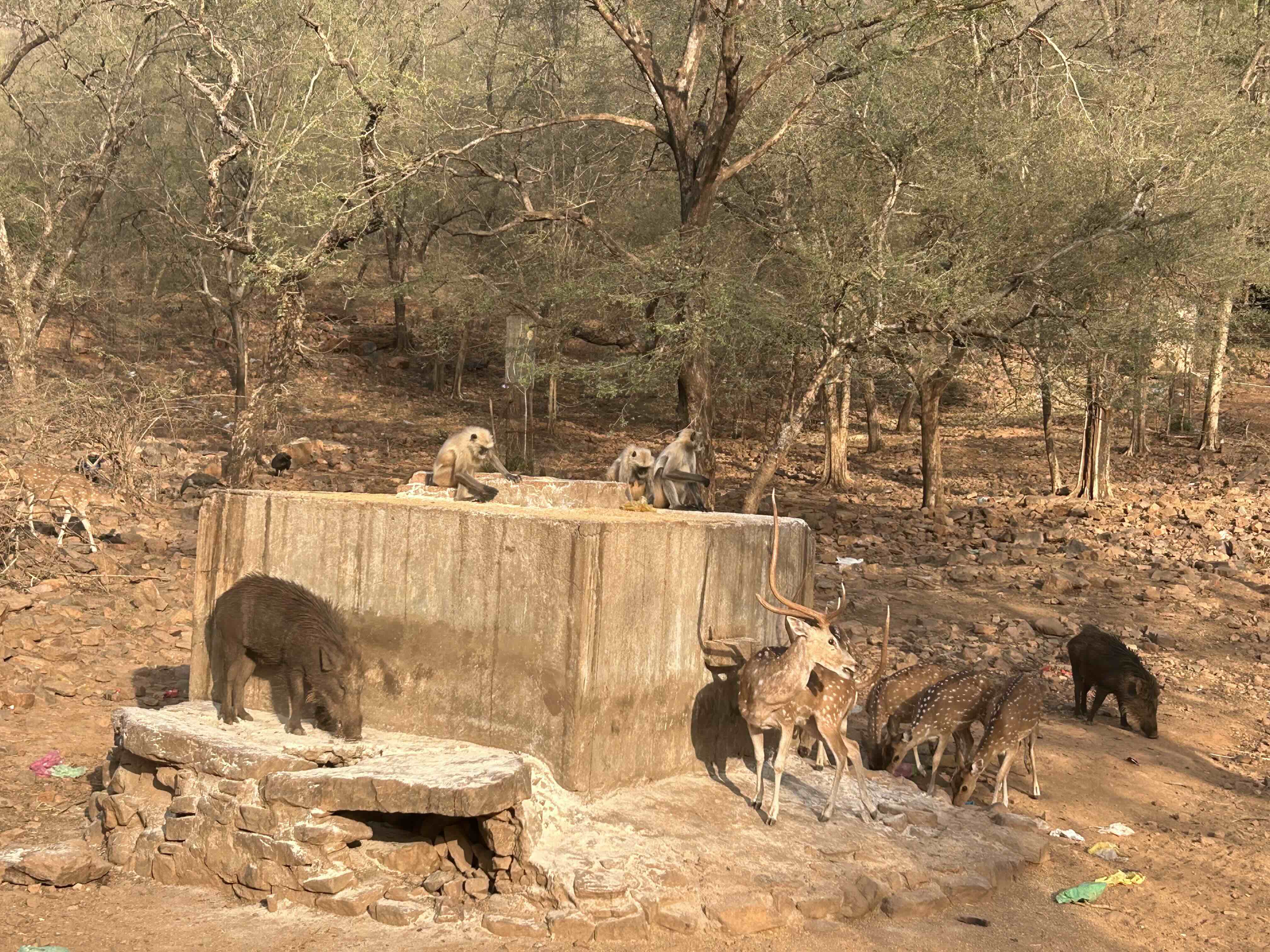
The jungle revealed itself gradually. A sambar here, a herd of spotted deer there. Langurs, ever-present, watched us with casual curiosity. Wild boars emerged briefly from the undergrowth. The driver, however, seemed in a hurry. When I asked him to pause, he assured me we would have time on the way back. Slightly disappointed at missing a few good frames, I leaned back and let the forest pass.

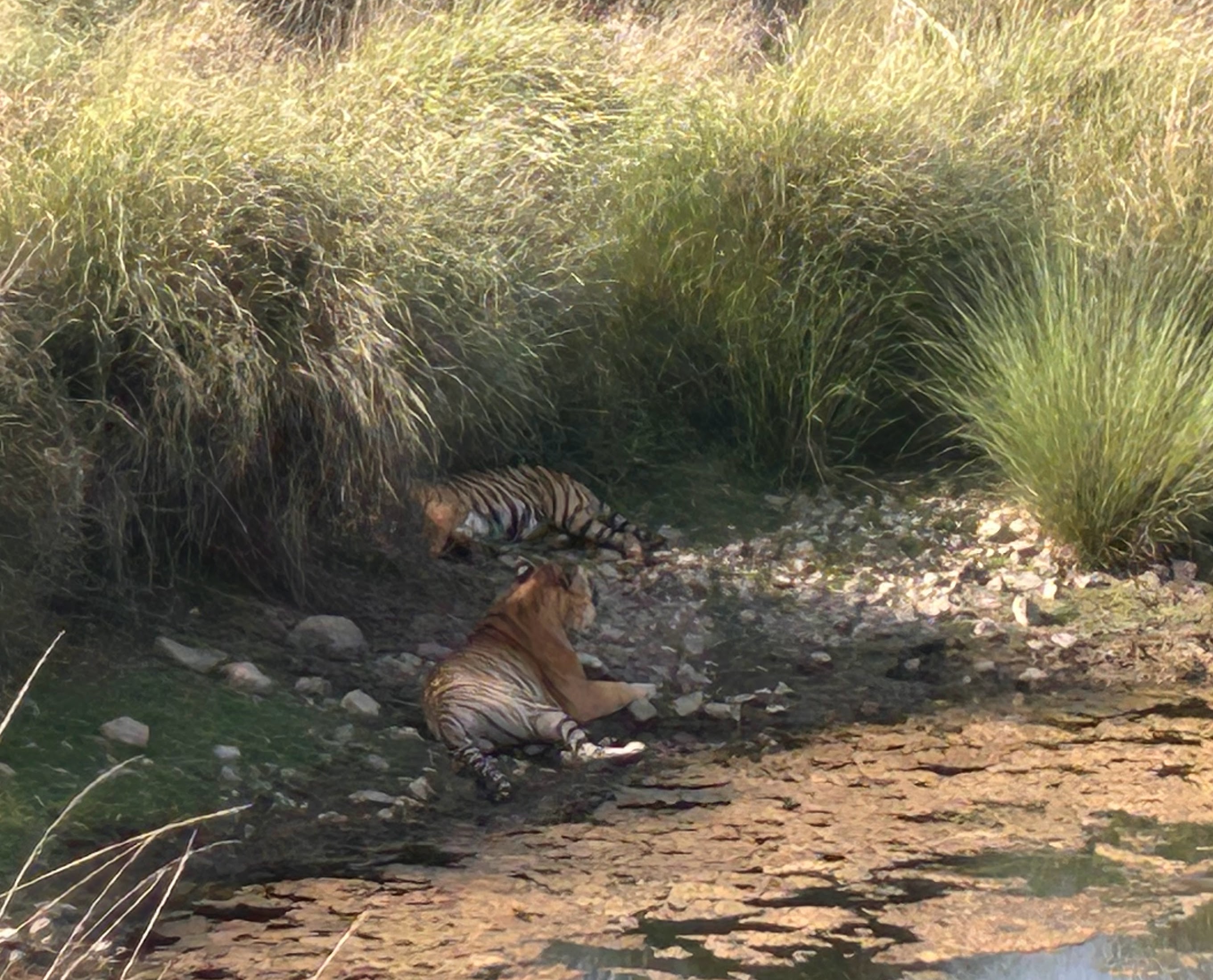
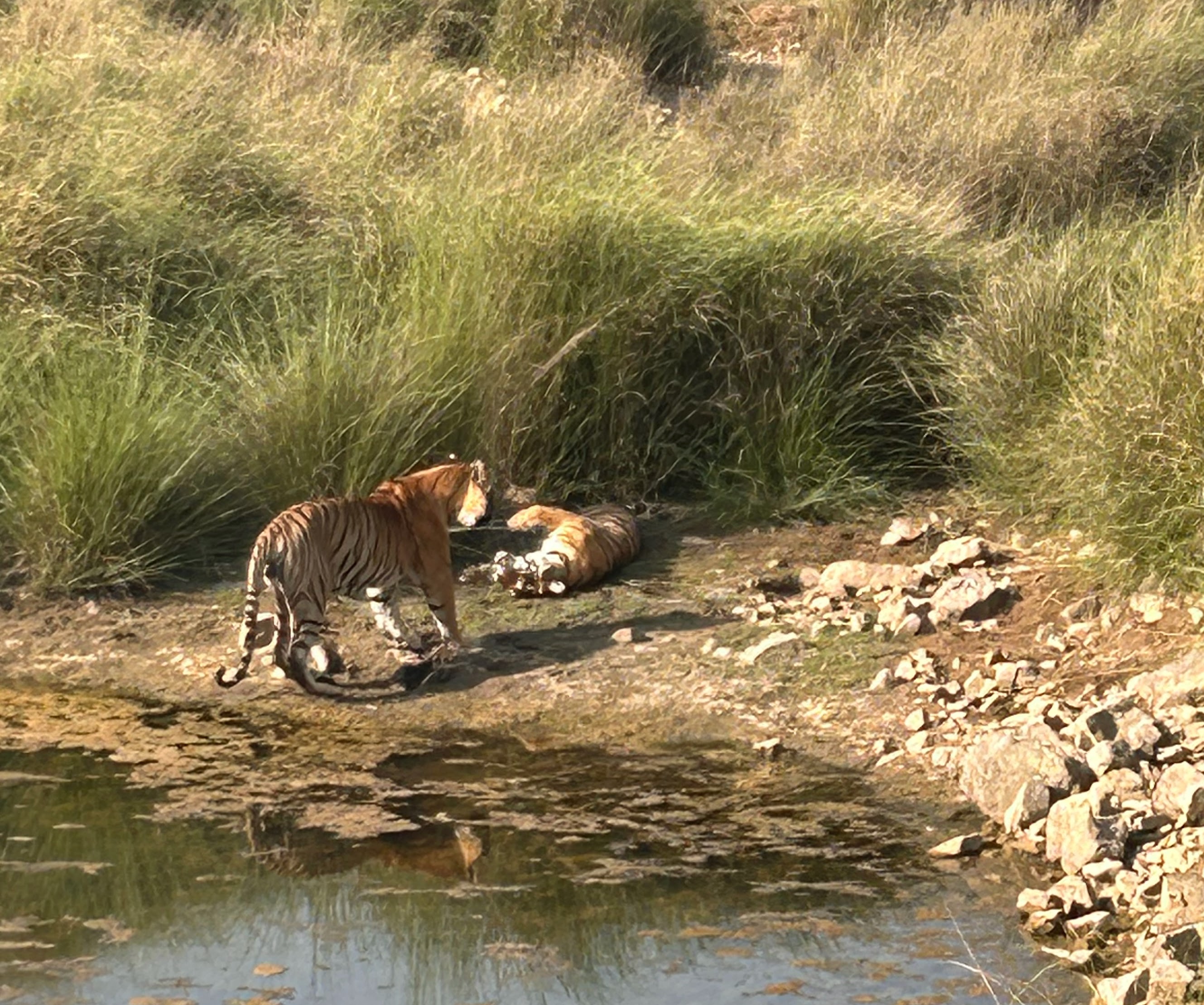
About an hour in, we spotted two gypsies ahead, their occupants gesturing urgently. Near a water body fringed with tall grass, we saw them, a pair of tigers, stretched out in the languid heat of the afternoon.

The urgency suddenly made sense.

A male, T2305, and a female, T125, had given us an extraordinary start. They played, mock-fought, and drifted in and out of stillness, commanding complete attention. Cameras clicked in a frenzy, but even that felt secondary to simply watching them, unbothered, magnificent, entirely in their element. It was only when more vehicles began to gather that we moved on.

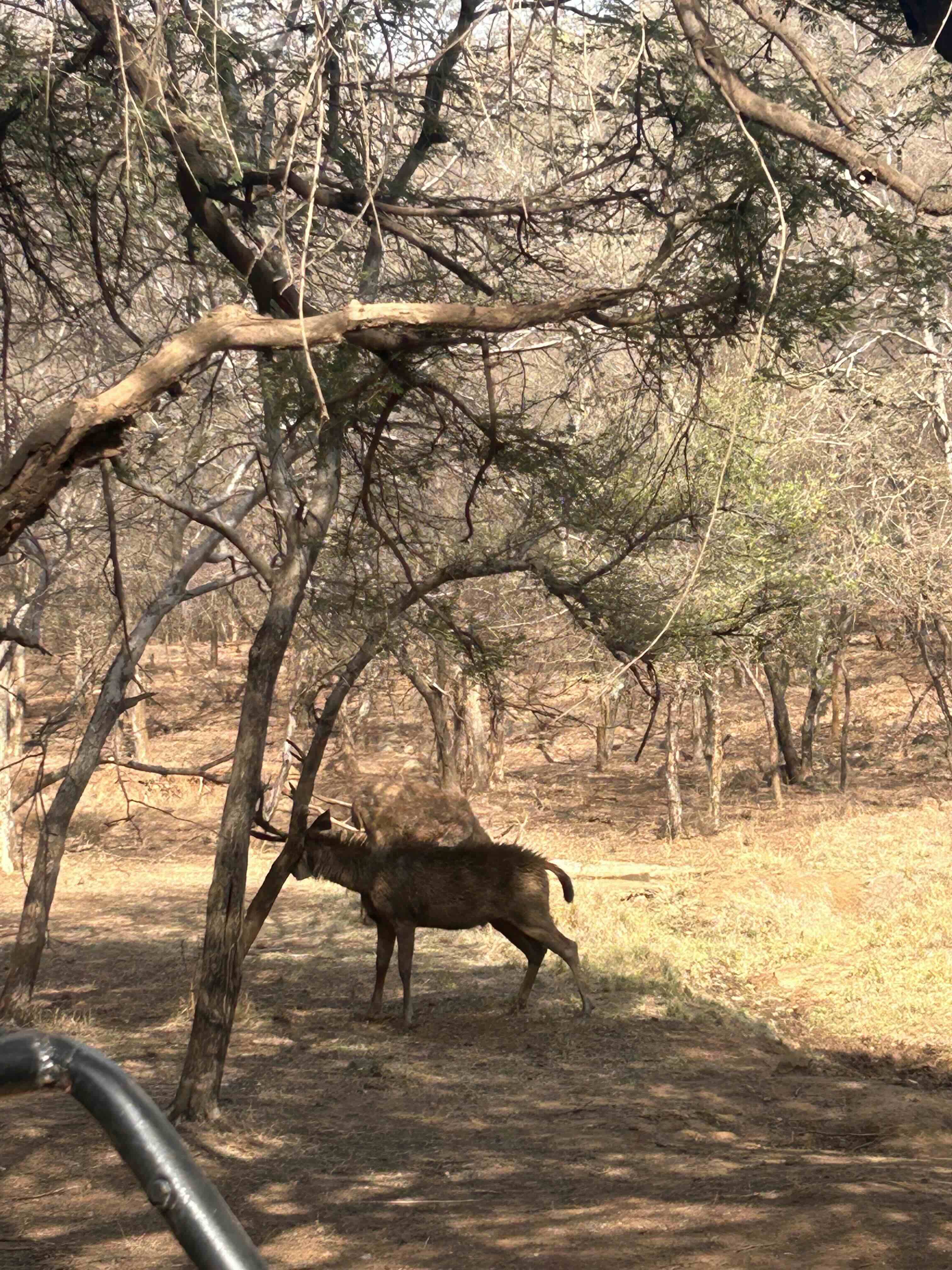
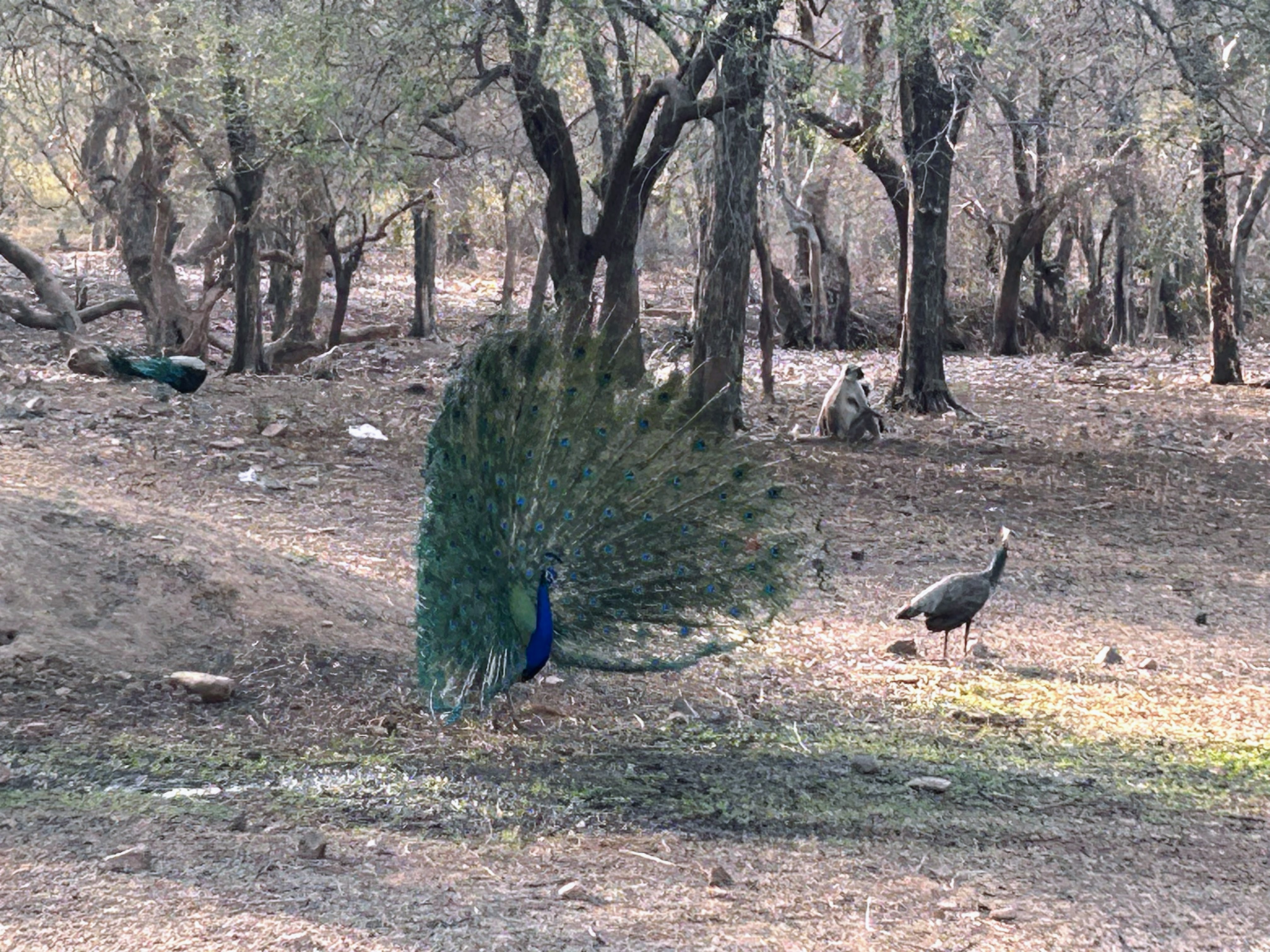
On the return, the driver kept his word. We paused often, taking in the quieter rhythms of the jungle. A male sambar rubbed his antlers against a tree. A herd of spotted deer grazed alongside a troop of langurs, an unspoken alliance of vigilance. Nearby, peacocks fanned out their iridescent plumage, performing earnest, hopeful dances for the peahens.

A jungle, I realised, is never about one animal. It is an intricate tapestry, each species playing its part, each moment layered with quiet significance.

As we approached the exit gate, the guide asked for tips. It reminded me of my visit to Maasai Mara, where tipping is seamlessly built into the safari culture. Perhaps we should adopt something similar here. After all, it is the skill and instinct of the guide and driver that shape the experience as much as the wilderness itself.

And just like that, the first day came to a close, a smooth drive, blooming bougainvillea, the rare privilege of a tiger sighting, and the quiet poetry of peacocks in dance.

A Slow Farewell to Banaras

The last day of a journey is always different.


It carries neither the urgency of arrival nor the hunger of discovery that marks the first days. Instead, it moves with a quieter rhythm, leaving room for what was missed, what deserves repeating, and what one wishes to hold on to a little longer. My last day in Banaras, too, was meant to be like that, lightly planned, open-ended, leisurely. After two days of waking early, I allowed myself a slower start.

The first destination for the day was Sarnath.


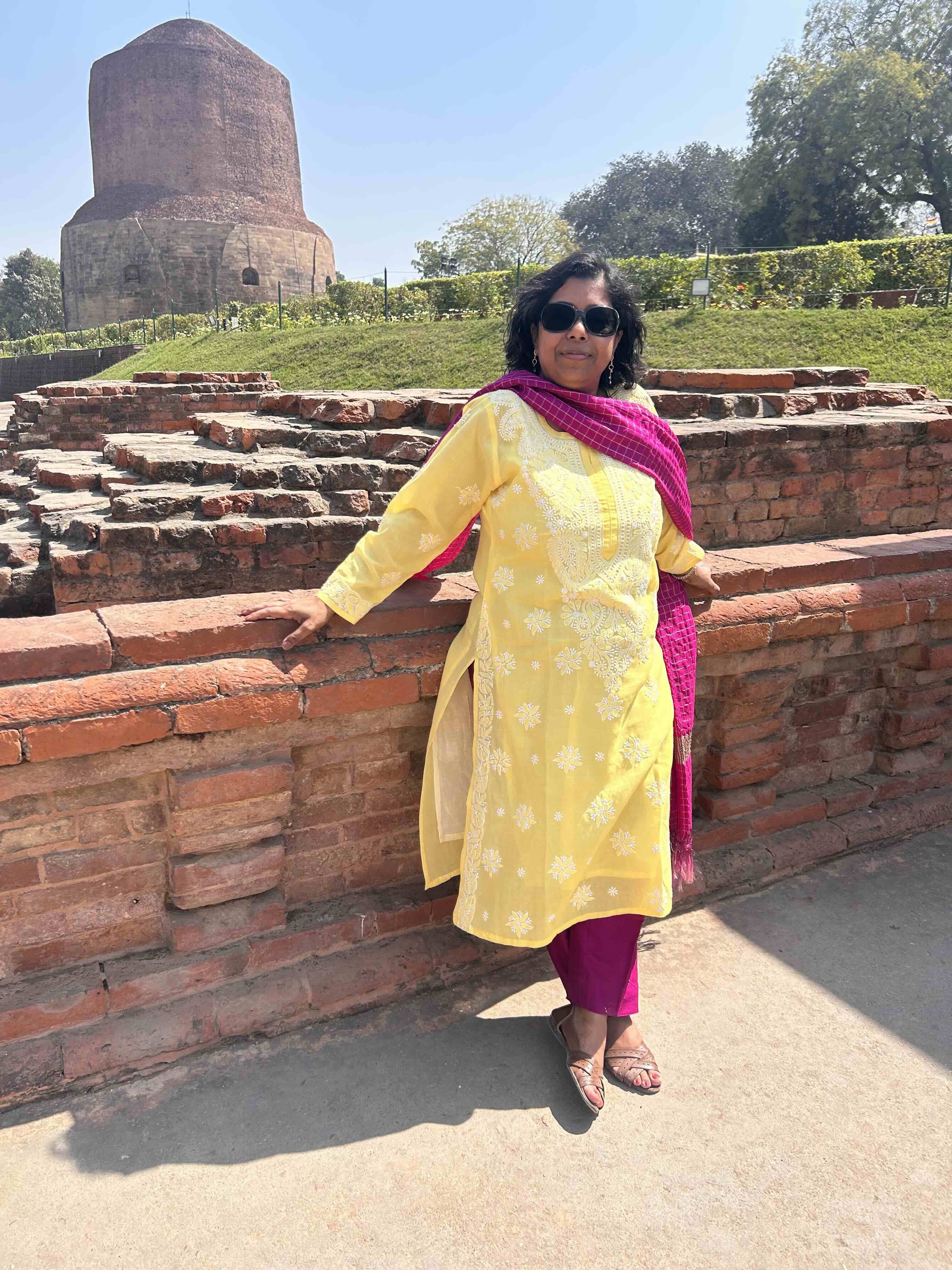
The first thing I encountered there, however, was not silence or the weight of history, but a noisy Holi celebration spilling into one corner of the road. Almost immediately, someone tapped on the car window to ask if I needed a guide. I said no. He persisted, promising to tell me everything and show me the entire site. I refused again. There are some places where one does not want a hurried narration or a half-remembered script. Sarnath, one of the most significant Buddhist sites in the world, deserved better.

I chose to walk.


The path was clearly marked, though the sun had already begun asserting itself. As I entered the archaeological site, my first impression was of order and care. It was well maintained, and there was something reassuring in that. Around me, guides shepherded tourist groups in neat, linear movements, but I found myself grateful for solitude. Their routes appeared efficient, rehearsed, perhaps useful, but I wanted to wander, to pause, to look closely at fragments of stone and history without being hurried along.


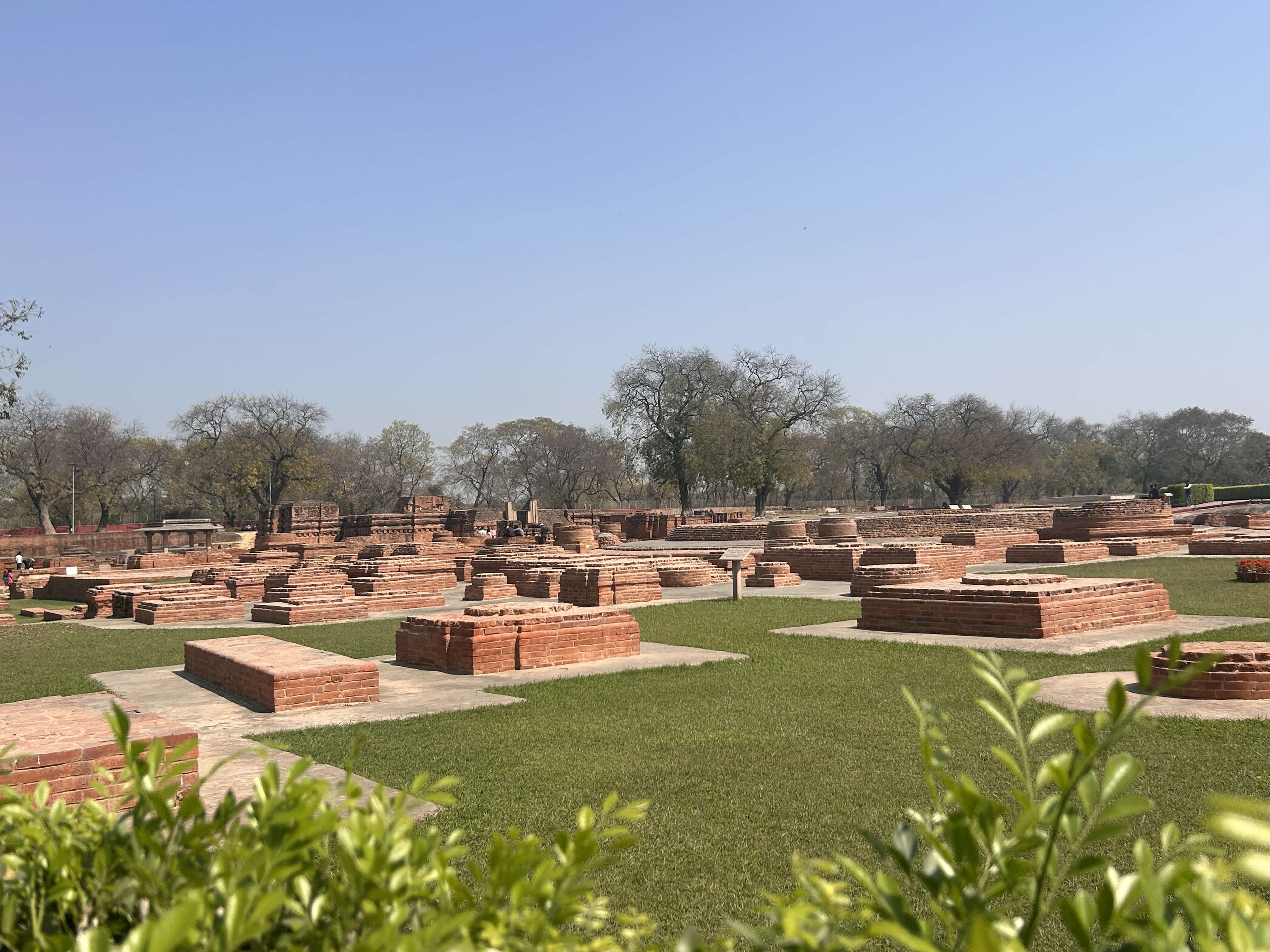
As I walked, memories of earlier visits to Buddhist sites in and around Mumbai returned to me. There is something about such places that alters one’s pace. One slows down instinctively. One begins to think not only of ruins, but of intention. I have always found it deeply ironic, and deeply human, that the Buddha, who is believed to have rejected the very idea of personal worship, became the centre of a sacred geography of stupas, relics, monasteries, and devotion. The viharas built over centuries, from the time of Ashoka in the third century BCE to those raised under later rulers, have not survived the violence of invasions and the slow erosion of time. Standing among their remains, I found myself seized by a familiar longing: the impossible wish to time travel, if only for a moment, to see these sites in their fullness, alive with monks, ritual, and learning.


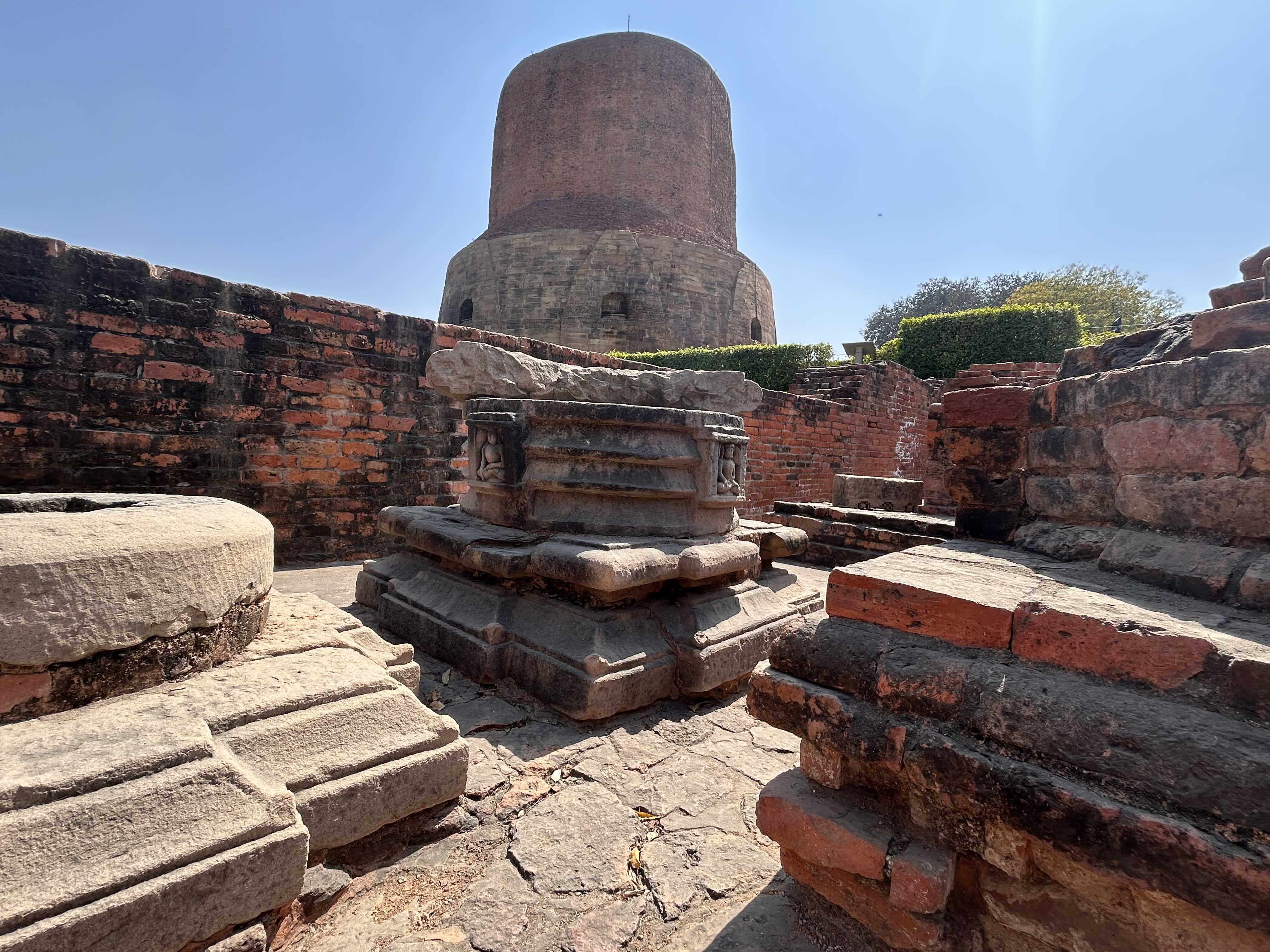
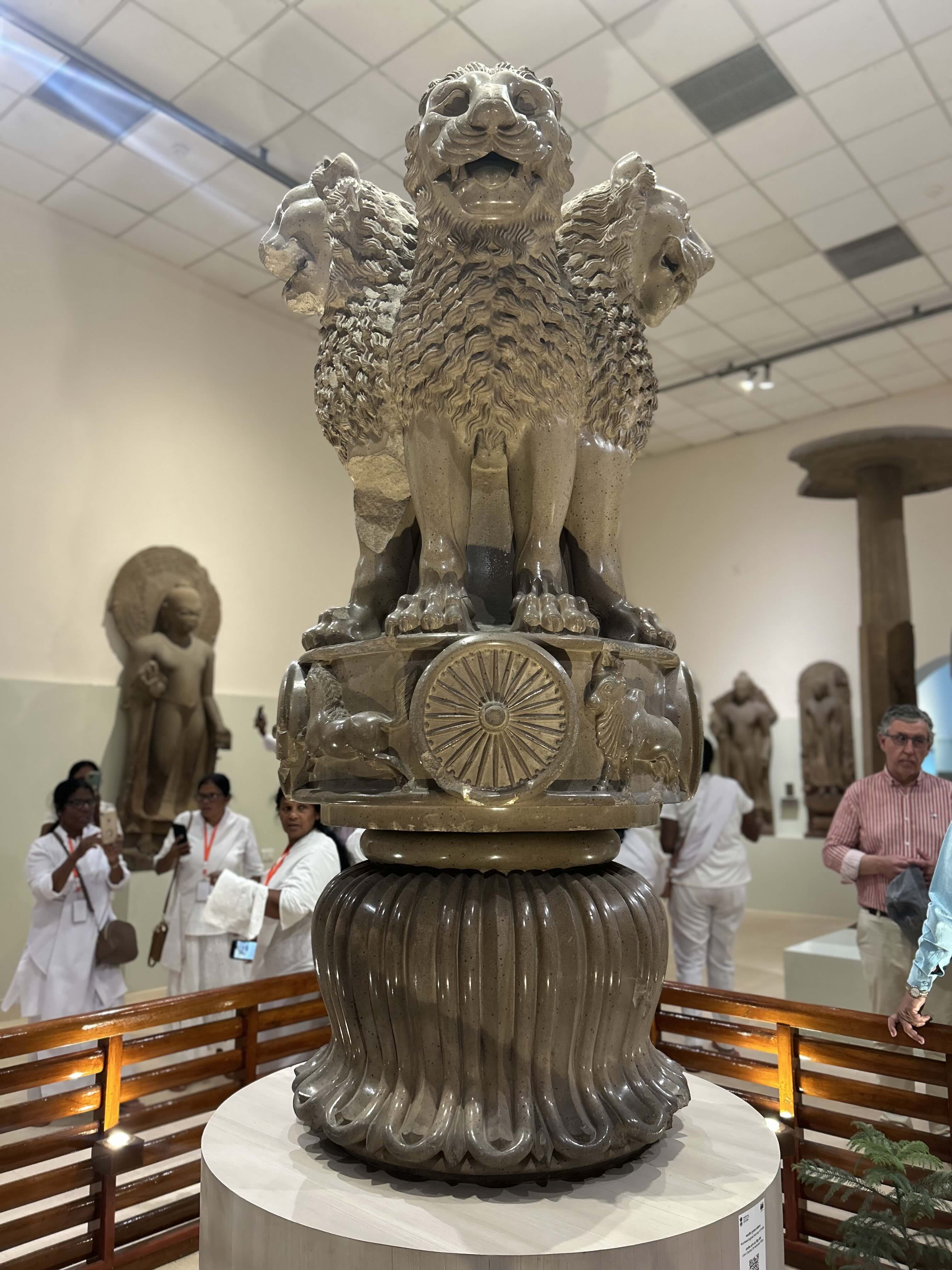
The Sarnath Museum was, as expected, indispensable. To stand before the Ashokan remains and other excavated finds is to understand how much of history survives in fragments, and yet how eloquent those fragments can be. Someone had told me that Sarnath is best experienced in the afternoon, when one can stay on till lamps are lit near the Dhamek Stupa. I, of course, could not do that. By then my visit was already drawing to a close. But perhaps every journey must leave something unfinished. It is the unchecked box, after all, that becomes an invitation to return.


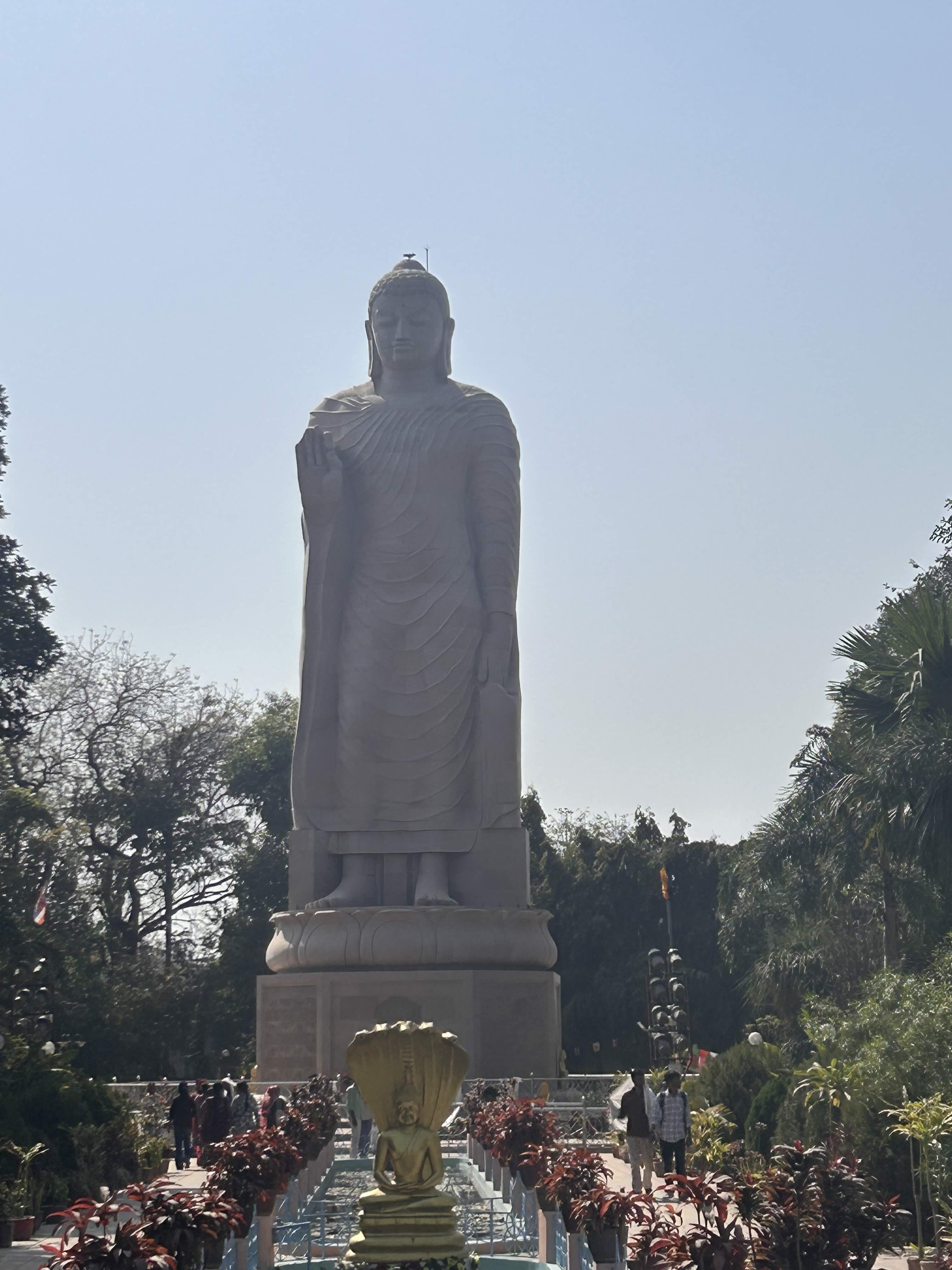
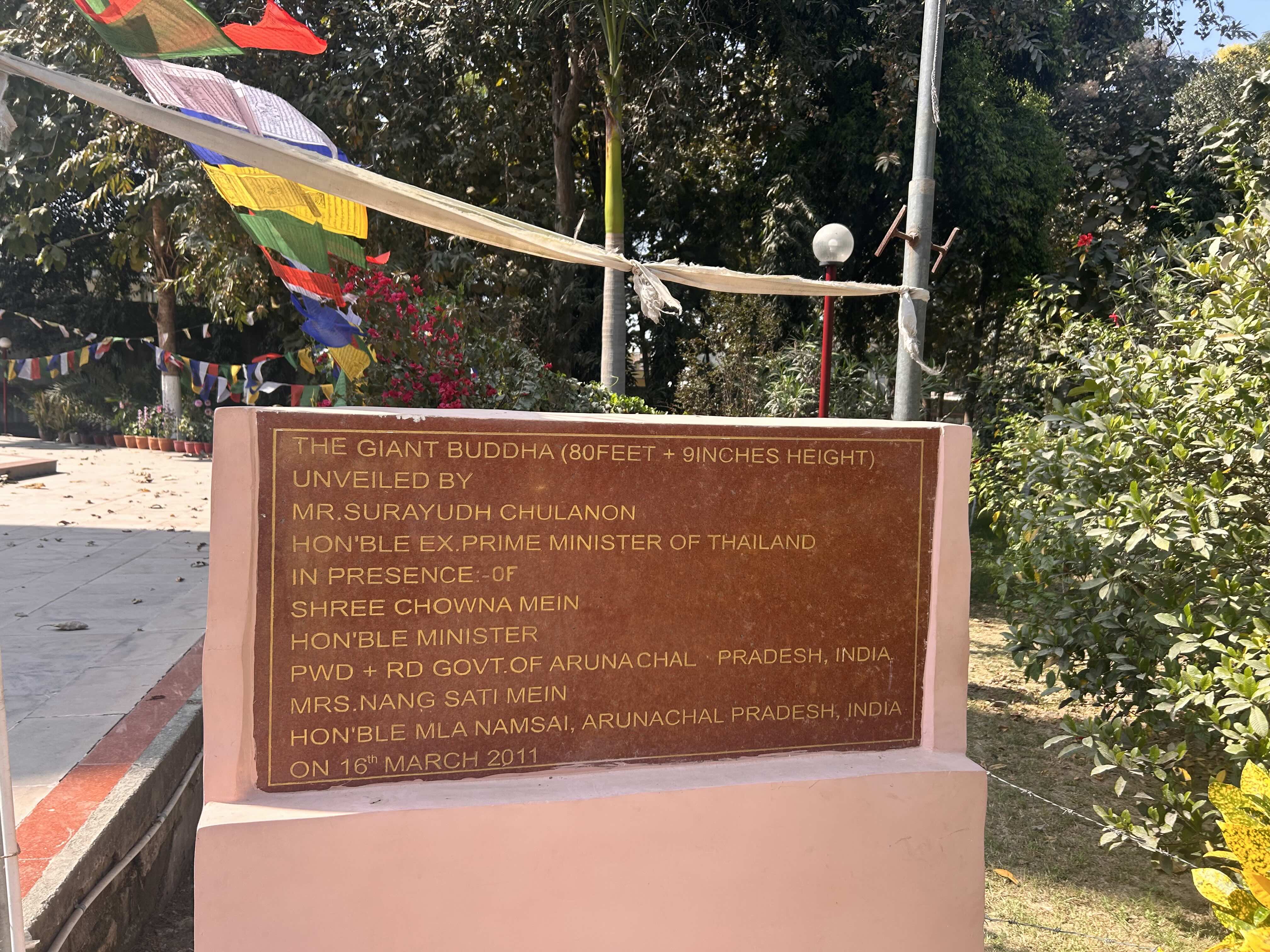
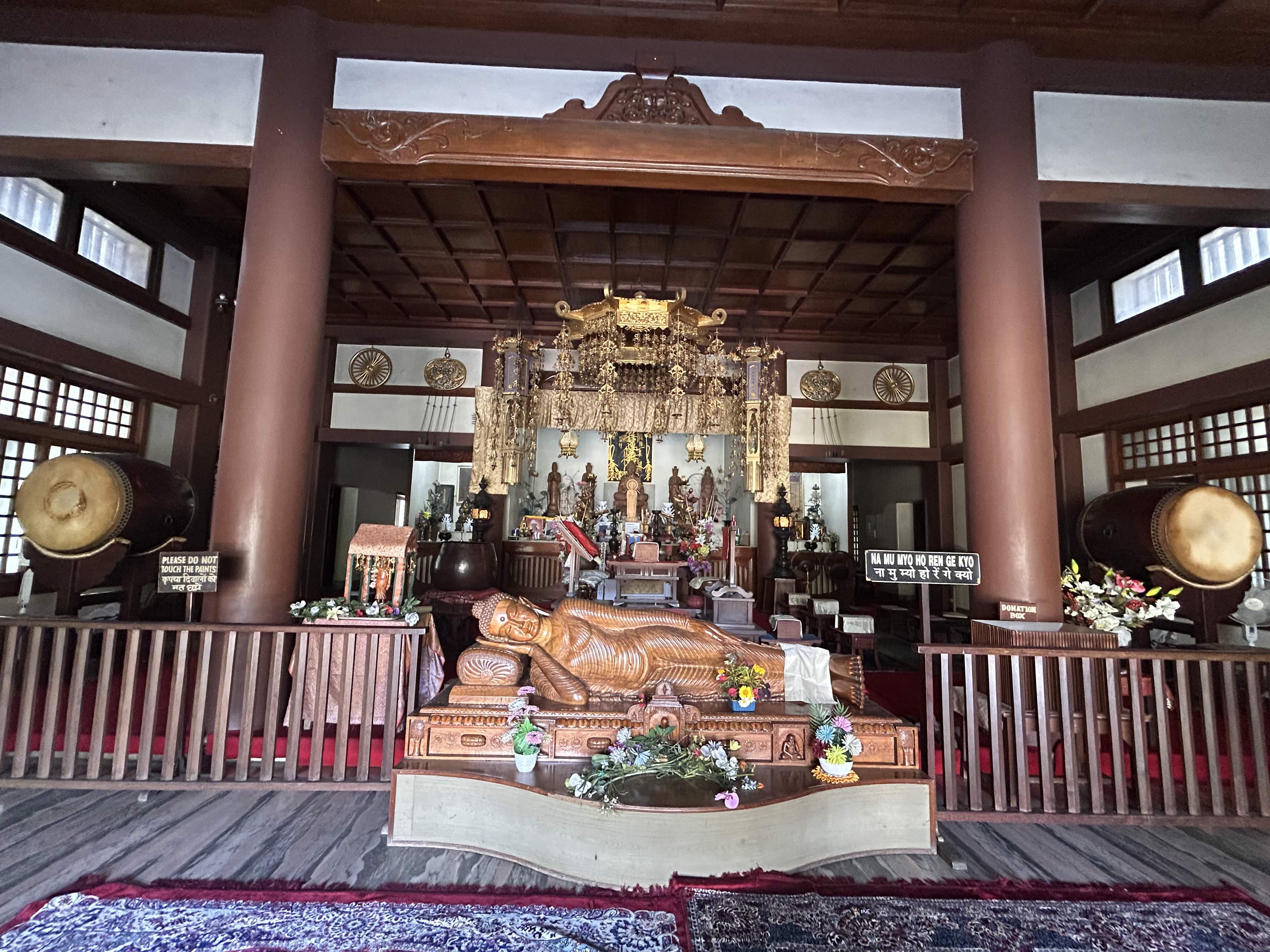
From Sarnath, I moved to the Giant Buddha statue and the Thai temple nearby. There, unexpectedly, I came across a reference to a minister from the Khampti tribe of Arunachal Pradesh. The Khamtis are a Theravada Buddhist community, and according to Samrat Choudhury in his book ‘The Braided River’, their language belongs to the same broad linguistic family as Thai. Suddenly, my mind travelled far from Sarnath to Namsai, where I had once stayed and from where I carry some especially fond memories. In that moment, standing in Uttar Pradesh and thinking of Arunachal Pradesh through a shared Buddhist thread, the world seemed to fold in on itself. It is always startling, and oddly comforting, to discover how small the world can be.


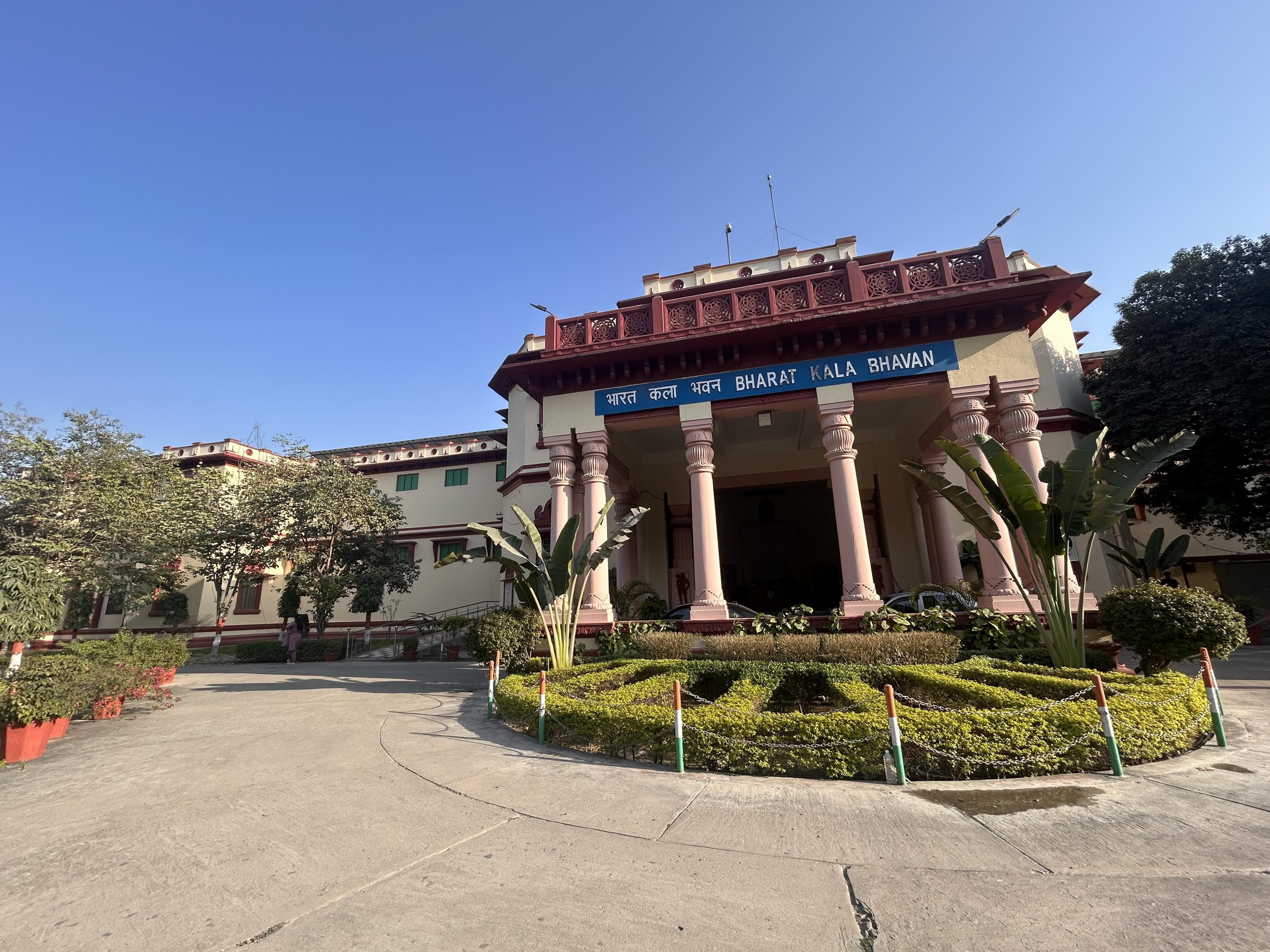
After Sarnath, I decided to go to BHU. I remembered that the Bharat Kala Bhavan Museum would close by 4.30, and we hurried to reach by three. If Sarnath carried the aura of ancient stillness, the BHU campus felt like something else entirely, an island of calm set apart from the city’s constant noise. The further one moved inside, the more Banaras seemed to lower its own volume. Inside the museum, time widened again. The artefacts ranged from the Harappan civilisation to later periods, and there was an odd pleasure in moving from age to age within a single afternoon. I found myself lingering before moulds from the Shunga period, and then pausing in surprise before a Mughal-style painting of the Exodus of Moses. Such juxtapositions always fascinate me; they remind me that Indian history is rarely linear and never simple. I had barely completed the final section when the museum announced closing time.

Outside, as I got into the car, Aftab, my driver for the visit, asked if I wished to return to the hotel.


I did not.
Instead, I asked to be taken to Assi Ghat.


I had no particular plan when I sat down on its steps. Perhaps I simply wanted to be near the river one last time. But then the foodie in me asserted itself, and memory led me to Kashi Chaat Bhandar. Google informed me that I could walk from the ghats towards Sonarpura, though part of the way would eventually shift to the road. So I began walking. It was nearly forty minutes, with the sun softening by degrees and the city entering that beautiful hour when evening begins to gather but daylight has not fully withdrawn. There was no hurry, no agenda, only the pleasure of moving through Banaras one last time.


At Kashi Chaat Bhandar, after the now familiar effort of negotiating the crowd, I ordered palak patta chaat and dahi puri. There are few satisfactions as complete as good street food after a long walk. Restored and slightly emboldened by my growing confidence in navigating the city, I took a rickshaw back till Sonarpura. From there, I wanted to return to the ghats on foot, one final walk beside the river, one final conversation with the city.


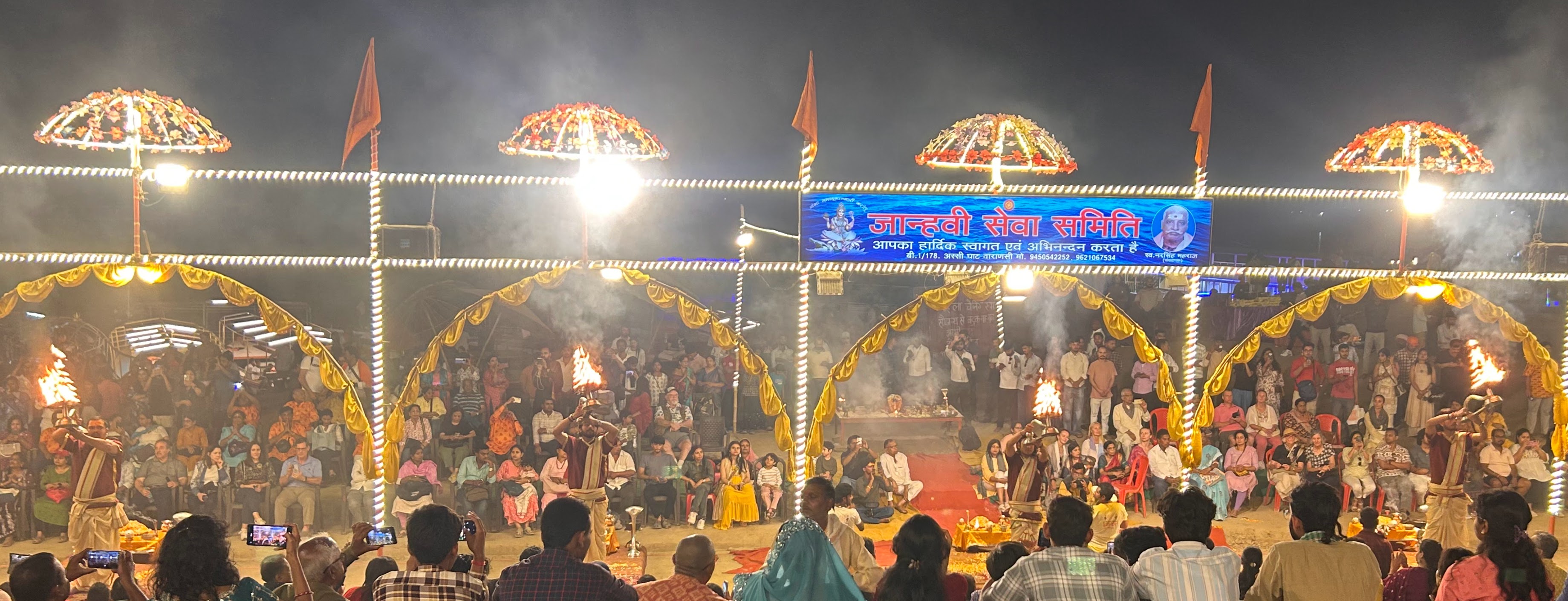
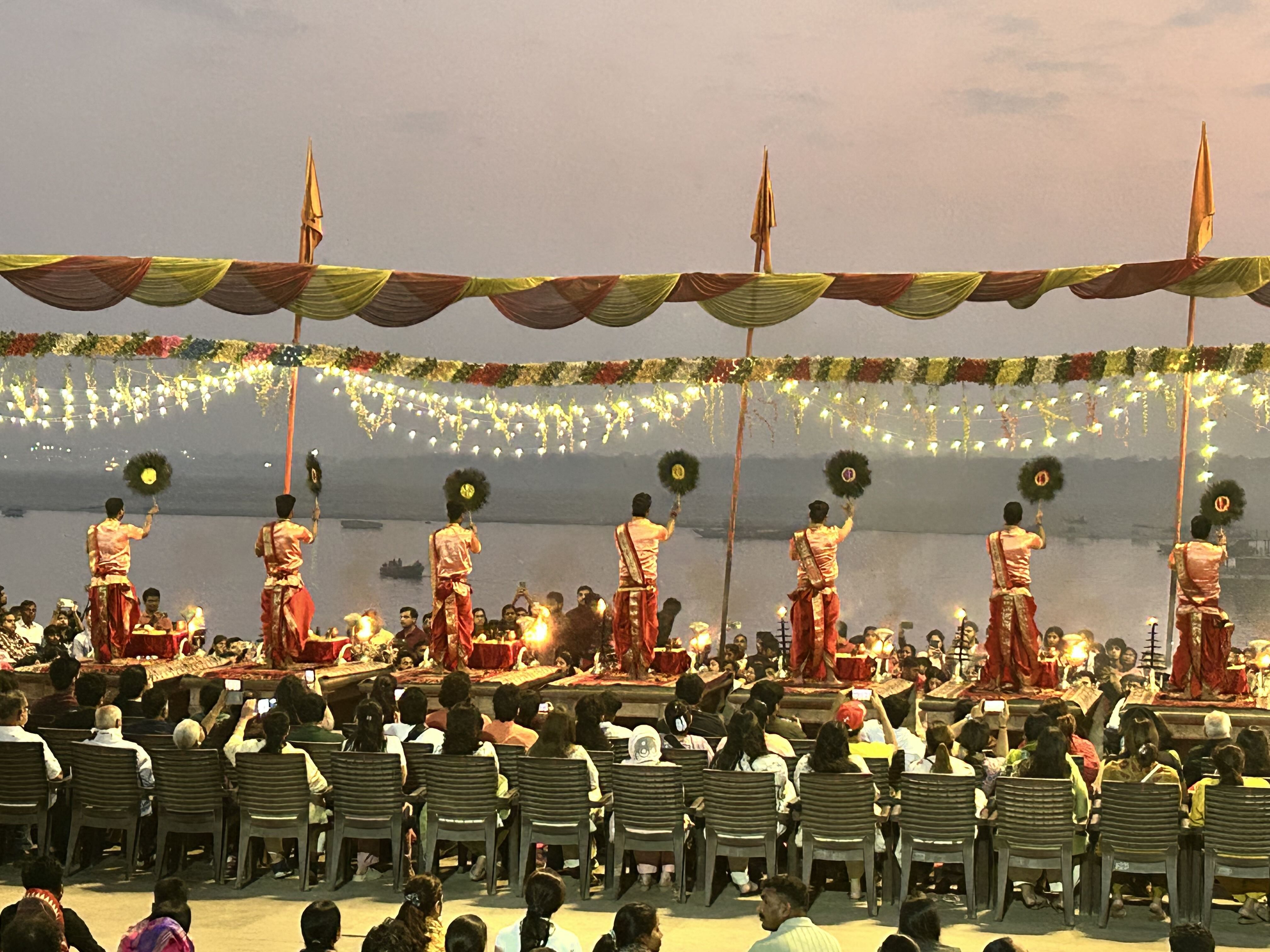
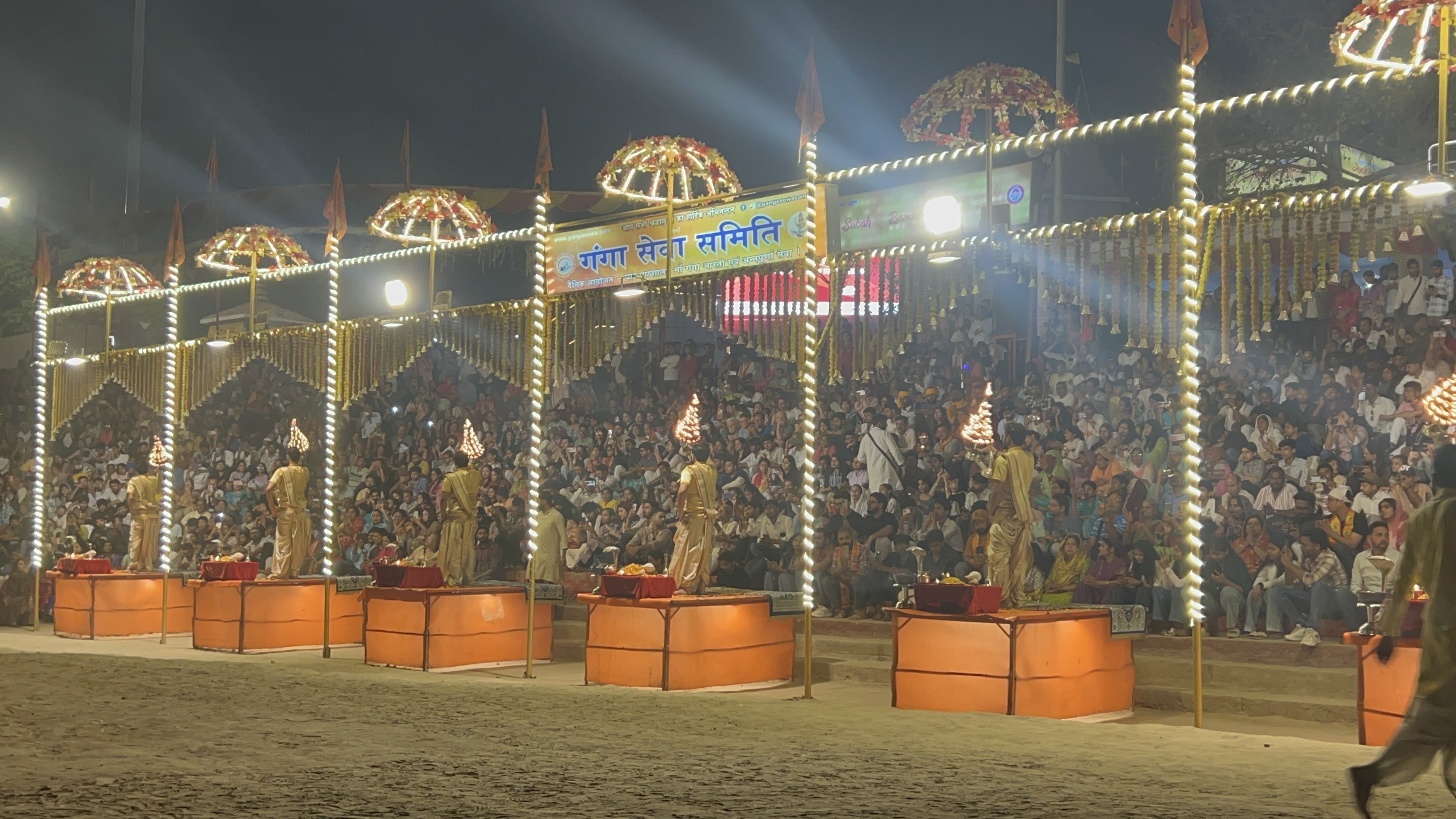
I arrived in time for the evening Ganga Aarti at Assi Ghat, though I soon realised that another aarti was underway at the neighbouring ghat as well. Sitting there among the crowd, watching the ritual unfold, I became aware once again of the invisible machinery behind devotion, the choreography, timing, discipline, and collective labour that makes such spectacle possible. Faith may appear spontaneous, but public ritual is almost always meticulously arranged.
Later, as I left the ghats, I stopped at Roma’s, a place Chandrali had recommended. It felt like the right final note: a small meal at the end of a long day, one last taste to carry away.
And so the journey ended.


After walking more than eighteen thousand steps, after ticking as many boxes as I could and leaving a few unticked on purpose or by chance, I brought my Banaras trip to a close. But what remained with me was not merely a list of places seen. It was something less tangible and more enduring.


Banaras will stay with me as a city of paradoxes, exclusive and inclusive, ancient and modern, theatrical and intimate. A city where ordinary people carry their pride in the place with an ease that never feels performative. A city where crowds can exhaust, but where solitude appears unexpectedly, in a brief moment before a jyotirlinga, in a quiet temple off the tourist map, in a boatman’s recitation of poetry, in an evening walk back from a chaat shop, in a bowl of prasad placed wordlessly into one’s hands.


And perhaps that is what I will remember most.
That this crowd-averse traveller came to Banaras expecting to observe, and instead found herself drawn in, into darshan, into ritual, into history, into appetite, into the strange intimacy of a city that reveals itself not all at once, but in fleeting moments. Tiny, solitary moments. And each of them, somehow, deeply satisfying

Of Ghats, Poetry, and the Ganga

How does one define a city and its soul? Having spent my life moving from one city to another, I have often felt that the soul of a city lies in the pride its ordinary people take in its culture and heritage. Today, I caught a glimpse of why Benaras is special.


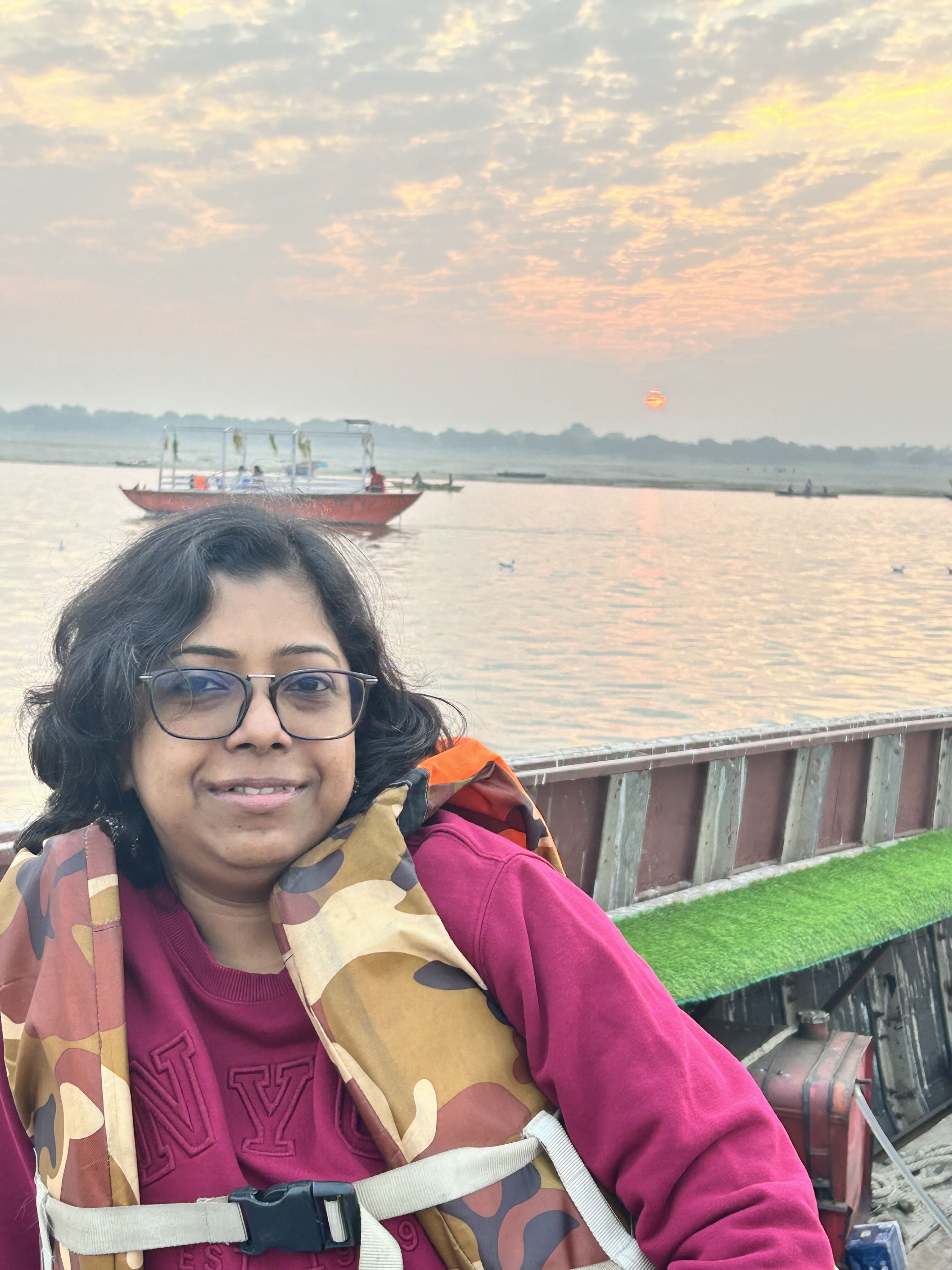
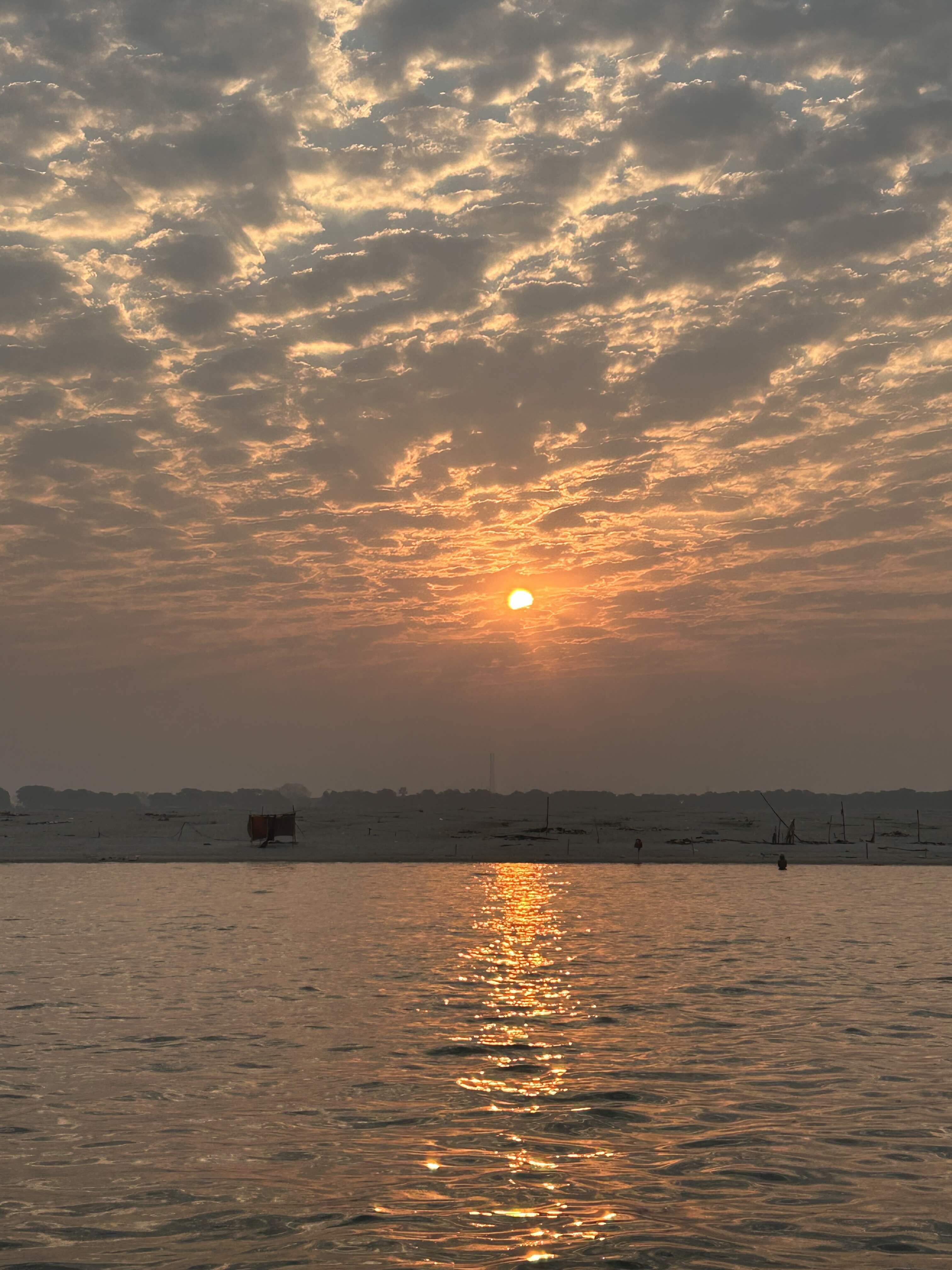
The day began early. I wanted to go for a boat ride at sunrise. Harshit had referred a boatman, and I had arranged with him to pick me up from Tulsi Ghat. I reached Assi Ghat at six in the morning, just in time to catch the final moments of the morning Ganga Aarti. From there, I walked to Tulsi Ghat and met Karma, the boatman. We began our journey just as the sky began to turn pink.

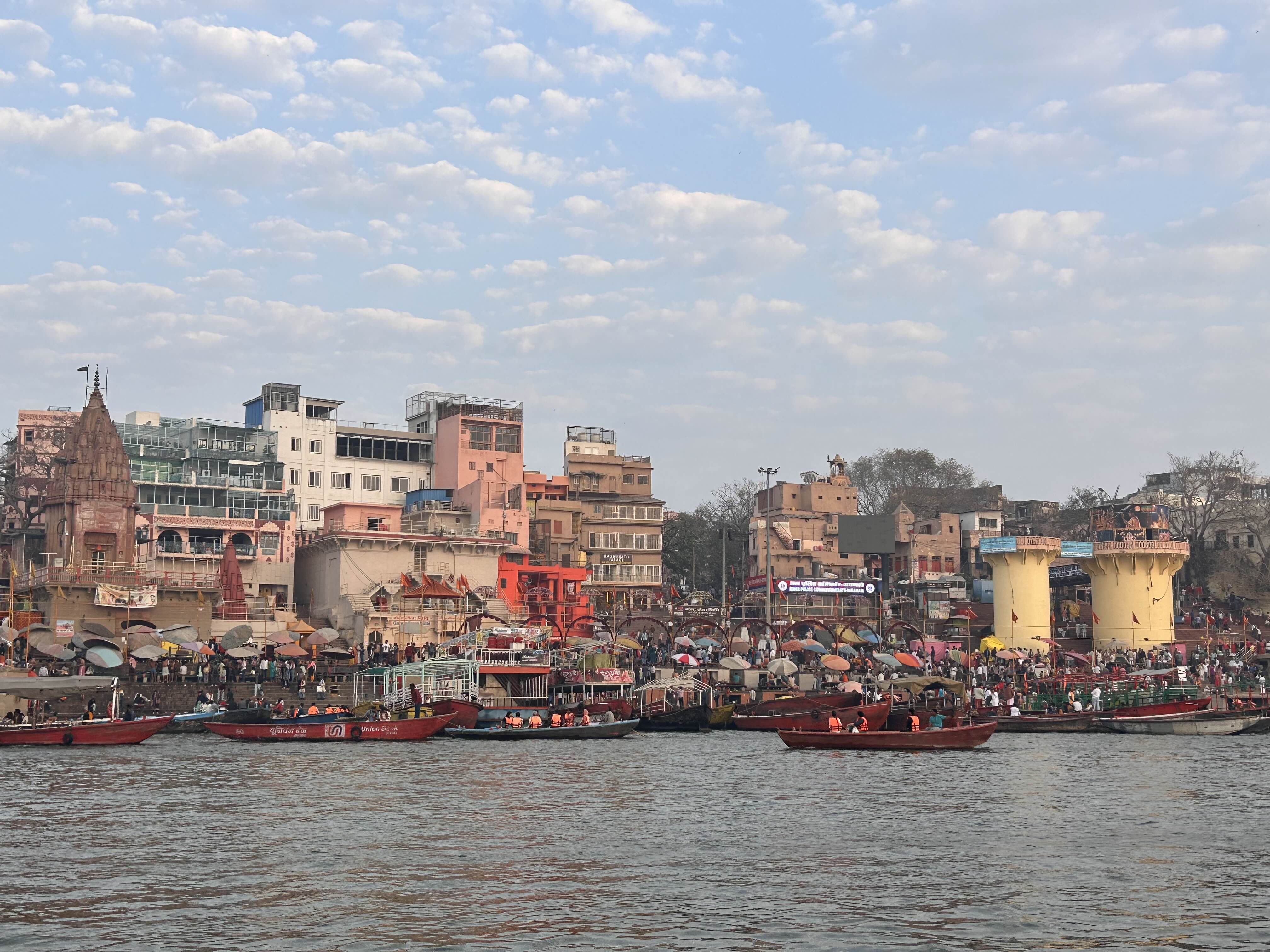
Karma turned out to be much more than a boatman; he was a guide and a storyteller. As we moved along the river, he narrated the stories of the ghats. Many of them, he told me, had been built by erstwhile rulers from across India and even Nepal. Today, many of those palaces lining the ghats have been converted into hotels. The palaces of yore are now premium hospitality properties. I found myself wondering at this quest for moksha that still sought to build palaces.

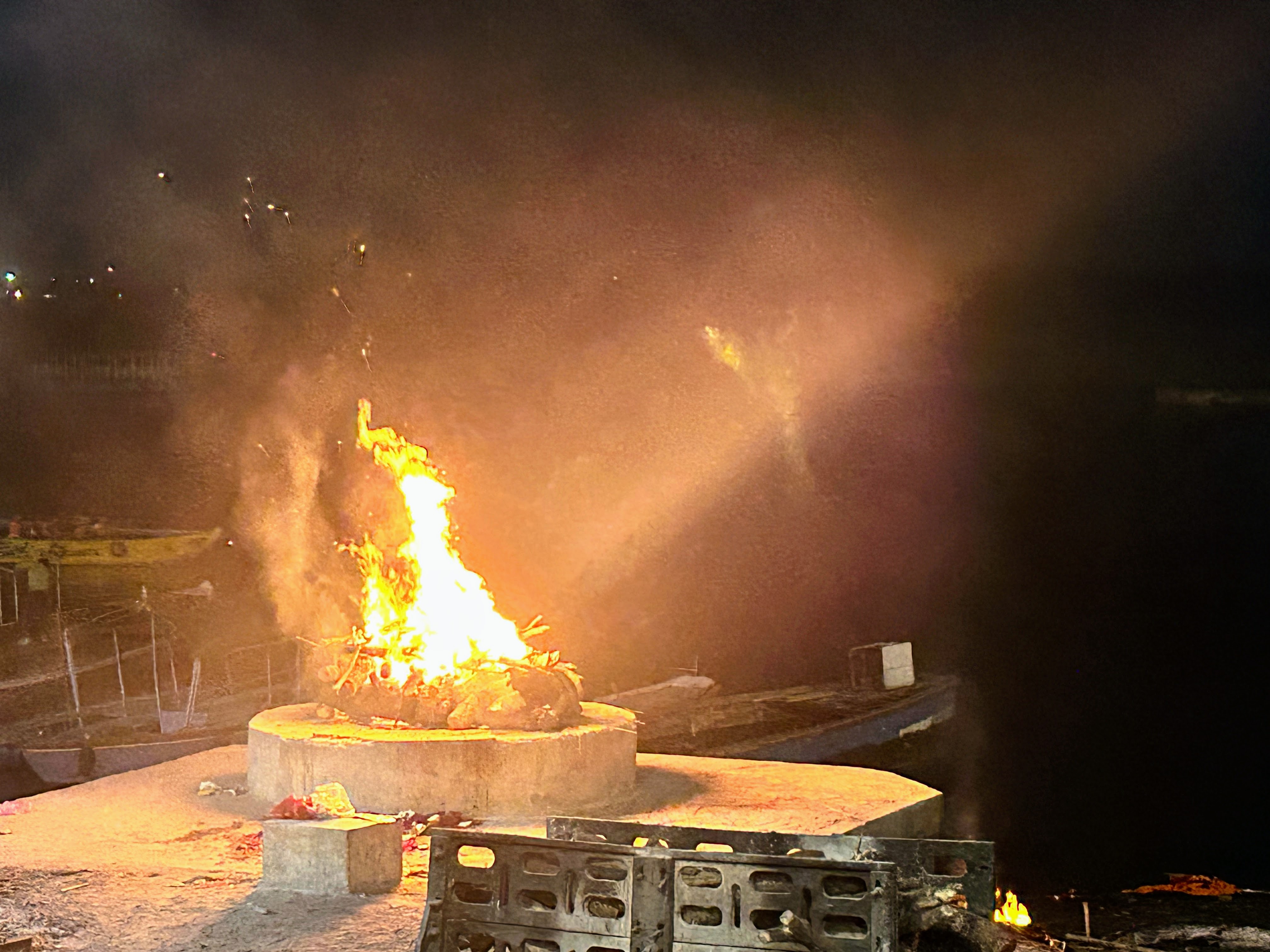
We passed Harishchandra Ghat, where pyres were burning, and Karma narrated the story of Raja Satyavadi Harishchandra. Then came Dashashwamedh Ghat, among the most famous in the city. Next to it was Manikarnika Ghat, and there I saw a pyre burning in the background while, in the foreground, a group on another boat was busy shooting a scene with someone dressed as Shiv. Life is transient indeed.

As we moved ahead, Karma surprised me by reciting Banaras, the famous poem by Jnanpith awardee Kedarnath Singh. Listening to him recite it flawlessly, I realised that it is people like Karma—common men who carry the words of poets in their hearts and wear their city with pride—who make a place truly special.

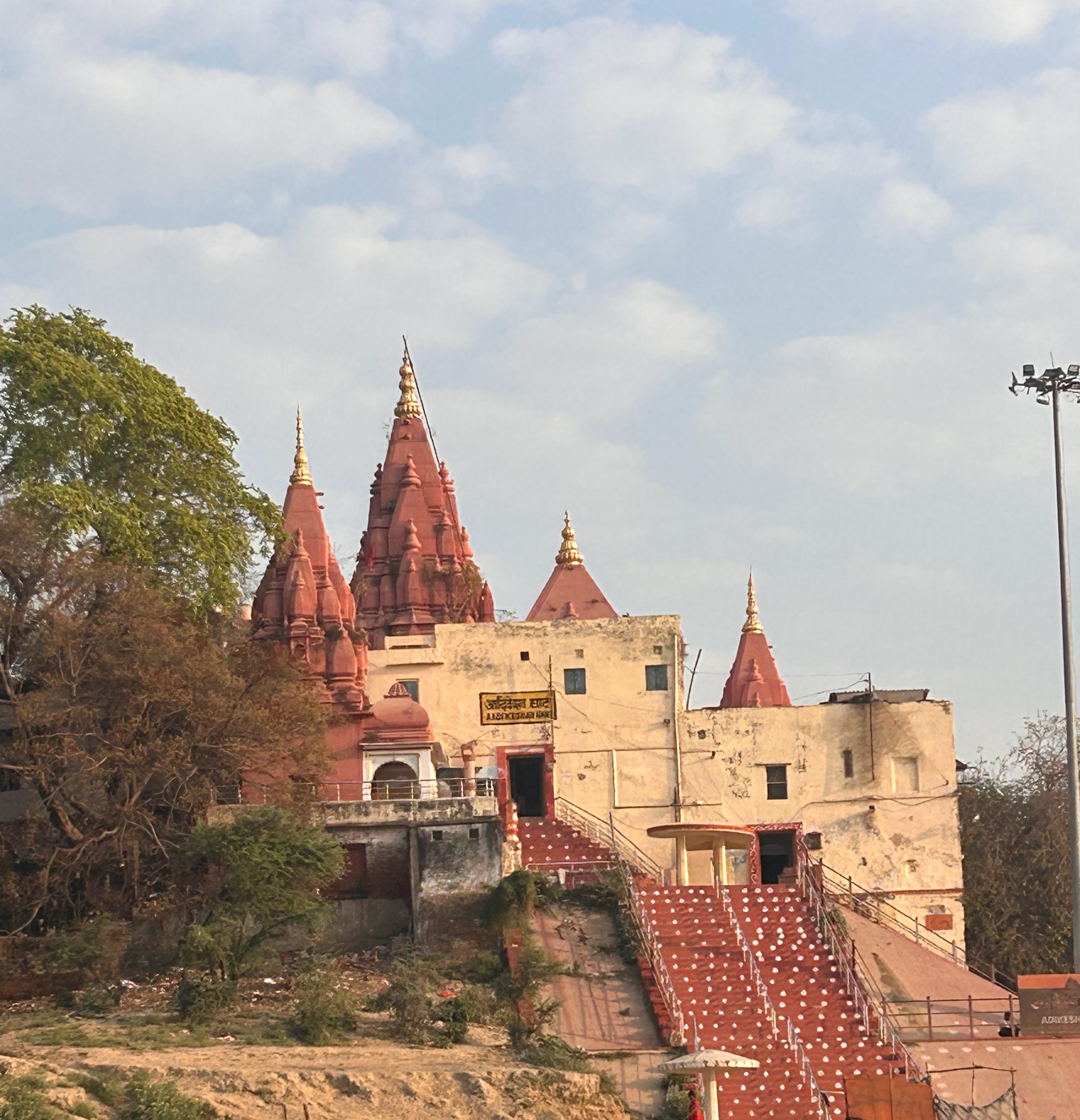
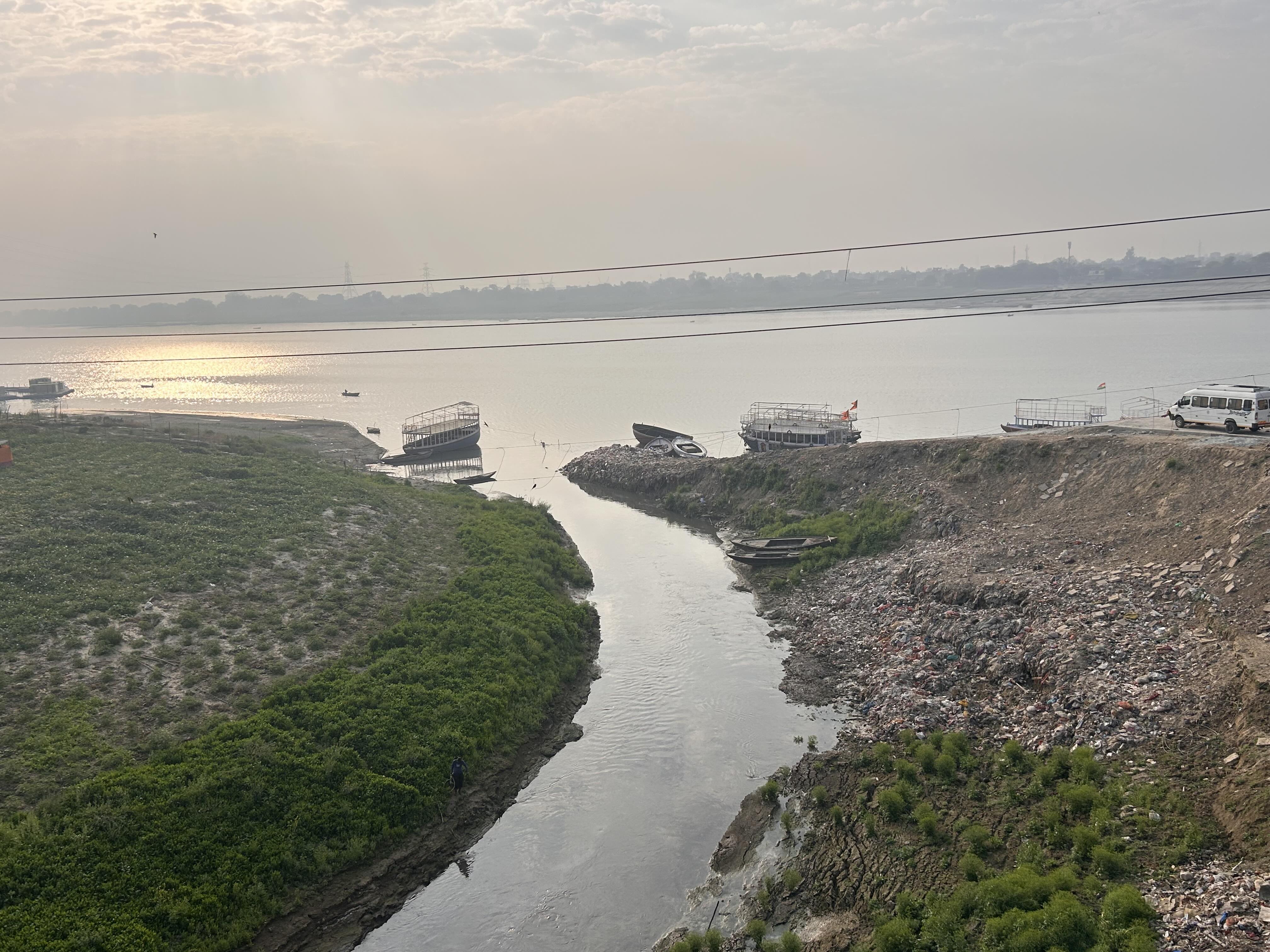
In the city of Shiv, Karma next took me to the Adi Keshav Temple, dedicated to Lord Vishnu. Located at the confluence of the Varuna and the Ganga, it is said to be the oldest shrine to Vishnu in the region. Far from the usual tourist circuit, the temple was quiet. The morning aarti was underway, and there was a stillness there that felt deeply comforting.


From the temple, I walked into the nearby village of Sarai Mohana. It is said that Buddha once walked through its lanes, and Karma pointed out a spot where he is believed to have rested.
But while the beauty of the ghats can fill the heart, it cannot fill the stomach. As I got off the boat, my growling stomach reminded me of that rather firmly. So I did what one does when one has a colleague from the city: I called Chandrali and was promptly directed to Aum Café at Assi Ghat—a small place with excellent food.

Satiated, I decided to head to Madanpura, the hub of Benarasi sarees. How can one come to this city and not explore its weaves? The next two hours saw me go completely bonkers over the astonishing range and beauty of Banarasi sarees. Did I go overboard? Absolutely yes.

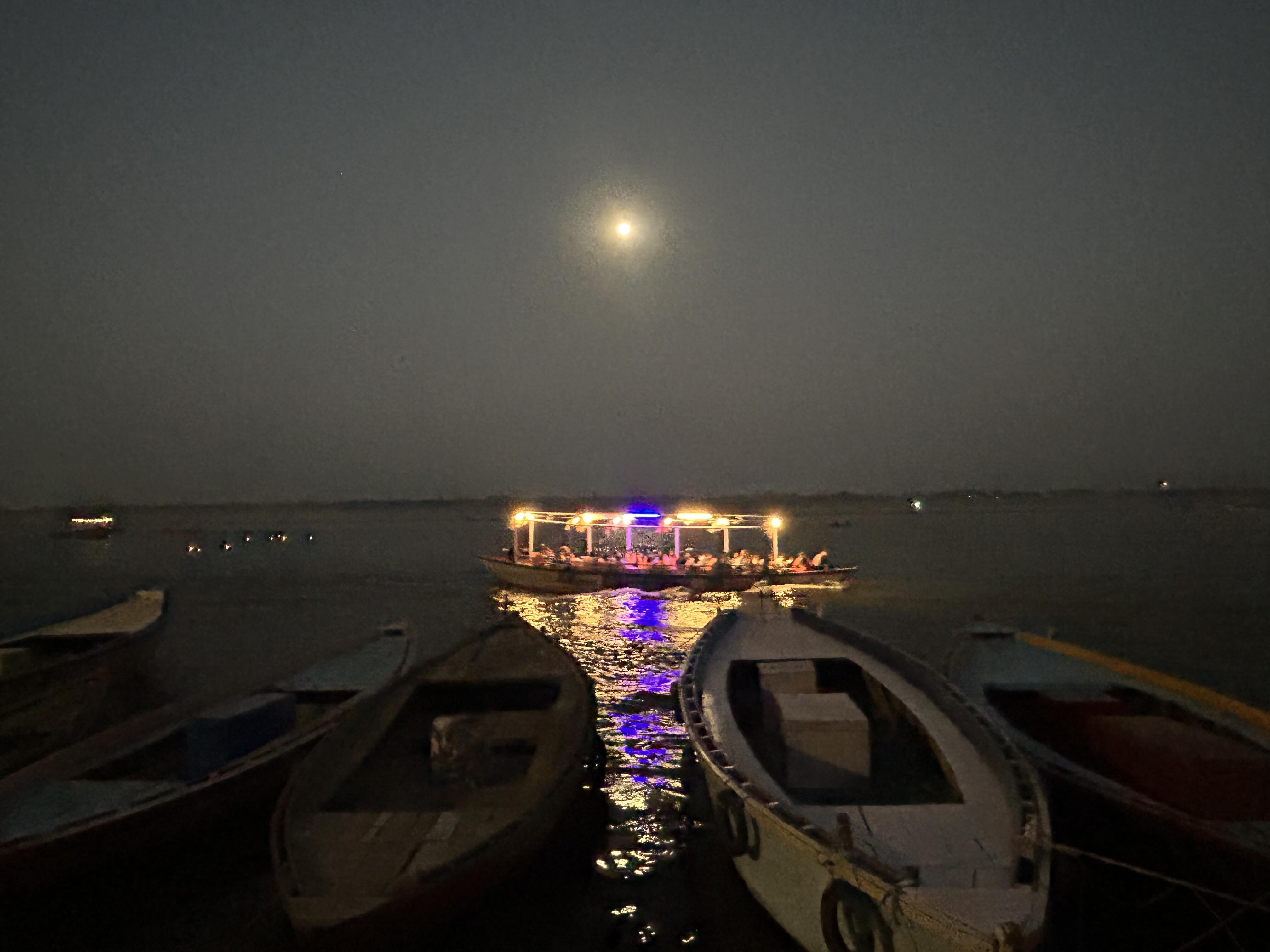
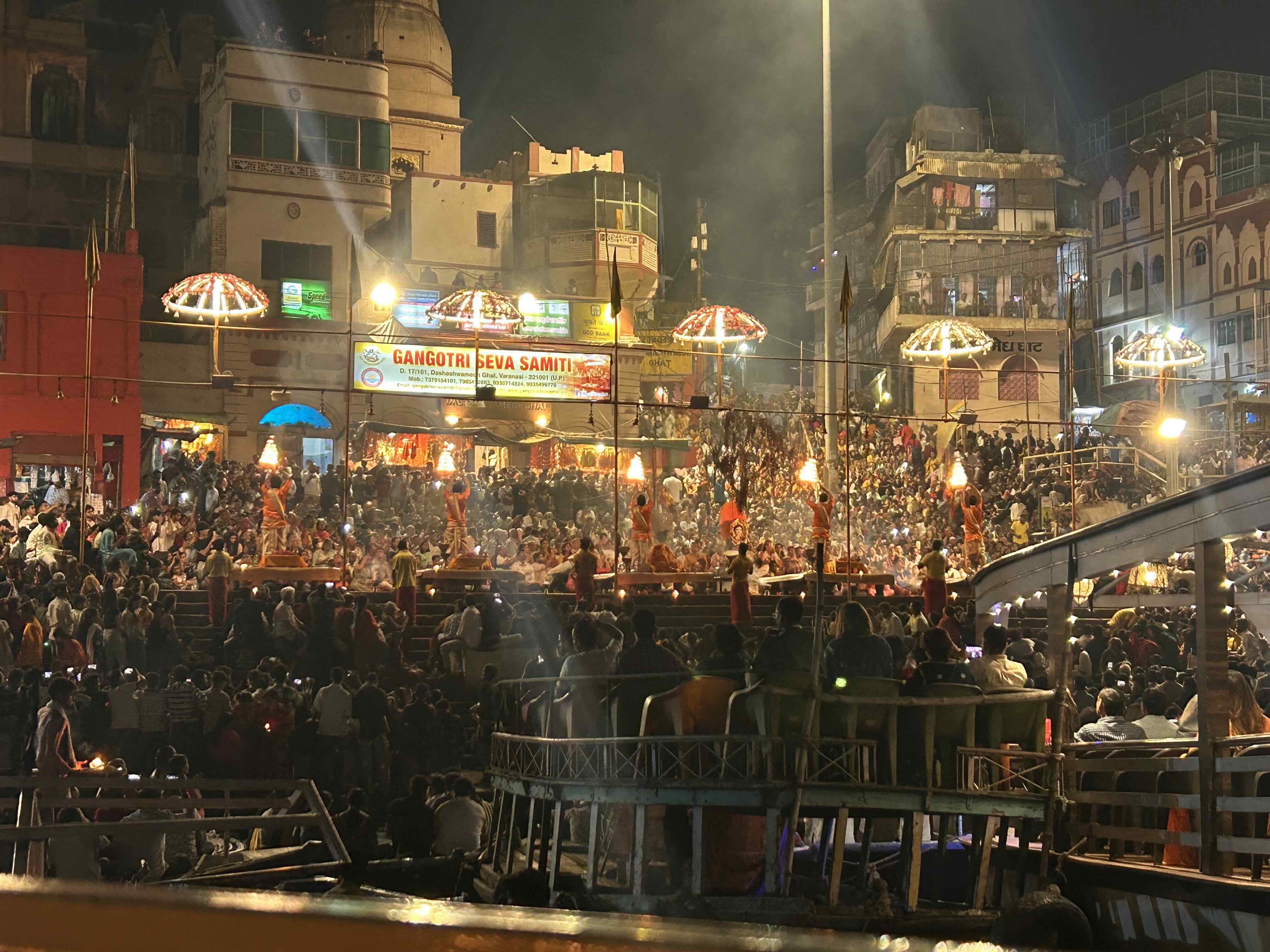
Finally, exhausted but happy, I returned to the hotel. But the day was not done yet. I wanted to watch the Ganga Aarti at Dashashwamedh Ghat from a boat. Clearly, I was not alone in that desire. By the time we reached the ghat, it looked like a sea of humanity—on the steps and on the river. Boats jostled for space to secure a better view, and I was strangely reminded of the mad rush of safari vehicles trying to catch the Great Migration at the Masai Mara.

The Ganga Aarti at Dashashwamedh Ghat has been carefully crafted as spectacle: from the priests’ camera-friendly attire, to the dimming of lights at the right moment, to the choice of music. Even the damarus had fluorescent lights. The image of the aarti with the great दीपक is so iconic that once that portion concluded, several boats began to move away, even though the aarti itself was still underway.

Thus ended the day—a day that offered me a glimpse into the fabric of the city: a boatman reciting poetry, funeral pyres forming the backdrop to a film shoot, the richness of the Benaras weave, and the eternal presence of the Ganga.

When Shiv Planned My Darshan

A few days before my visit, an acquaintance had asked, “Darshan to karengi na?”
As a crowd-averse traveller, often disappointed by the jostling and haste that accompany visits to major temples, I had replied that I had no fixed plan for darshan. If it happened, it happened. If not, there was much else to see in the city.


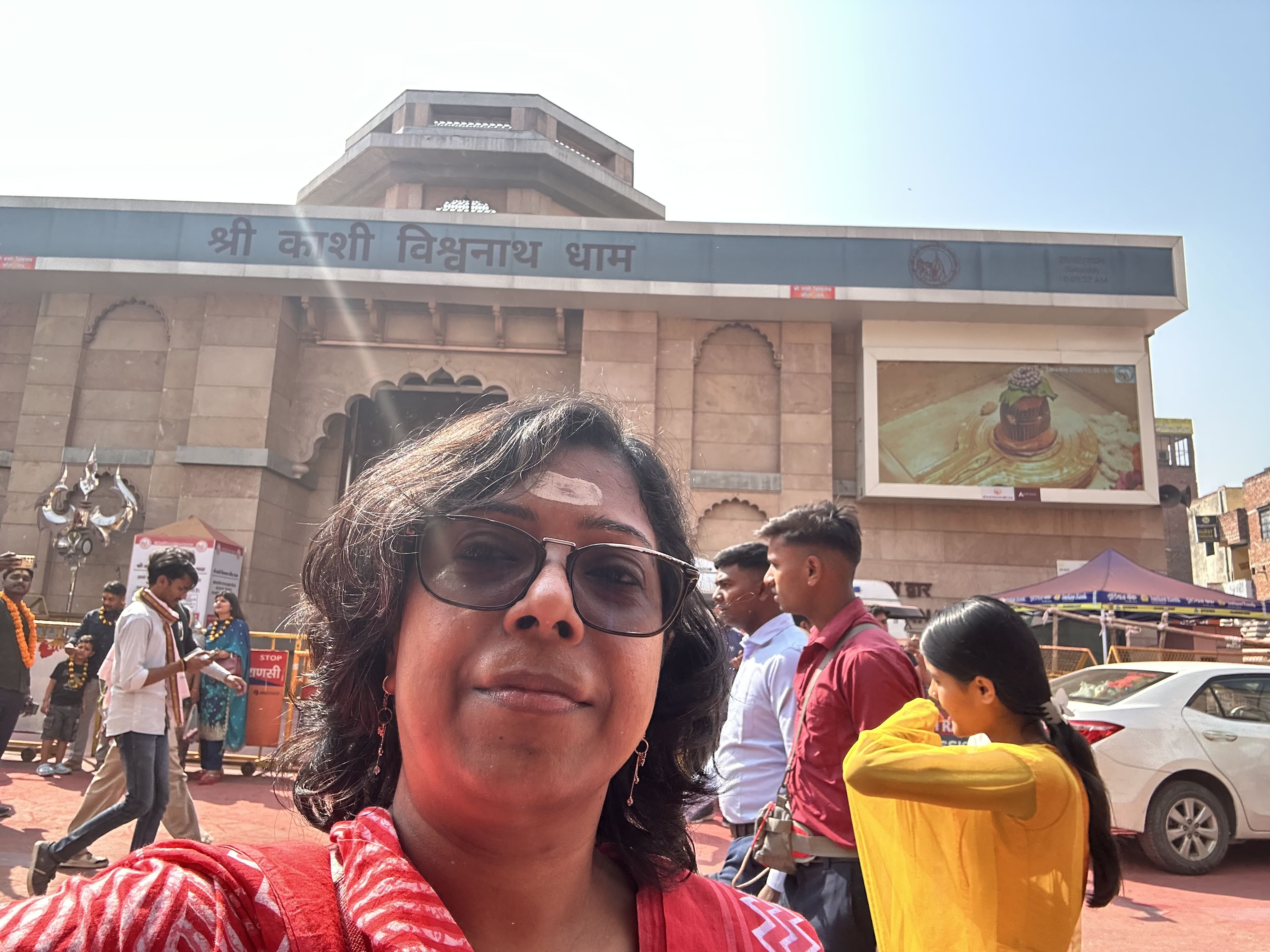
Yesterday, I repeated the same line to another acquaintance. But as someone who had spent a part of his life in Benaras, he took it upon himself to ensure that I visited the Kashi Vishwanath Temple. As I approached the temple, I could see a serpentine queue winding ahead. Several people stopped passersby, asking if they wanted darshan and offering to guide them inside. I dodged a few such offers and reached Gate No. 4 at around 9.30 in the morning.


The person deputed to facilitate my visit ensured that I completed my darshan by 10.15 a.m.—peacefully, without any pushing or jostling. And even that morning, I found a brief moment to myself as I bowed my head before the Jyotirlinga. Even if I had not planned it, Shiv, it seemed, had planned it for me.


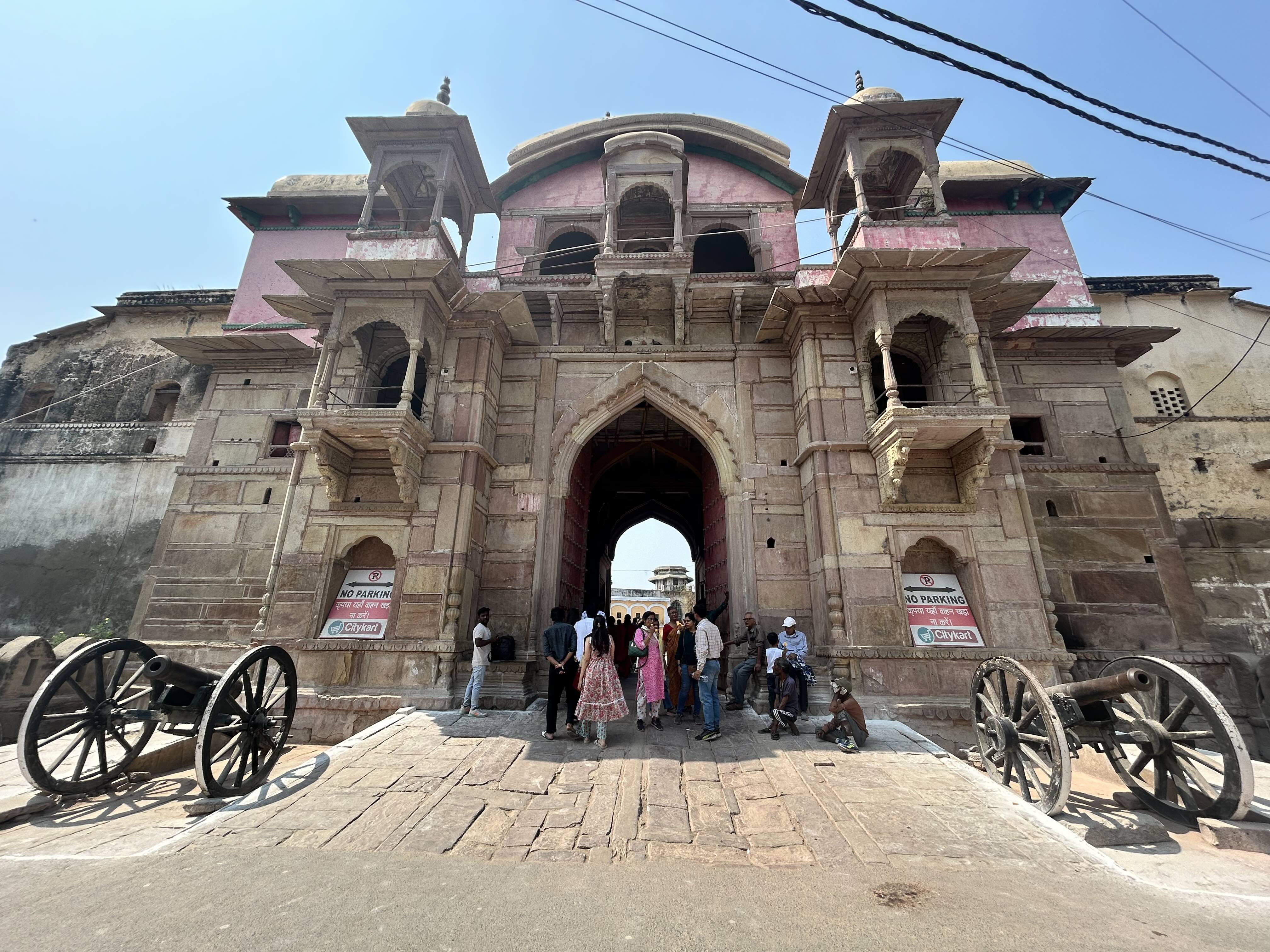
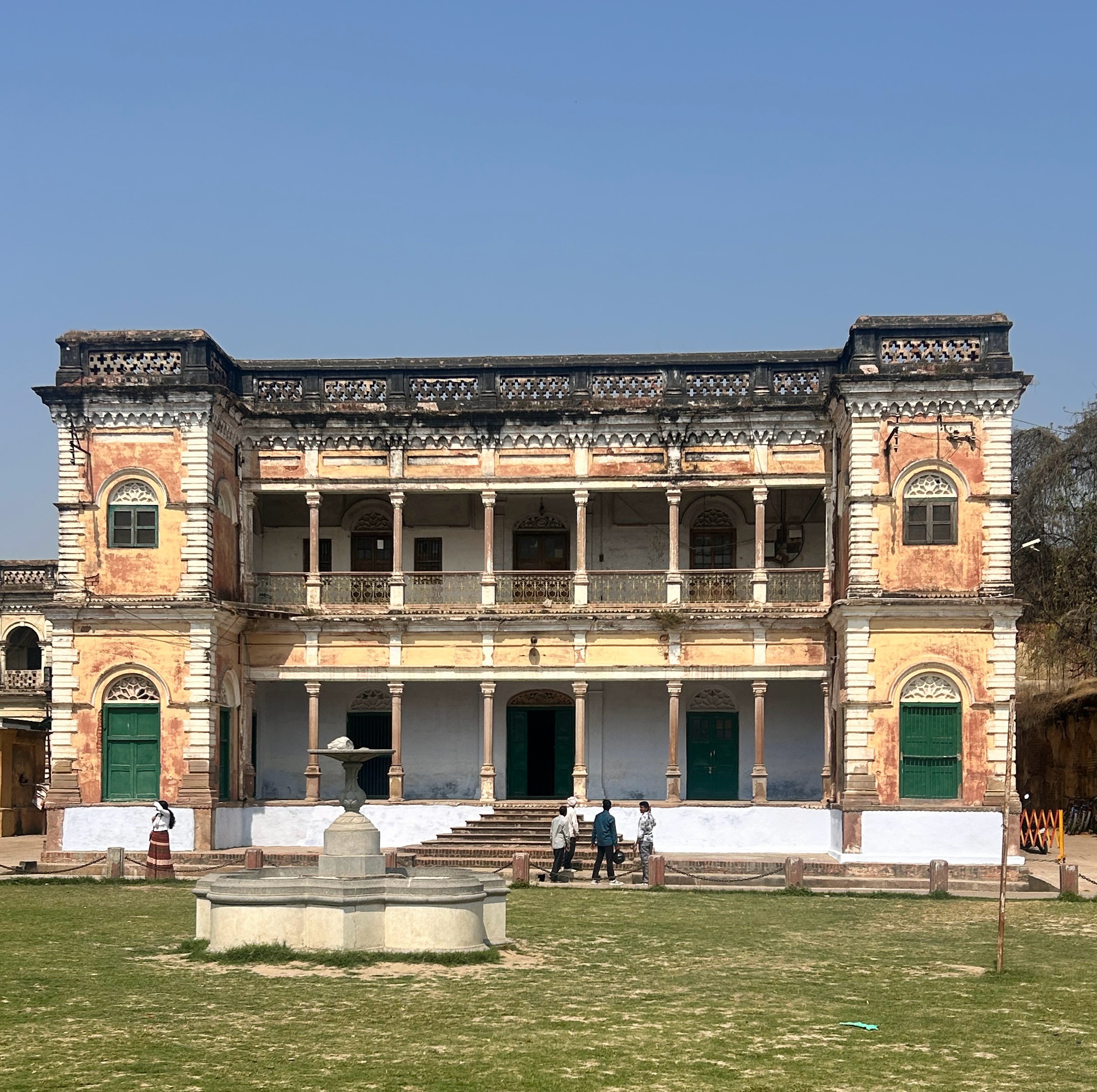
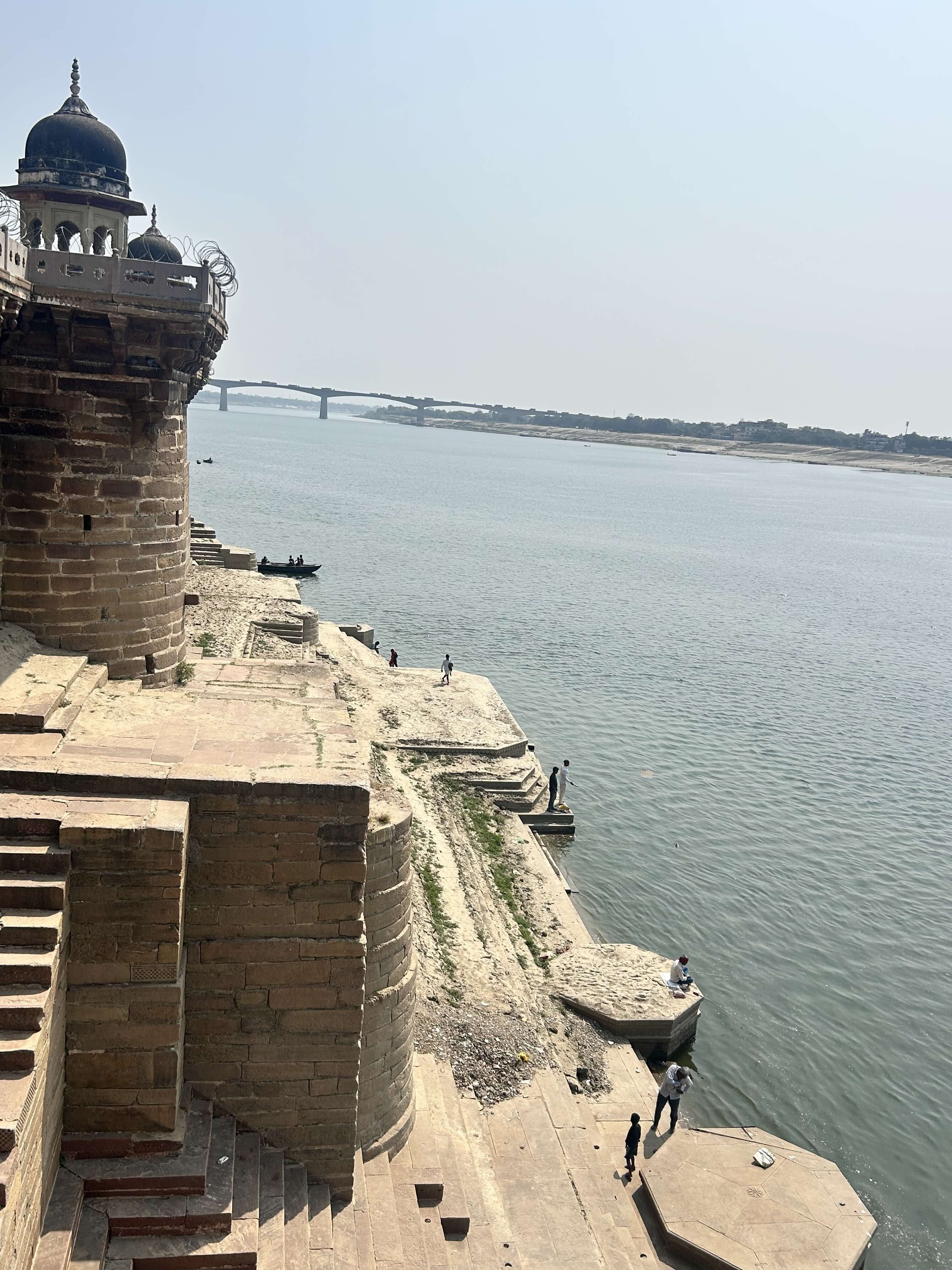
The next part of the day was spent at Ramnagar Fort, situated on the banks of the Ganga. Built in 1750 by Kashi Naresh Maharaja Balwant Singh, the fort remains the ancestral home of the Varanasi royal family. The structure is crumbling from the outside, and though the museum houses an interesting collection of vintage cars, royal costumes, arms and ammunition, the experience felt somewhat underwhelming. The display cases were dusty, many exhibits lacked proper labels, and the overall impression was of a place with great potential but limited care. I walked towards the back of the fort, expecting to reach the river, only to find the walls high. Yet the riverside edge of the fort precincts was animated by enthusiastic anglers.


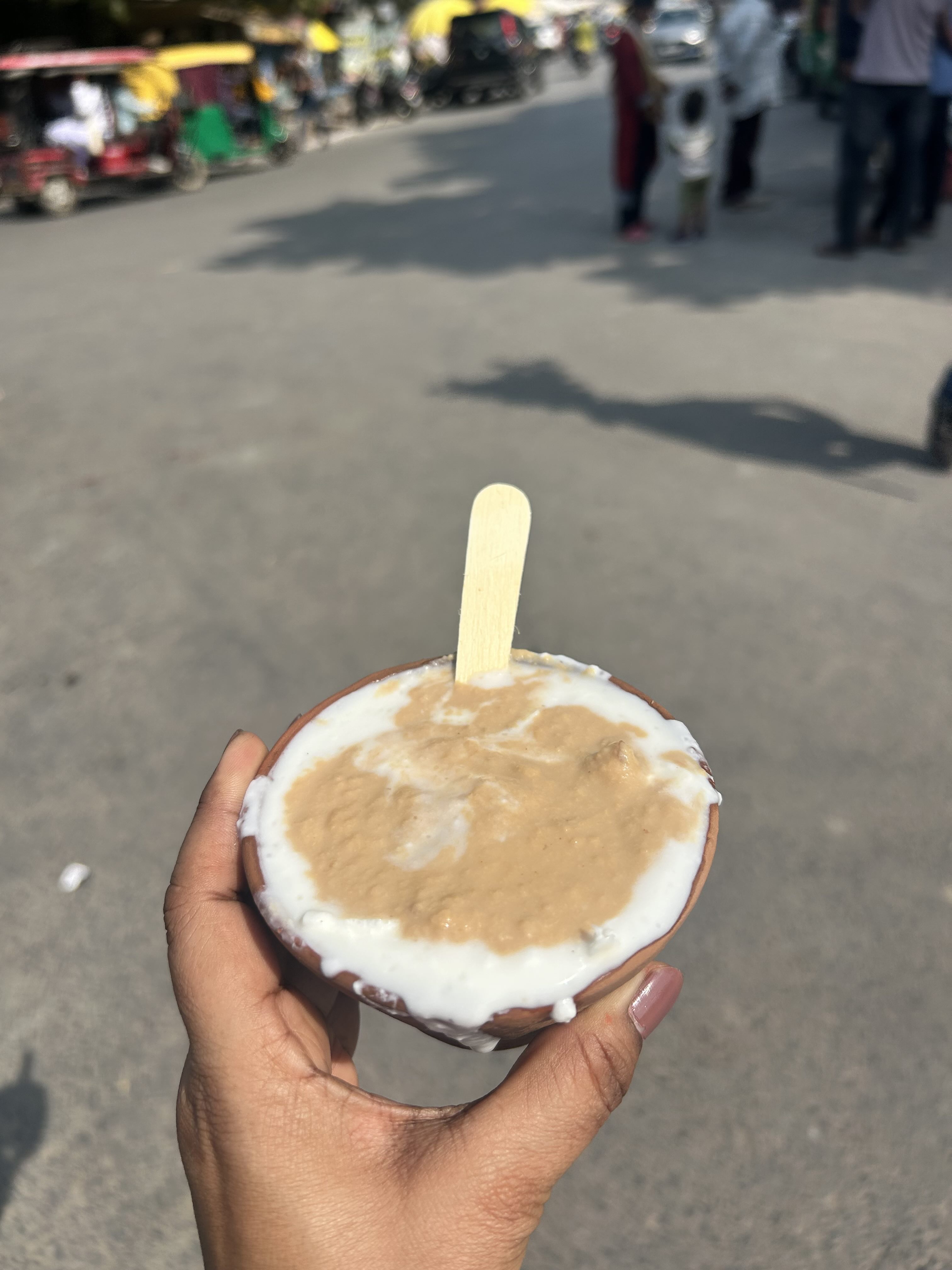
Almost next to the fort stands Shivji Lassi. The midday heat ensured that my feet found their way there almost automatically. After gulping down two glasses of lassi, I headed to the ancestral home of Lal Bahadur Shastri. It is a small but well-maintained house, offering a modest yet meaningful glimpse into the life of one of India’s most understated leaders.

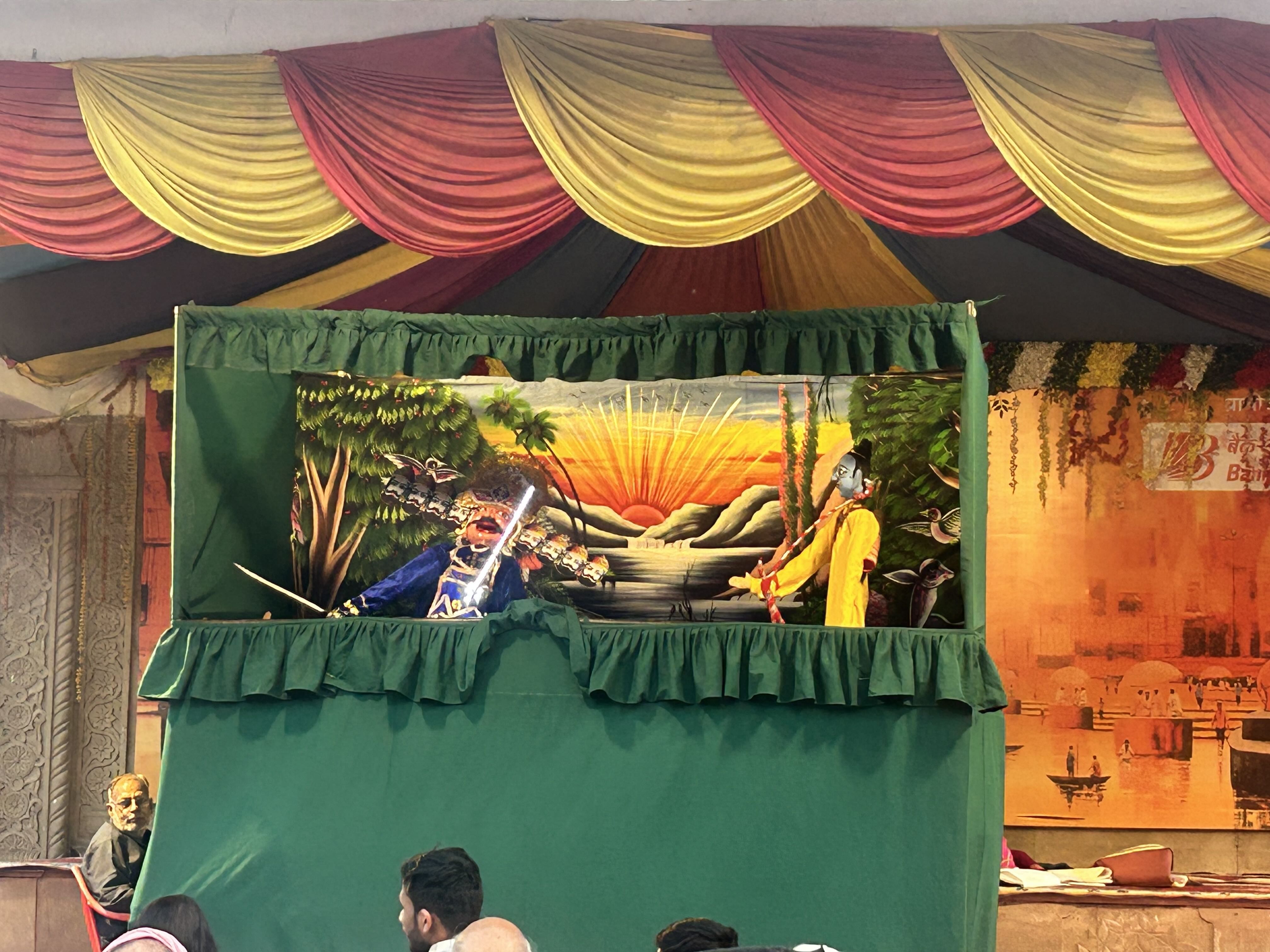
In the evening, I made my way to Assi Ghat to experience the Ganga Aarti. The first thing I encountered there was a puppet show based on the Ramayana. People were sitting, standing, moving around—but there was a curious method to the madness. As I walked further towards the aarti area, I found that most of the steps were already occupied. Somehow, I spotted a few chairs and promptly settled into one.


There is something surreal about hearing hundreds of voices recite the Hanuman Chalisa in unison. This was followed by the puja of Ma Ganga, during which the organisers invited devotees to participate. At one point, one of the priests admonished a devotee who seemed more concerned with taking photographs than with the prayer itself.


And then began the elaborate aarti.
I have always found aarti mesmerizing. But when it is carried out with such care, rhythm, and a sense of spectacle, it becomes truly unforgettable. As the aarti concluded and I slowly made my way towards the parking area, someone placed a bowl of prasad in my hands. Benaras, once again, in its own small way, touched the soul.


Thus ended my second day in the city of Shiv, a day of devotion, faith, and a little bit of history.

Between Benaras and Kashi: First Impressions of the City of Shiv

It was Benaras for my father and Kashi for my mother.
For my father, Benaras was a contradiction: a city where one seeks salvation, and where widows, until about a century ago, were often abandoned. For my mother, it was a city that lived vividly through Bengali literature, almost as if it were an enduring character in the novels she read. Somewhere between Benaras and Kashi, I do not know when it became the city I longed to visit at least once in my life. Perhaps the seed was sown in college, when I read and re-read Sarat Sahitya. In Sarat Chandra’s world, Benaras was never merely a backdrop; it was often a presence, almost a character in itself.


I had been planning this trip for a while, but somehow it never materialised. Then came the long Holi weekend, and I decided to take the plunge. It certainly helped that I had a colleague who had lived and studied in Benaras. And so, on a Friday afternoon, I landed in the city of Shiv.
Though I had drawn up a fairly detailed itinerary, the midday sun, coupled with a bit of laziness, ensured that I did not step out until evening.


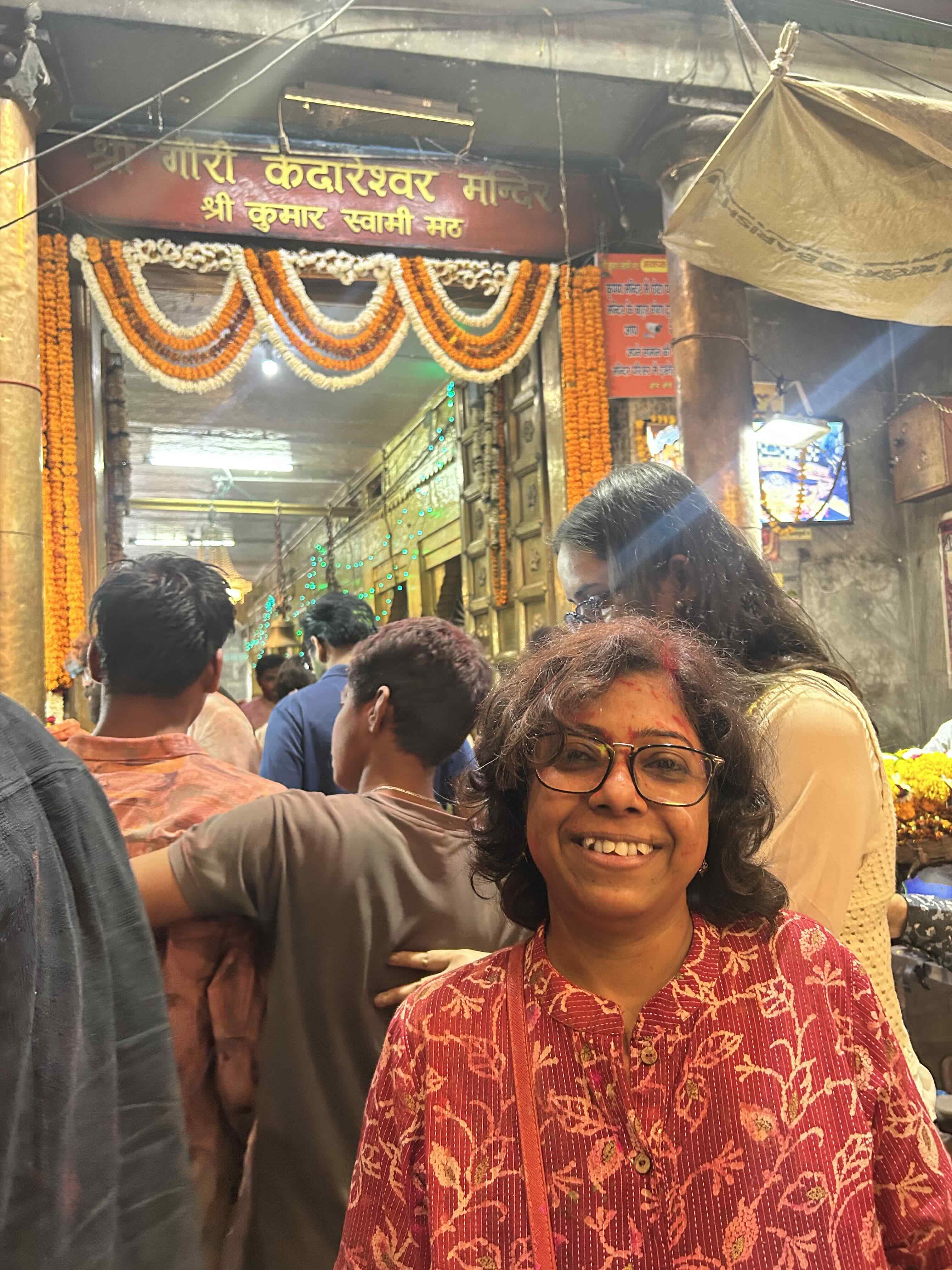
That evening, an acquaintance in the city reminded me that I had arrived on the auspicious day of Rangbhari Ekadashi, and that I must experience it. Rangbhari Ekadashi is believed to mark the day Shiv entered Kashi with Gauri for the first time after their marriage. I took an auto and reached the chowk near Kedar Ghat. Harshit met me there, and together we walked towards the Gauri Kedareshwar Temple.


Our first stop was the ancient Chintamani Ganesh Mandir. From there, we made our way to the Gauri Kedareshwar Temple. We removed our sandals, and I was handed a paper cup containing what I assumed was water. I took a sip. The moment I realised it was not water, I peered into the cup. Harshit was scandalised. It was meant to be an offering. Armed with a fresh paper cup, I walked in again, slightly embarrassed, and joined the sea of humanity.


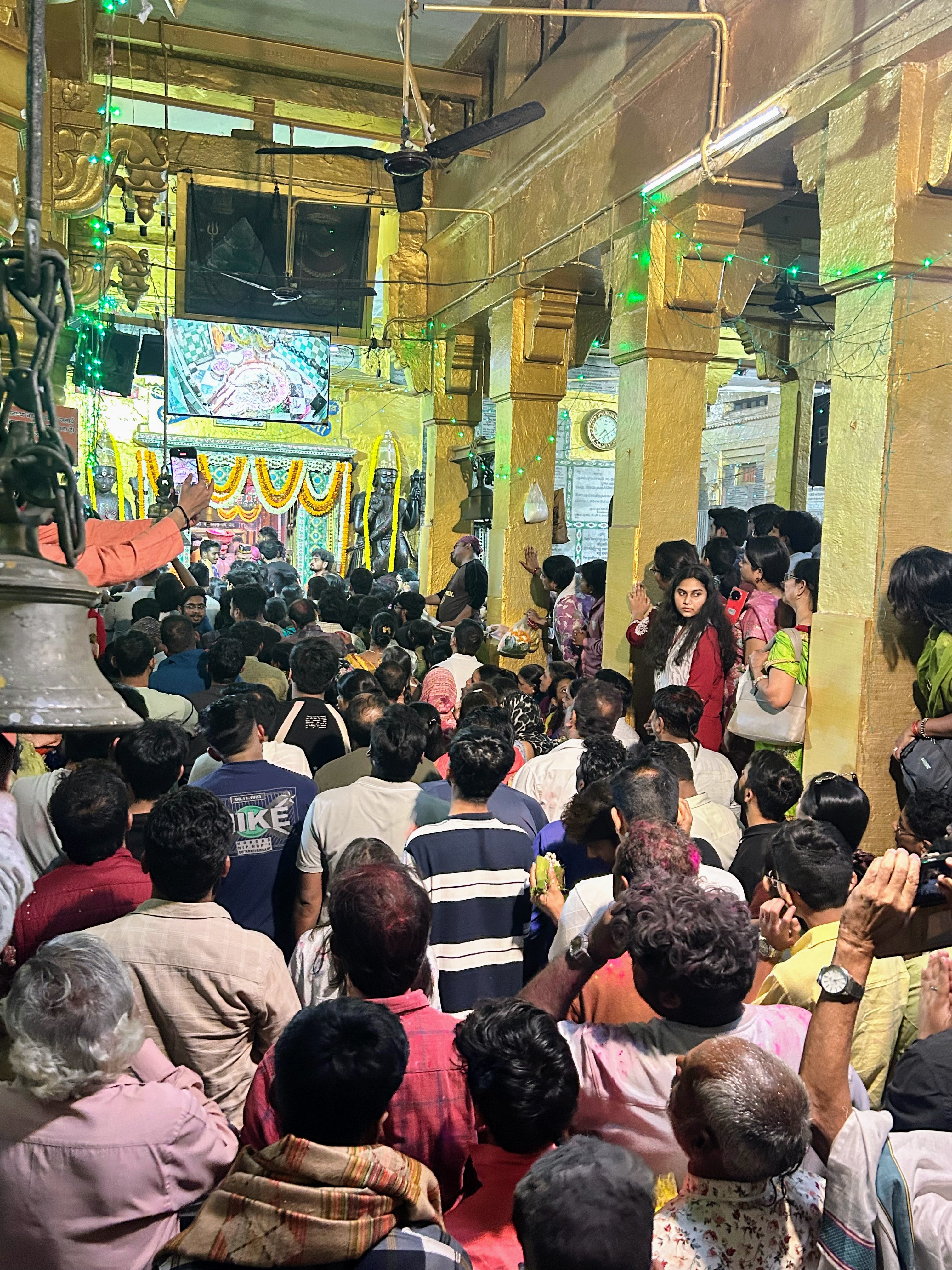
One of the twelve Jyotirlingas, the temple was in the midst of an elaborate puja for Rangbhari Ekadashi, and the rituals were being broadcast live on a screen outside. Technology, used well. After almost an hour, the puja concluded, and we slowly inched our way towards the sanctum sanctorum. Then I looked up at the screen and saw devotees rush in, jostling to touch the Shiv Linga. One part of me wanted to leave. But I was too deep inside the crowd by then, and there was no turning back. Swept along by the tide, I moved forward until I finally reached the Shiv Linga.


It is unusual, more an outcrop of rock than the smooth form one typically expects. Yet, despite the crush of the crowd, I somehow found a moment. A brief, still moment. I prayed, touched the Shiv Linga, and came out of the temple.


My pet peeve during temple visits has always been the speed with which one is pushed out of the inner sanctum, sometimes before one has even finished praying. But today, despite the crowd and the jostling, I was granted that moment. And that felt deeply satisfying.


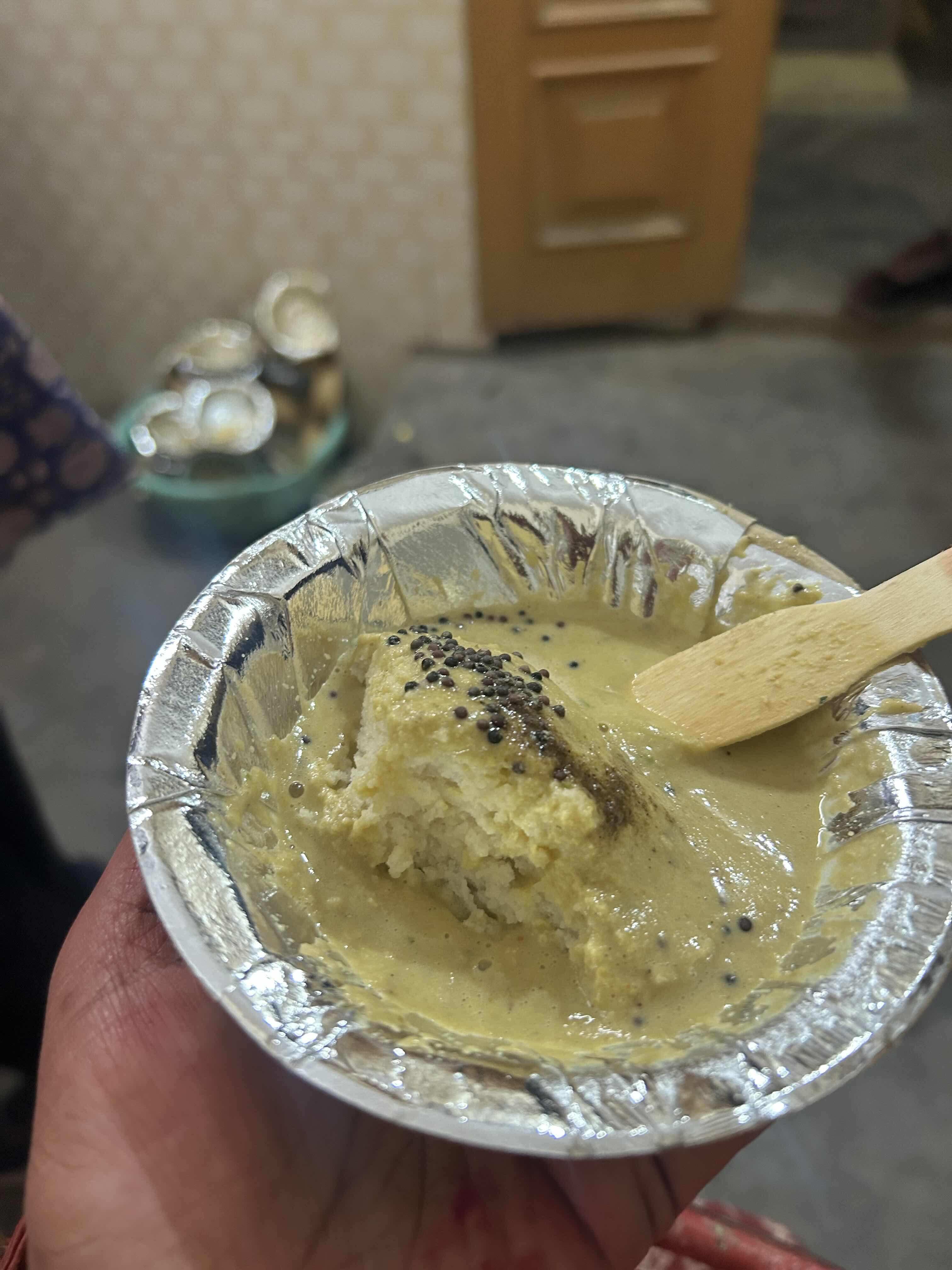
Once the visit was over, Harshit took me on a food trail through the city. We crossed Harishchandra Ghat, where funeral pyres burned even as life moved on around them, and then plunged once more into the crowds. Our first stop was idli served with dal chutney. From there we headed to Keshri Chaat, Harshit expertly manoeuvring his scooter through the dense, chaotic lanes while I sat pillion, equal parts anxious and exhilarated.


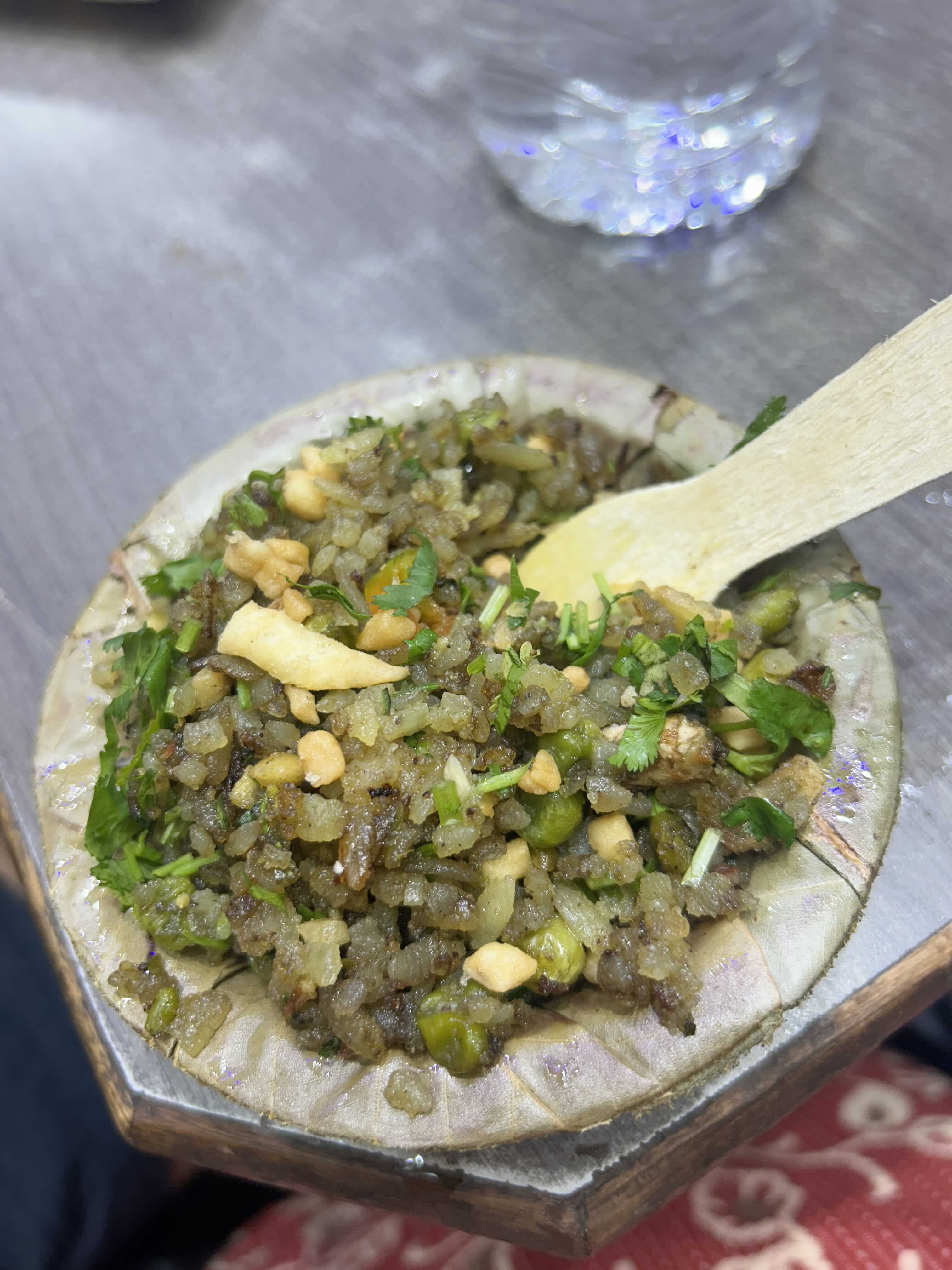
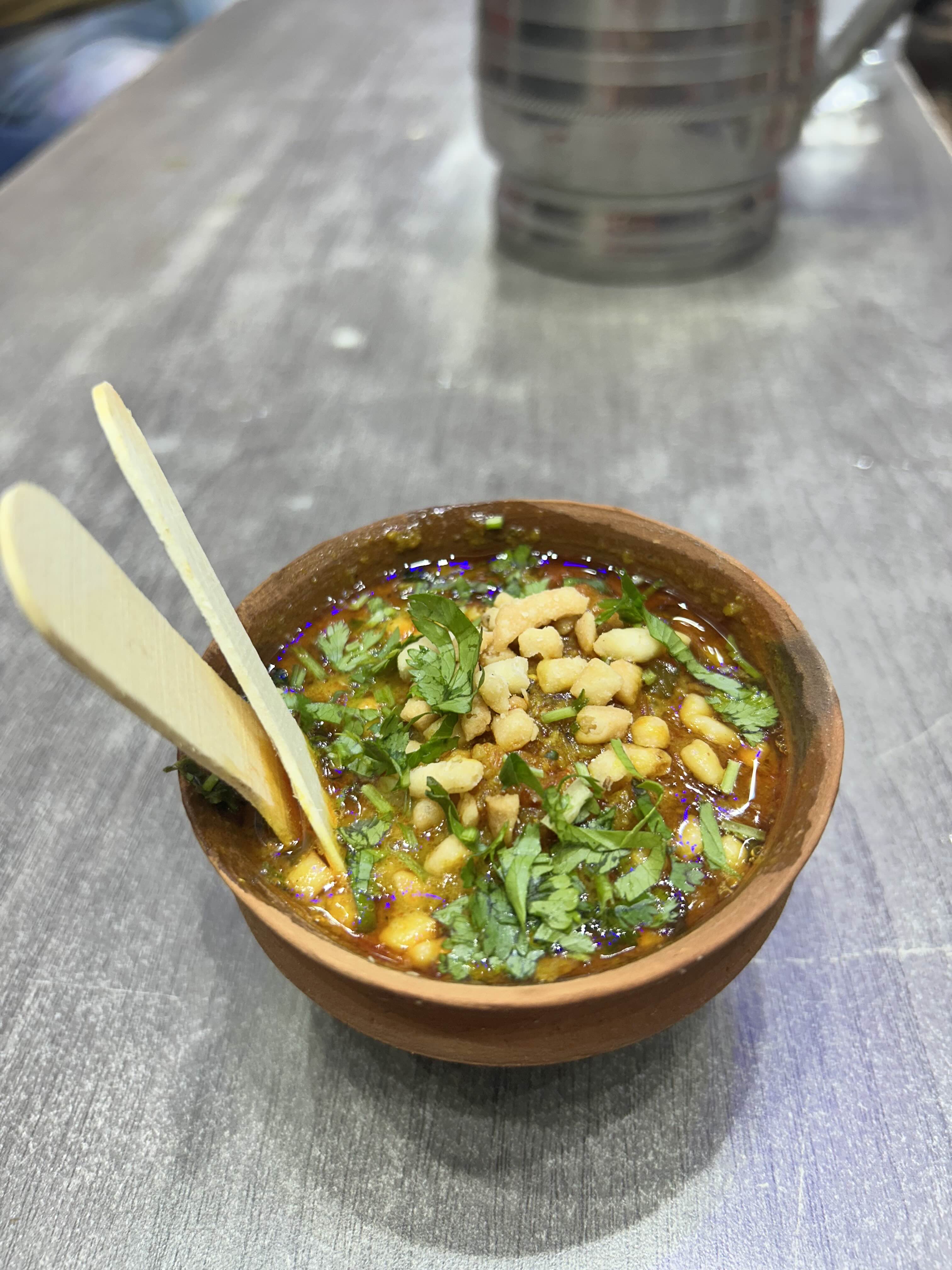
The quality of the chaat was evident from the crowd gathered outside the shop. I began with tamatar ki chaat, followed by palak patta chaat, gol gappa, and finally chewra matar—an interesting preparation made with chewra, or poha as we usually know it.


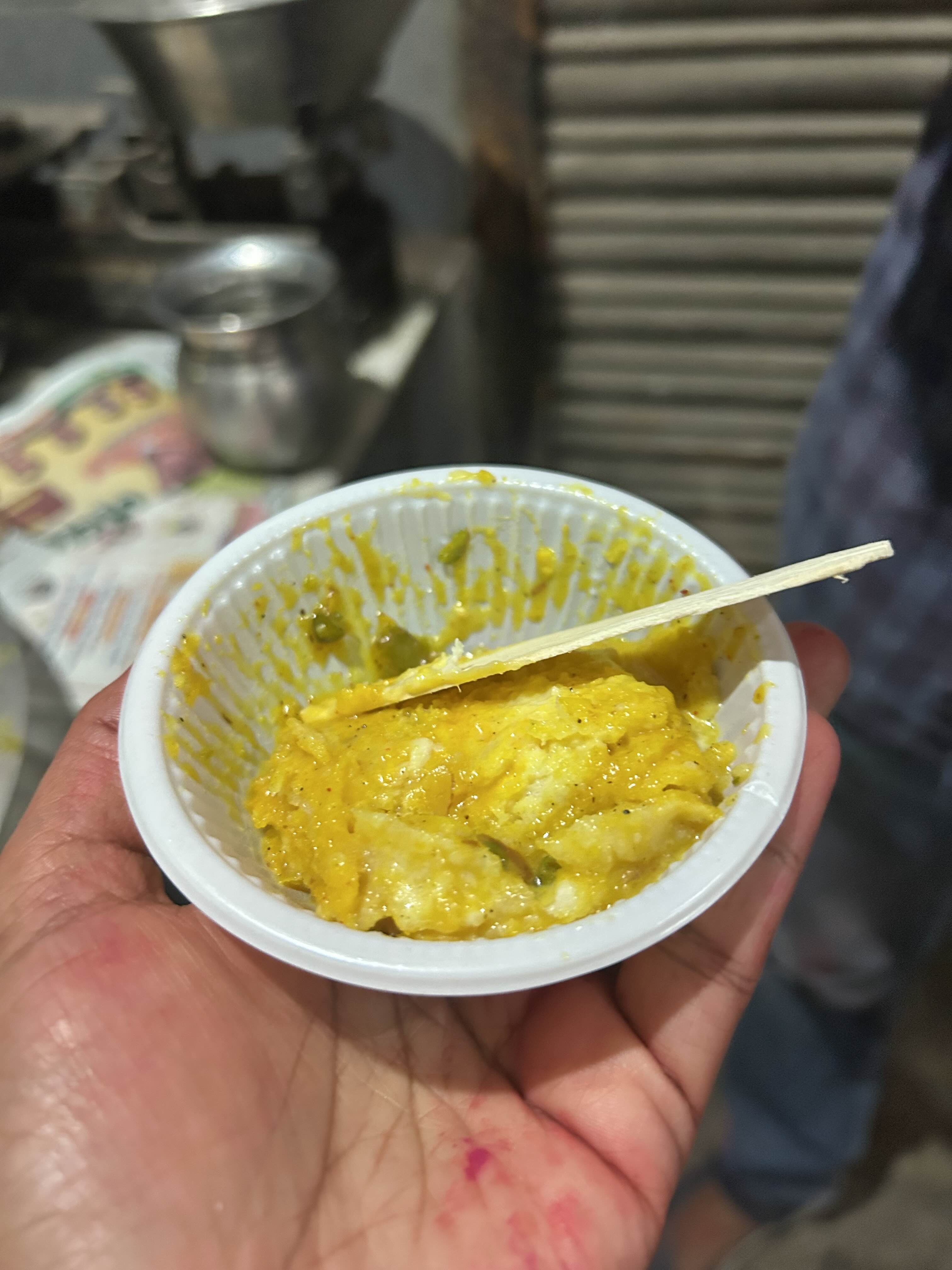
We then set out in search of thandai. With the narrow lanes teeming with two-wheelers and pedestrians, it was a challenge of its own. Unfortunately, we were too late. By the time we reached, the thandai was over. Harshit then took me to a place, opposite Parshuram Mahadev mandir, selling a sweet made of malai, which is interestingly named ‘palangtodh’.


And thus ended my first day in Benaras. A day when Shiv pulled a crowd-averse traveller into the heart of a celebration—and left her unexpectedly, completely satisfied.

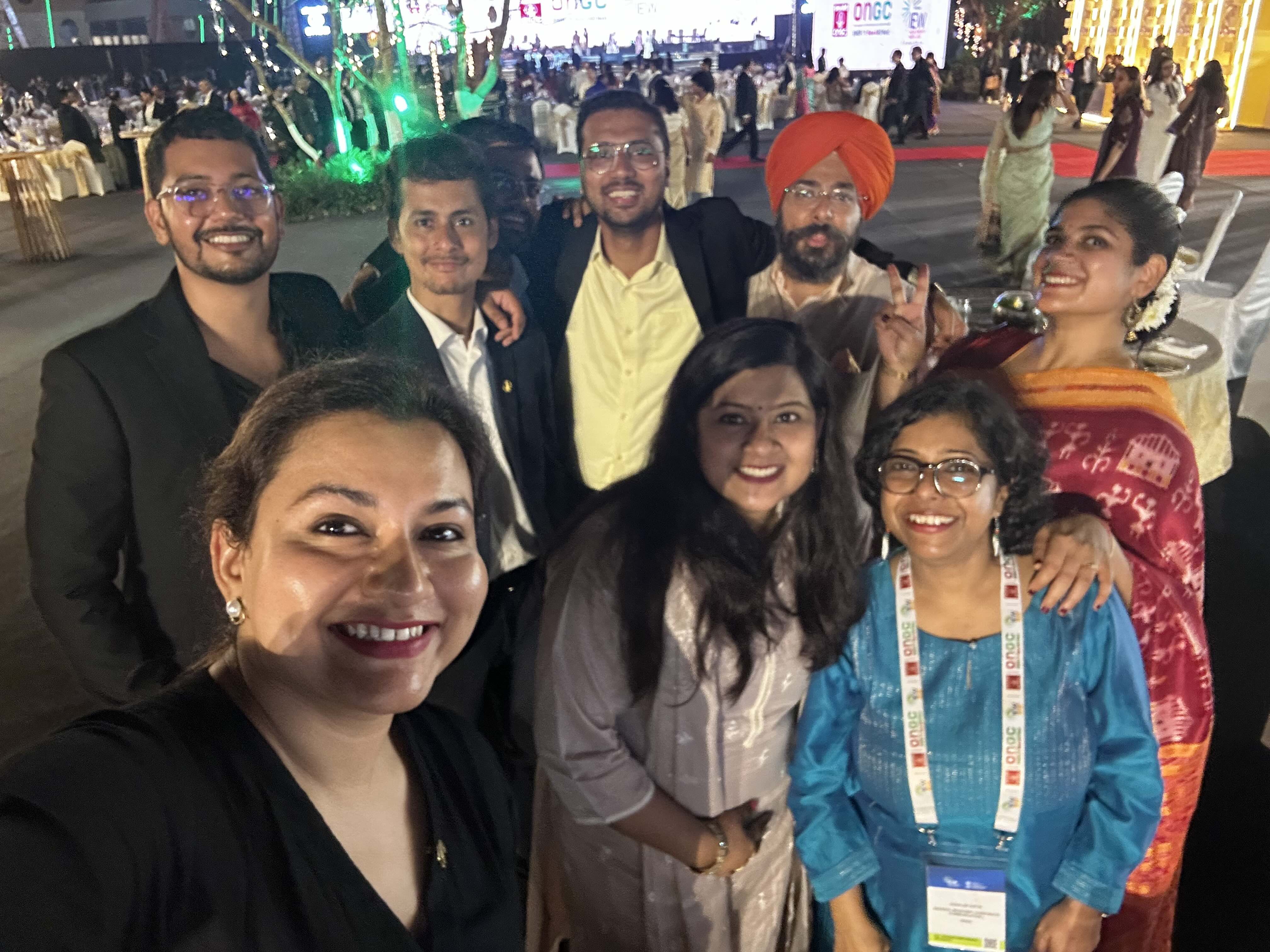
Sofa Diaries After IEW 2026: Nine Days. One Team. Total Madness

Growing up, my mother had a favourite phrase for anything that demanded intense preparation and unfolded on a grand scale: “Dakkha Jaggo”—the Yagna of Daksha Prajapati. And honestly, now that I’ve had a taste of what it feels like to be part of something like that, I can say this with some authority: it’s exhausting… and deeply satisfying.

I’m lying sprawled on the sofa as I type this, my body flat-out refusing to follow instructions from my brain. Fatigue has officially outranked hunger—until my stomach finally growled loud enough to win, and I caved and ordered food.
The last nine days have been a blur because India Energy Week kicked off in full force—one of the major energy conferences in this part of the continent. It was a whirlwind of last-minute checks, deadlines, curveballs, and challenges (including one freak incident), all culminating in something that makes every long hour feel worth it: appreciation from the top management. Blockbuster, truly.

But in all the madness, what kept me going was my equally mad team—serious one moment, dissolving into peals of laughter the next. The kind of people who know how to work hard and party harder. The kind who understand my brand of madness—especially when it comes with goofy photos.

Three cheers for the team—Gagandeep Aneja, Umang Pandya, Ankita, Bagmishree, Chandrali Mukherjee, and Akshaya Jeena—for the commitment, the energy, and the sheer fun you brought to the ride.

Nahari at Nahar: A Morning in Purani Dilli

In our fast-paced world, there are moments when a sight or a sound takes you back, when life feels lived, not rushed. I belong to that in-between generation that grew up analogue and stepped into digital adulthood. Lately, I’ve found myself pausing more often, trying to catch my breath in the whirlwind of the way we live now.

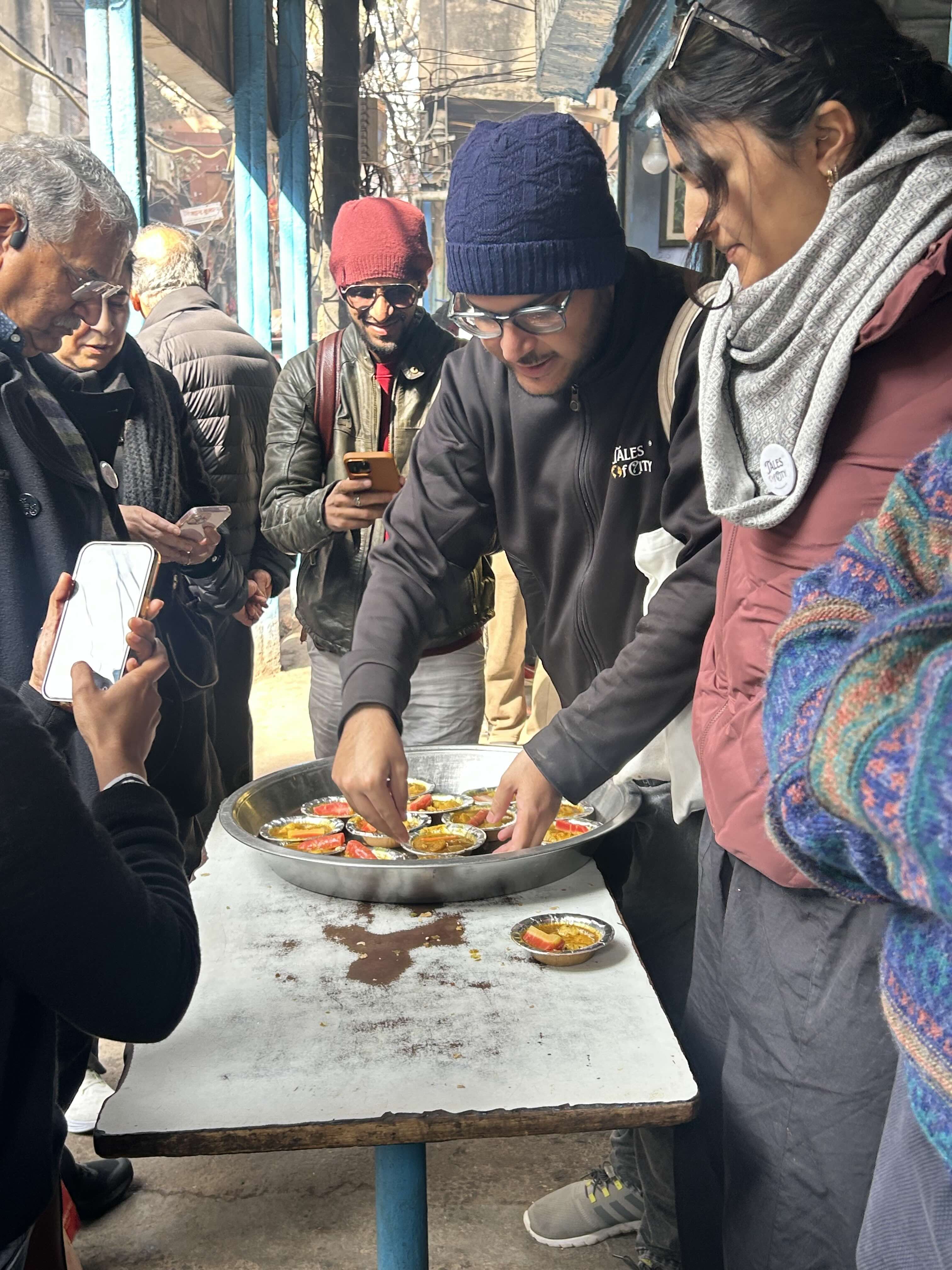
About a month ago, over dinner at The Kunj, Chef Sadaf Hussain remarked that Delhites won’t wake up early for nihari. This week, an email landed in my inbox about a food walk in Purani Dilli, enticingly titled “Nahari and Nashta” by Tales of City, led by Chef Sadaf. It began at 10:00 a.m. Manifestly, Delhites were not trusted to wake up early.

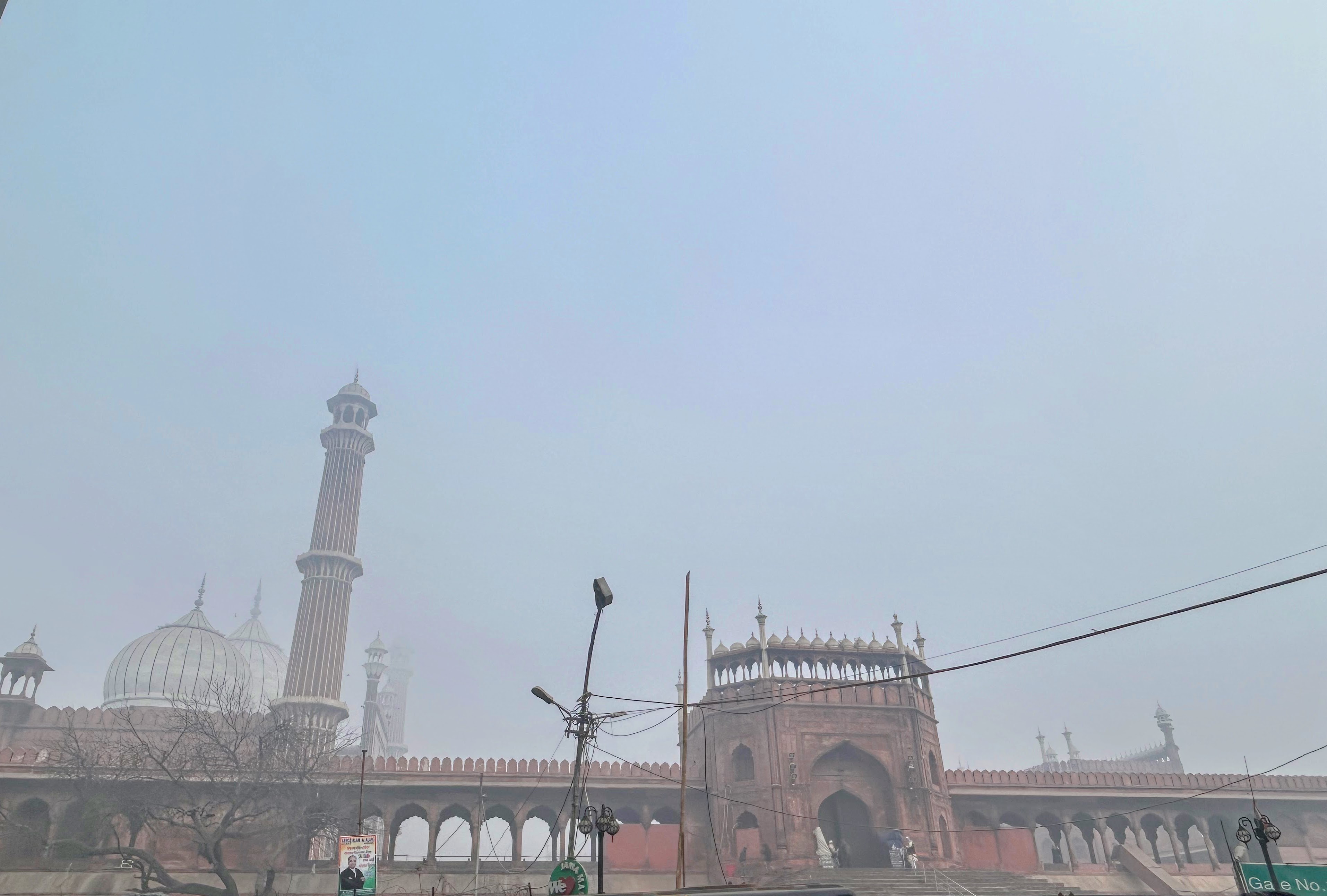
Purani Dilli, for me, is where centuries coexist. It’s also the part of the city that makes me more curious the more I see. So on Saturday morning, braving the cold and the fog, I joined a group of fellow foodies outside Gate No. 1 of Jama Masjid. The city was wrapped in mist, but it was awake; the area was already crowded. You could sense preparations for Ramzaan beginning.

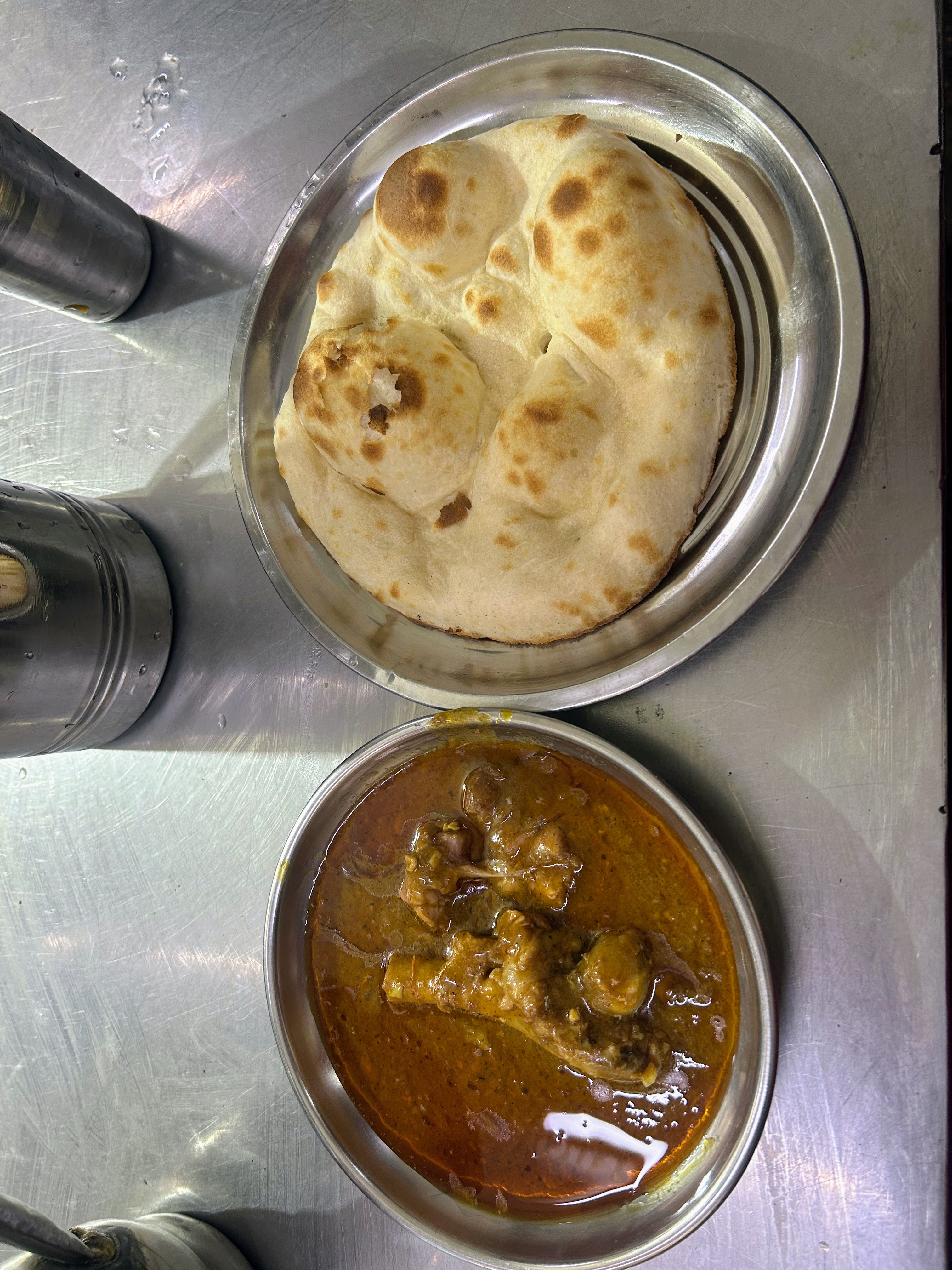
Maneuvering through winding lanes, we reached Shabrati, a small joint with a big reputation for serving truly delicious nahari. Now, I’ve always called it nihari. It was only today that I learned it is actually nahari, a dish eaten at nahar, or dawn. Traditionally, food for the masses, sold on carts across the old city, it was later adopted by royalty. We huddled inside the compact eatery and dug into nahari with khameeri roti. Soon a quiet descended, the kind that arrives only with good food, punctuated by extra servings and satisfied, happy nods.

Tea followed, of course. Standing outside Shabrati, we spoke about the journey of food as we know it, from the 14th century onwards. As we were about to move on, we noticed the kitchen preparing nahari for the evening. While we clicked photos, Chef Sadaf tried his hand at stirring the enormous handi. It was quite funny to watch the chef at the eatery look on with deep suspicion, apparently not trusting another chef to stir it “properly.”

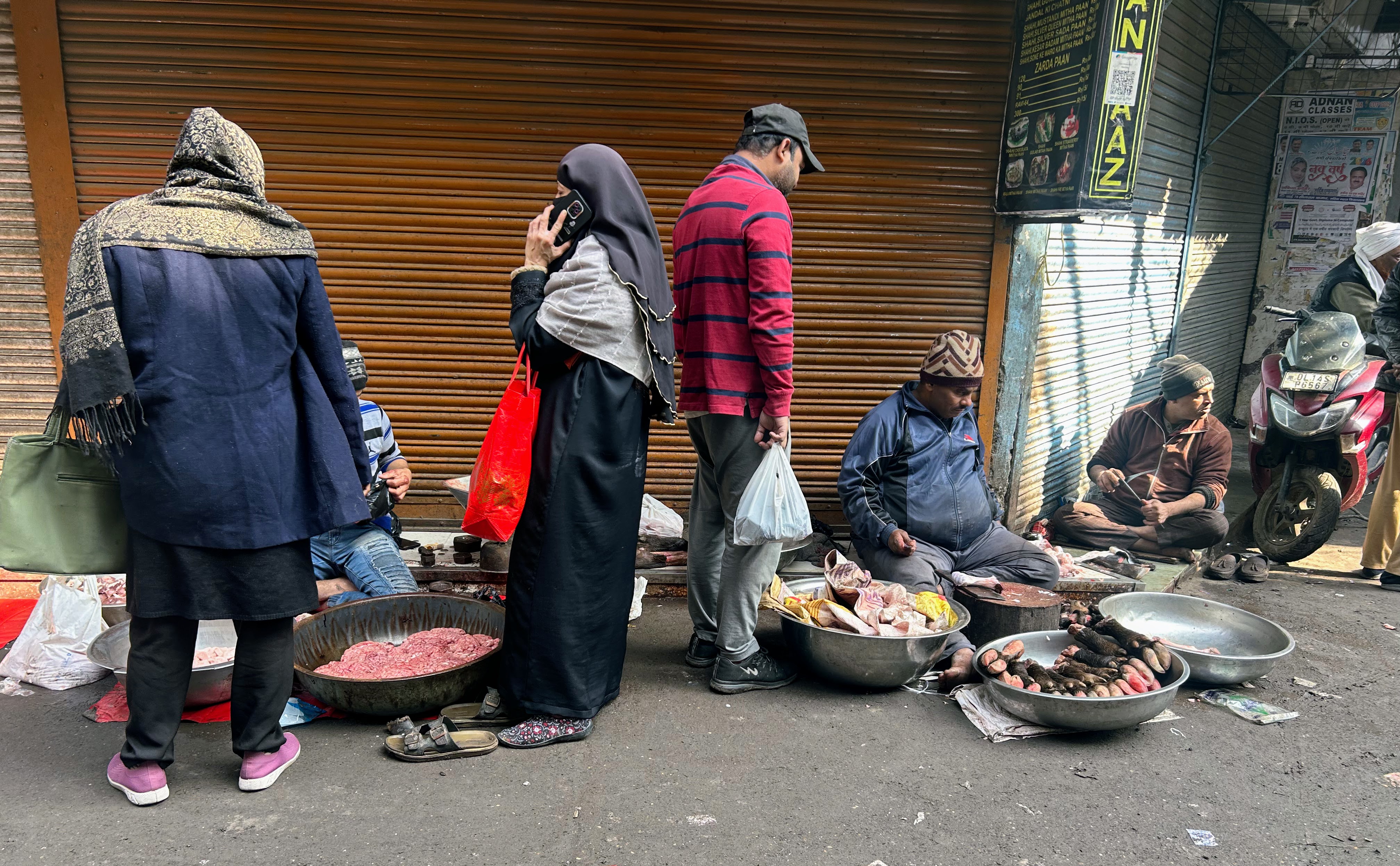
We moved through more lanes, past vendors selling offals by the side. The scene reminded me of growing up in Arunachal, when the local butcher would inform my father if good mutton had come in. Mutton was always bought in person. The foodie and brilliant cook that my father was, he would decide what he wanted to make on Sunday and choose the cuts accordingly.
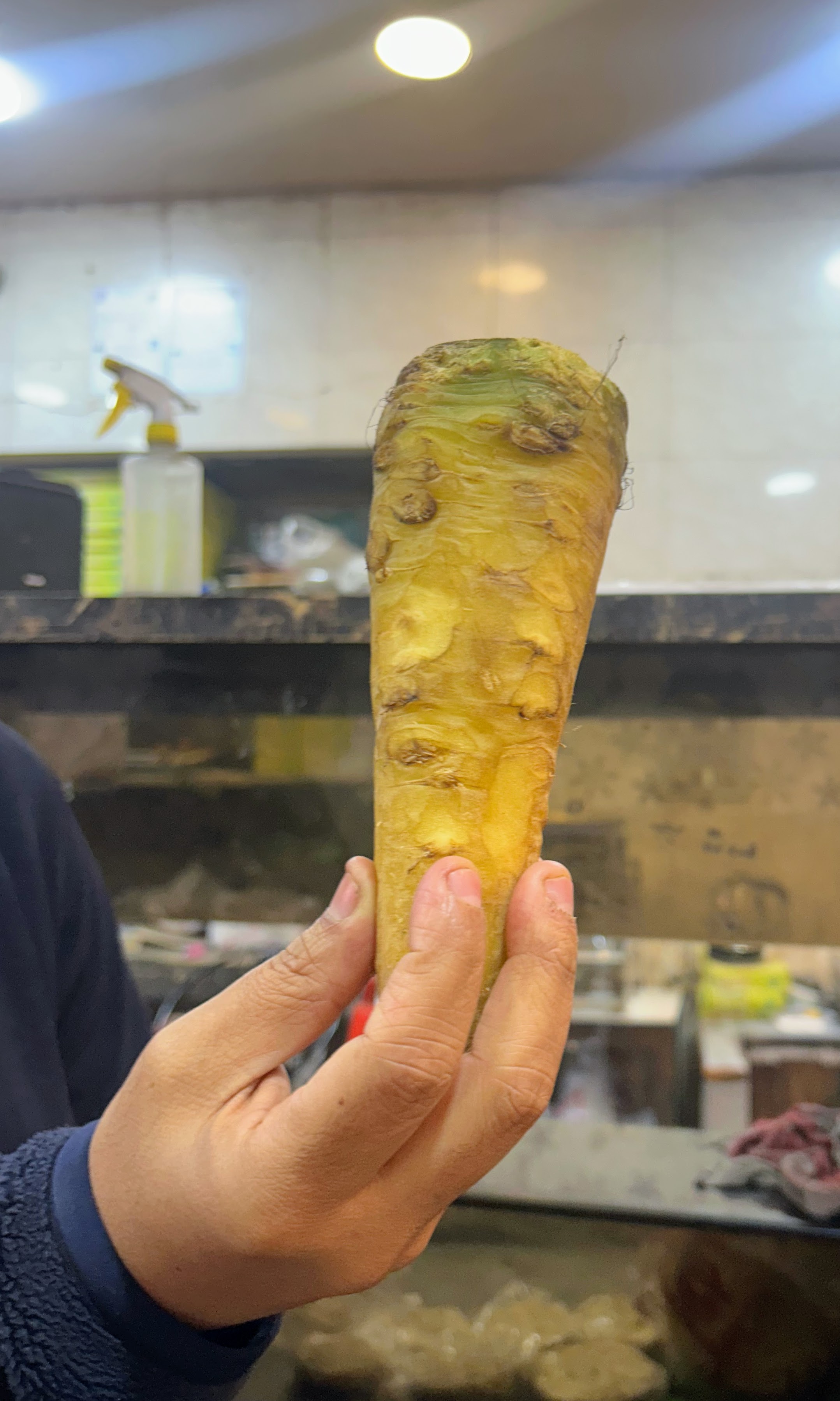
At Sheeren Bhawan, as our discussion drifted towards sugar and its journey across the world, a pale, creamy halwa arrived. On the counter lay a whitish tuber. It turned out to be safed gajar or white carrot, an indigenous variety, more fibrous than the popular red one, and the halwa was made from it. It was the first time any of us had even seen a white carrot, let alone tasted halwa made from it.

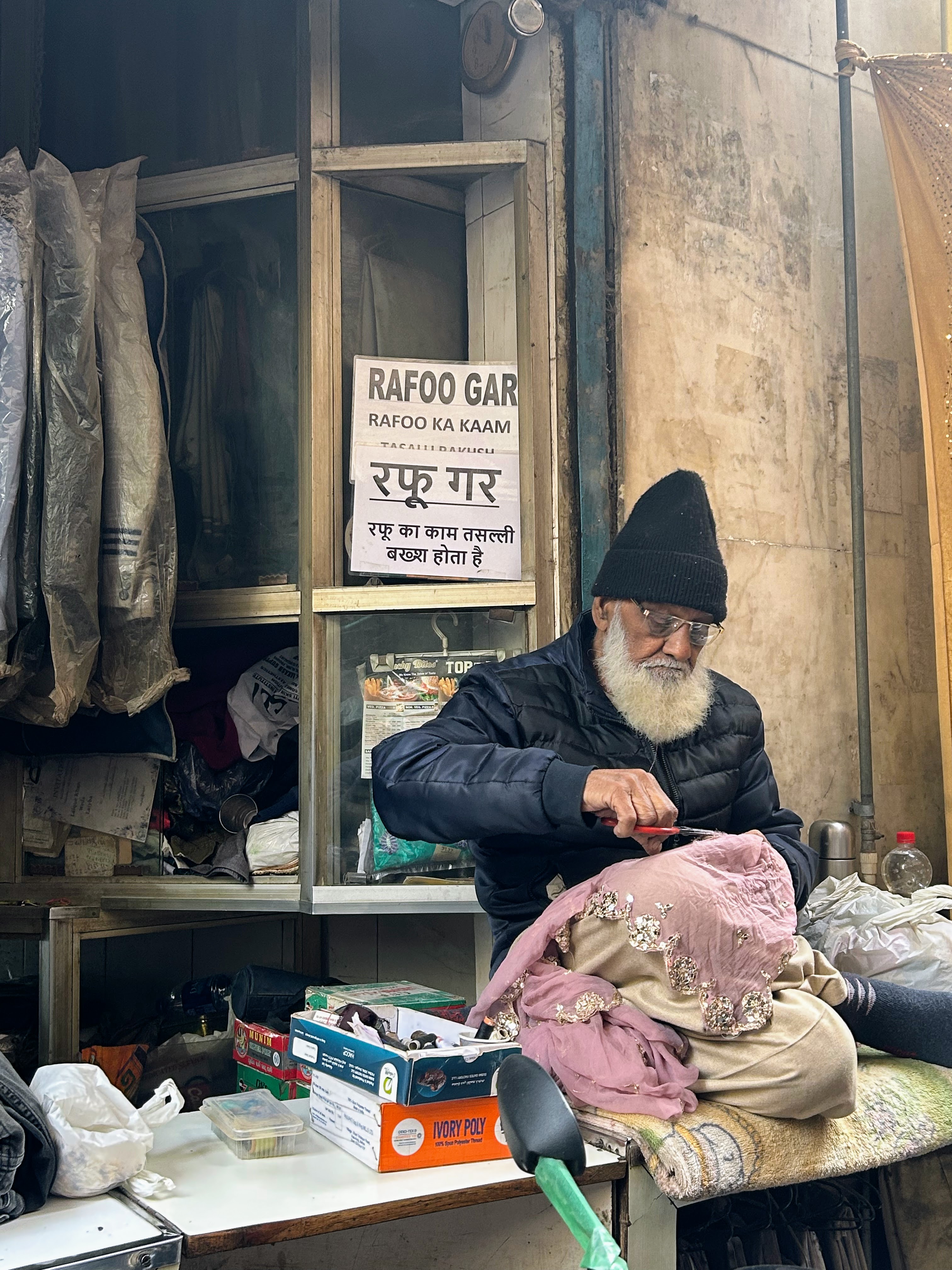
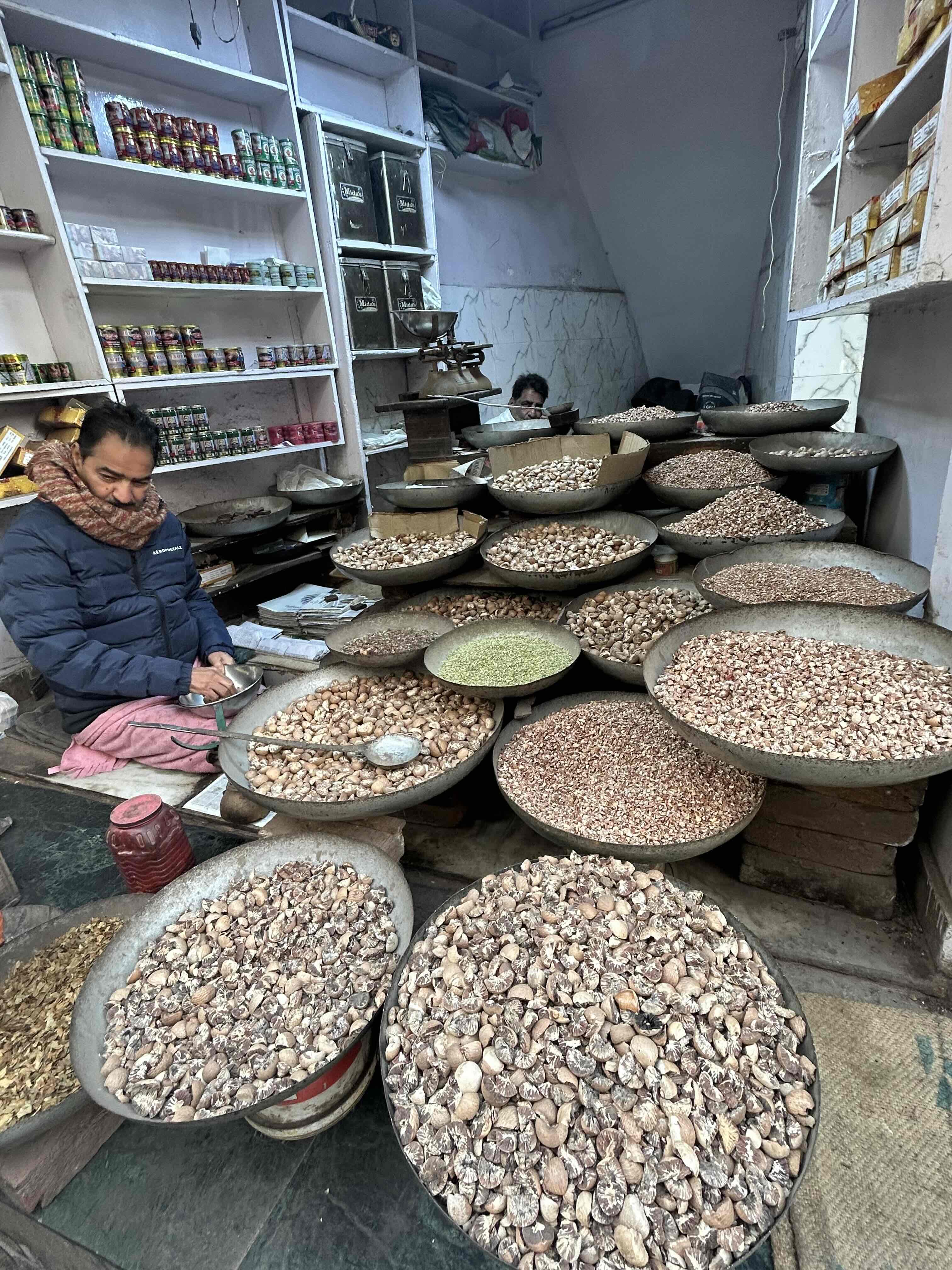
As we moved through the maze of Purani Dilli, a slower slice of life revealed itself, unhurried, detailed, and oddly comforting. A store selling betel nuts and the condiments necessary for paan. A Rafu Ghar, almost extinct in today’s use-and-throw world, a skill fading into memory. A shop selling only parathas. An ear cleaner. And then there were the lane names, quirky, specific, sometimes poetic, offering glimpses into the trades that once populated these streets.

We reached our next stop only to learn we were late: the nagori halwa was over. But bedmi puri and aloo ki sabzi more than made up for it, as we spoke about the deep connections between communities and food, how recipes travel, adapt, survive, and become identity.

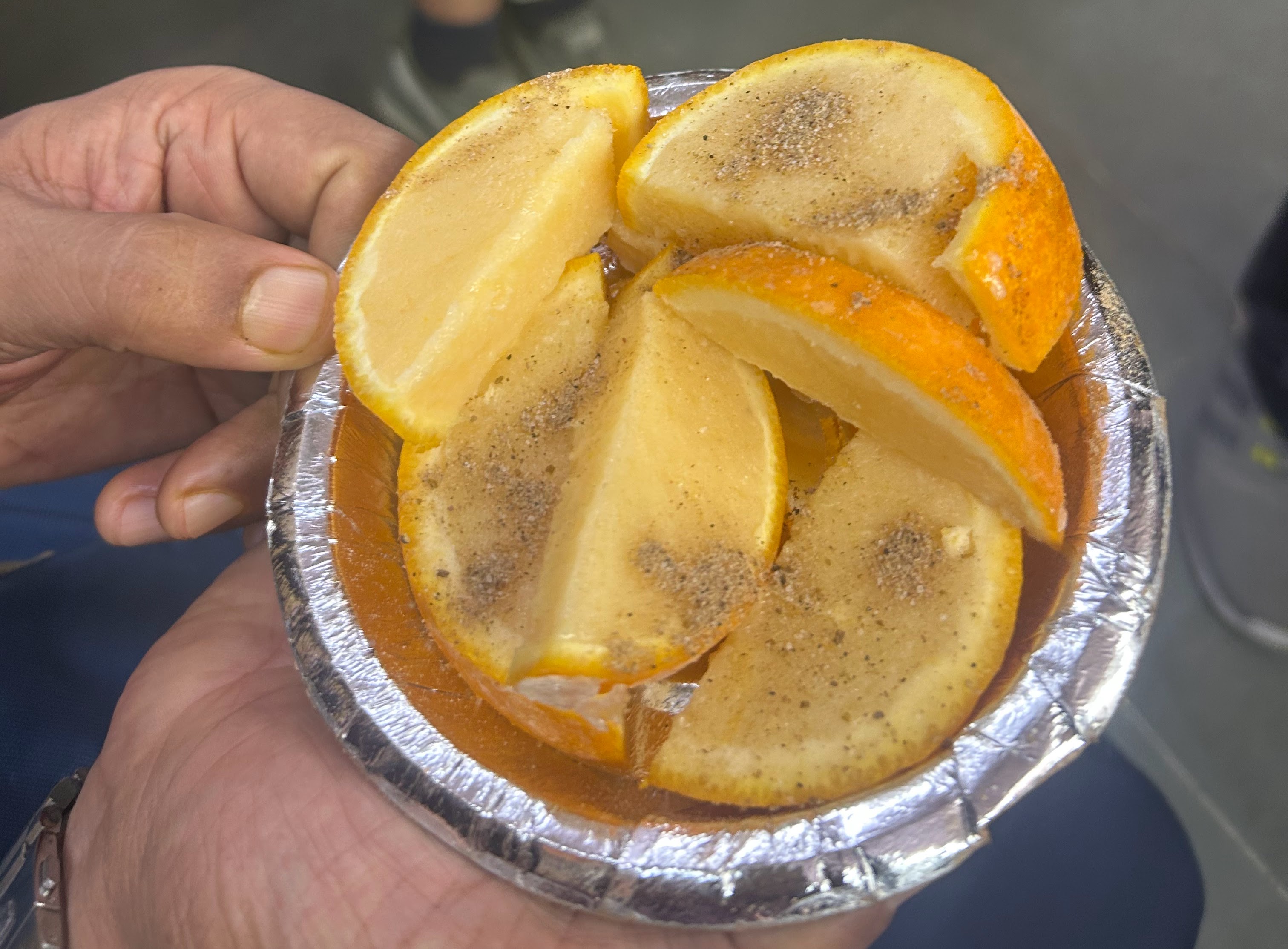
The walk ended at one of the oldest kulfi shops in the city, and once again the word Julpep made me smile. Talking about spices, culture, and the influence each has on the other, we relished different kinds of kulfi. My favourite, of course, was the Santara kulfi.

When I entered Chawri Bazaar Metro Station and boarded the train, it felt like I was travelling not just out of Purani Dilli, but from a slower life into a faster one. Yet the hours spent that morning, on food, yes, but also on absorbing a culture of coexistence, were perhaps the best kind of weekend reset I could have planned.

Concentric Circles, Endless Gratitude: A Sunday at the National War Memorial

Winter is in full swing in the capital, with daytime temperatures dipping below 20°C. Ironically, that’s also when Delhi’s tourist spots see their biggest turnout. The smog-and-cold combination often makes me think staying home is the smarter plan. But in the eternal confrontation between my lazy self and my wanderlust-bitten self, it’s usually the latter that wins.

This Sunday, INTACH organised a walk at the National War Memorial, led by raconteur Dr Shahjahan Avadi—an ex–Air Force officer himself. The memorial is located near India Gate, and my logical self did know that parking would be a problem. But it was cold, and I decided to take the car anyway.

The drive up to the oddly named C-Hexagon circle was smooth. And then I joined the queue to enter the Central Vista parking and immediately realised that getting the car was not a bright idea. Thanks to a fellow walker, I managed to find a spot nearby.

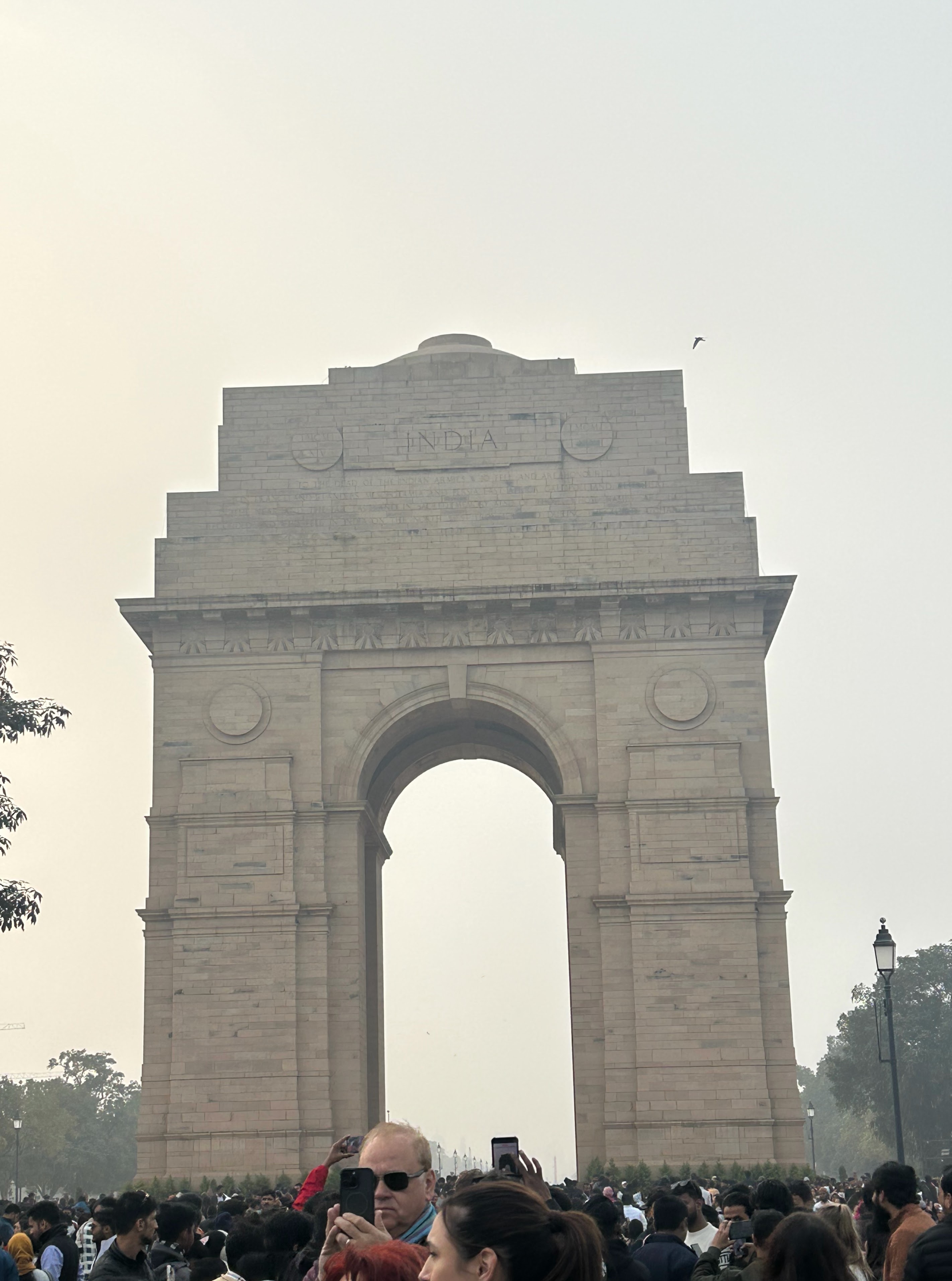
Then, what should have been a simple walk to the statue of Netaji Subhas Chandra Bose turned into a brisk walk—and then a jog—as we searched for the entry. My rant about signage has now become a constant at most public locations in the country. After a brief hunt through the sea of humanity around India Gate, we finally located the group.

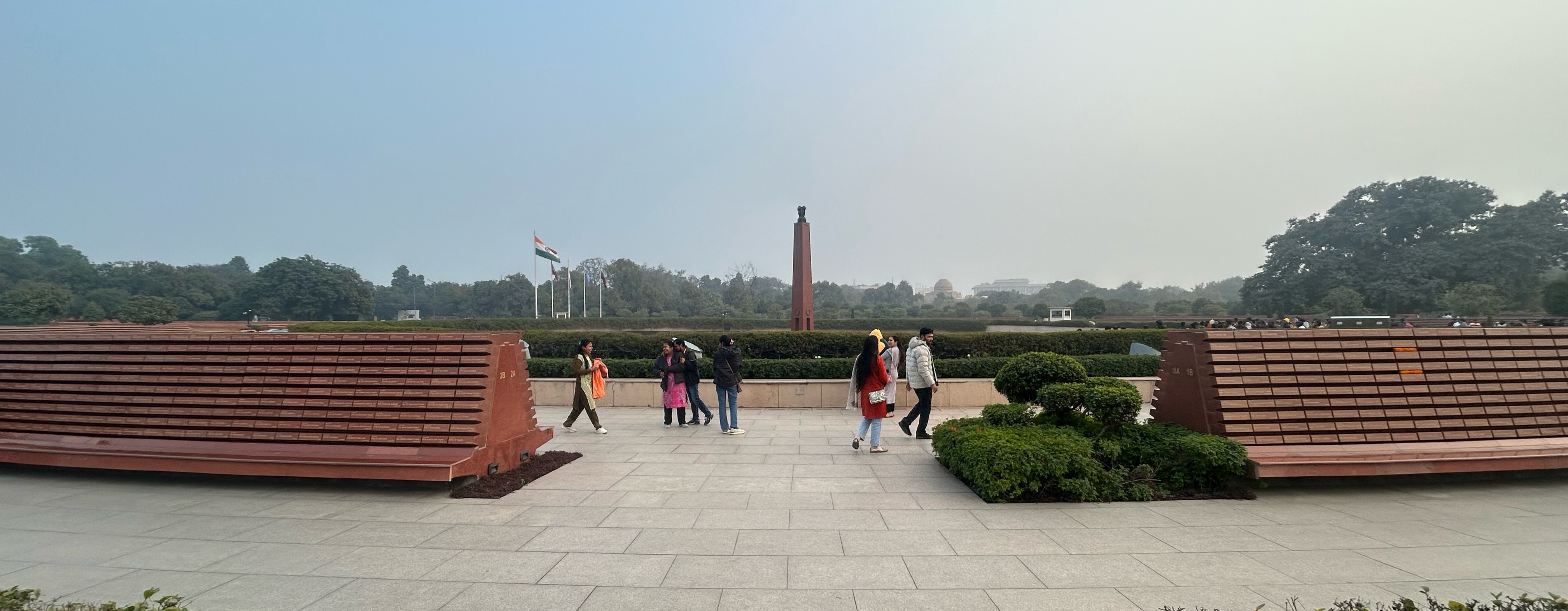
Built in 2019, the National War Memorial honours India’s fallen soldiers. Designed in concentric circles, it is said to echo the ancient war formation of the Chakravyuh.

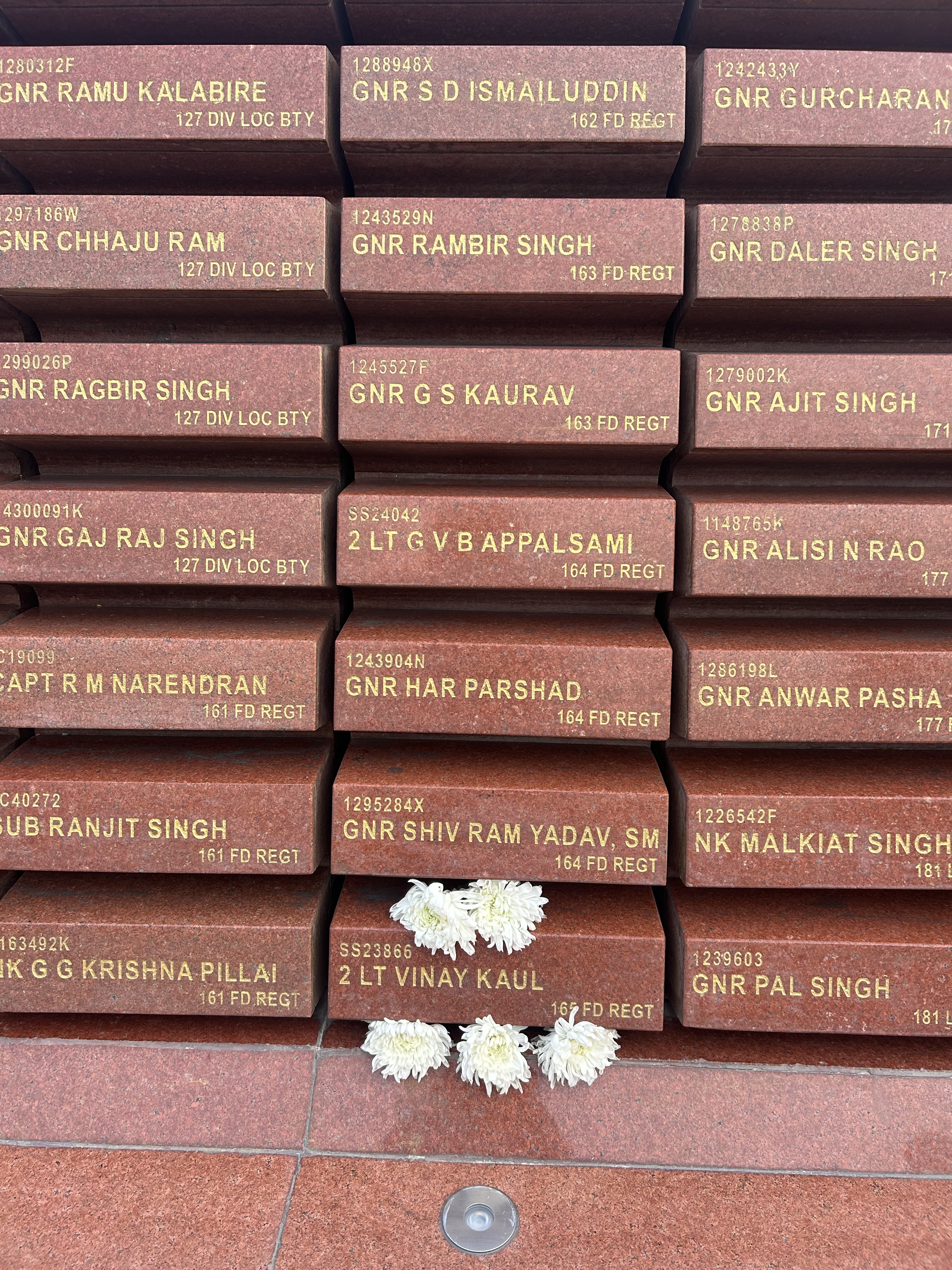
The first circle is the Raksha Chakra, a ring of trees symbolising the stability and integrity of the nation. Next comes the Tyag Chakra, where granite panels bear the names of those who made the supreme sacrifice—etched in golden letters. From 1947 to the present day, the names of martyrs can be read here.

As we walked, something caught my attention: someone had placed flowers at two granite panels. It made me wonder how often we truly think about these sacrifices when we think of our country. We celebrate achievements—and rightly so—but do we pause to consider whether those achievements would have been possible without the lives given, and without the soldiers who continue to guard our borders?

We then moved to the Veerta Chakra, which houses murals of battles that became turning points in the nation’s story. From Tithwal to Rezang La, from Longewala to Gangasagar to Meghdoot—each mural carried a reminder of indomitable courage and enduring sacrifice. It was heartening to see that even amidst the India Gate crowds, many were drawn into the quieter gravity of the memorial. These stories deserve to be known by more people.

At the centre is the Amar Chakra, where the eternal flame burns—Amar Jawan Jyoti. Beside it is a cabin where a soldier stands guard in honour. The discipline is so absolute that for a moment we almost mistook him for a statue. Being a Sunday, we also witnessed the change of guard and the retreat ceremony.

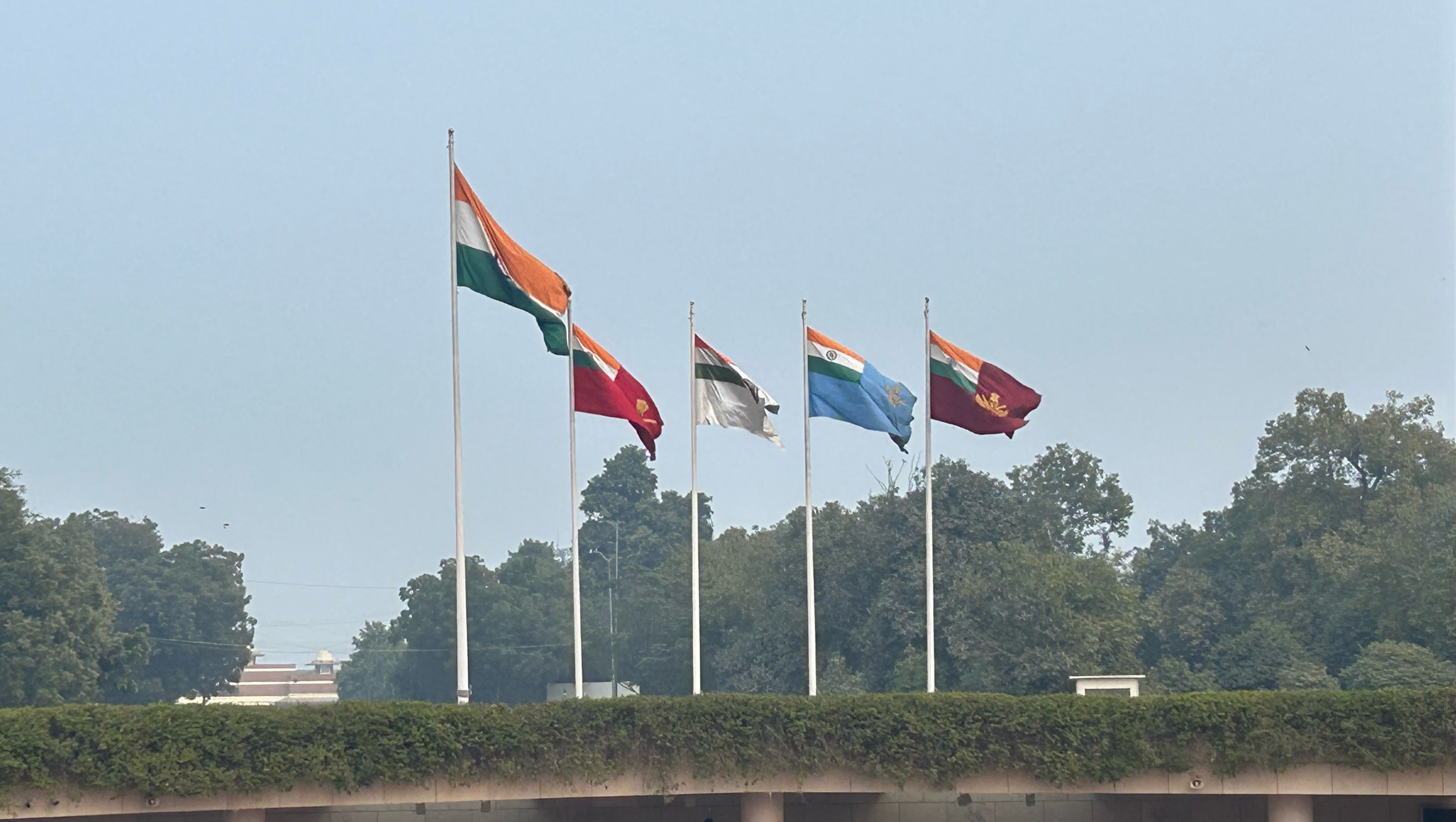
As dusk settled, the flames around Amar Jawan Jyoti were lit. An elaborate change of guard followed, and finally the five flags—the National Flag and those of the Army, Navy, Air Force, and IDS—were lowered. By the time the ceremonies ended, the air had turned sharply cold. Pulling my fleece tighter, I remembered a story Dr Avadi shared about Operation Meghdoot—how he said one can lose around 10% of one’s memory after serving in Siachen.

It was a Sunday well spent—learning a little more about the bravery, courage, and quiet determination of our armed forces.